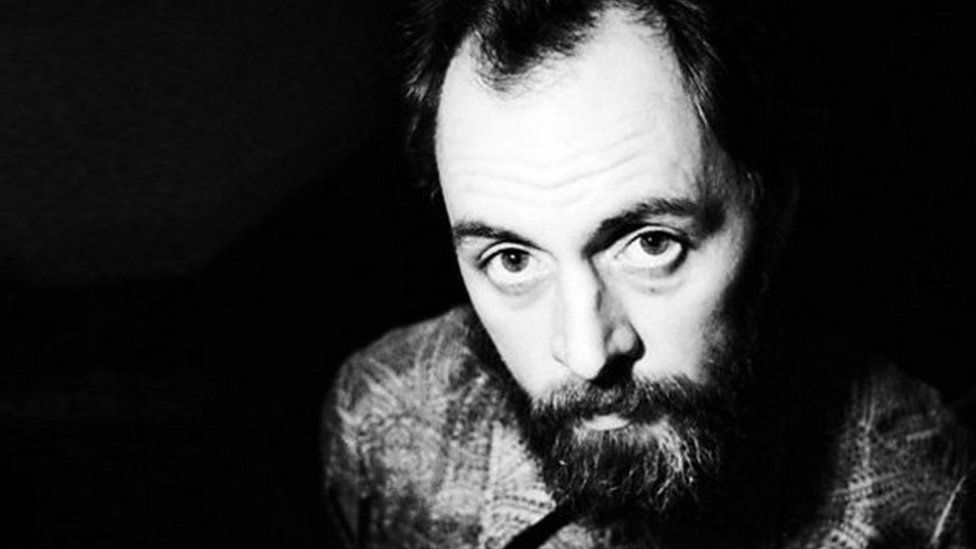
Ronald David Laing
PsychiatristWikipedia
5
MENTIONS
4
EPISODES
4
PODCASTS
Search complete. 5 mentions across 4 episodes found for "Ronald David Laing".
Oct 15, 2026

Jano Jimenez-BarretoGUEST
So past self, current self, and future self might have implication on, on, on how consumers might, might perceive products or advertising.
Jano Jimenez-BarretoGUEST
But then when this idea of the inner child, somehow influenced by Ronald David Laing, this is a psychiatric Scottish psychiatric that wrote the book "The Divided Self," and, uh, through, through [laughs] his ideas about the, the, the true self, we, we saw an opportunity to say, well, maybe this archetype might not only simplify cognitively the processing of the advertising, but also connect with true self or connect with something that sub-subjectively consumer might, might find more authentic.
Jano Jimenez-BarretoGUEST
And, and that was more or less the, [laughs] the story how we end with this.
Jano Jimenez-BarretoGUEST
And also observing the importance of ki-kidult con-consumption actually, and how in different countries, obviously the US, but also China or Korea or other countries, how important it is, how it's motivating different consumption of toys, of foods that are, you know, a reminder of what you did in the, in the childhood, and how important this kind of persuasive cues can, can, can be or can be used by advertisers in those, in those sectors.

William RamseyHOST
Here's a book for, uh, for Hans.
Sean McCannGUEST
Or David Lang.
William RamseyHOST
We can do a show [laughs] of this.
Hans UtterGUEST
Oh, yeah.

Andrew ScullGUEST
And certainly, the idea of fools or the mad having some privileged access to another reality is one we can see coming through.
Andrew ScullGUEST
And you can see it actually as late as the 1960s, where somebody like the Scottish psychiatrist R.D. Laing announced that schizophrenia was a kind of super sanity.
Andrew ScullGUEST
It was the world that was mad at the schizophrenic who was seeing things in a kind of novel fashion.
Andrew ScullGUEST
These things come and go, but the general history, I would say, of serious mental illness is for people like that to be highly stigmatized, often treated extremely badly, exiled, beaten, locked up, chained.

Beulah LevinsonGUEST
I had clients that I worked with for at least 10 years and more.
Beulah LevinsonGUEST
And we followed this therapeutic line, which also included Ronnie Laing.
Beulah LevinsonGUEST
I don't know how many people remember him, but he was a most incredible, fabulous, uh, s- uh, therapist, who set up schools in London, Philadelphia Homes they were called.
Beulah LevinsonGUEST
And they used to work literally with people from the beginning of their lives, from the birth onwards, and he would work through all their problems, doing everything that was absolutely basic and necessary.
Beulah LevinsonGUEST
And Ronnie Laing was one of my real inspirations, because this is what I would do.
Beulah LevinsonGUEST
I worked with people from the beginning, and this was interesting because Klein was the woman who talked about infant psychology.
Beulah LevinsonGUEST
So we would-