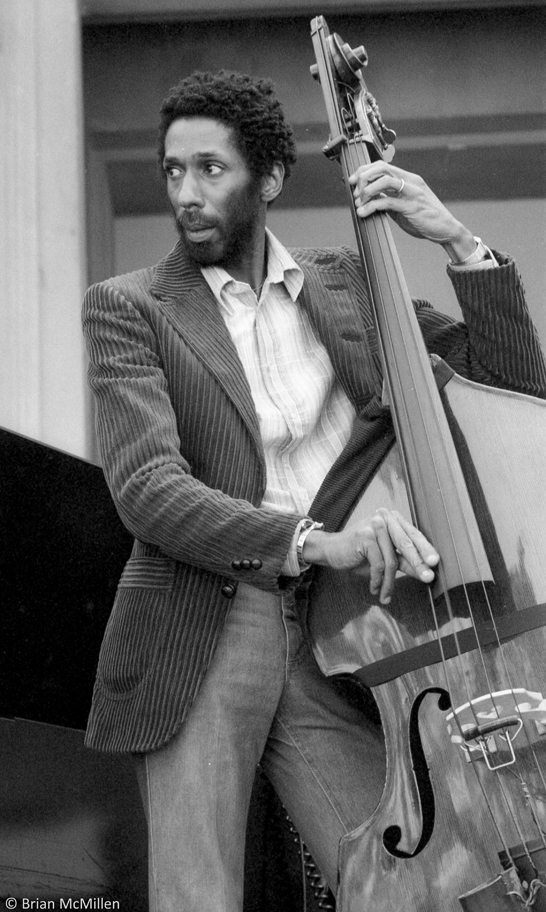
Ron Carter
American double bassistWikipedia
78
MENTIONS
46
EPISODES
37
PODCASTS
Search complete. 78 mentions across 46 episodes found for "Ron Carter".
Sep 17, 2026

Jonathan RomneyGUEST
Not in competition, there's another interesting film by the veteran director, Fernando Treba, called Bajani, which is a music documentary about connections between Roma musical culture, Latin America, and jazz.
Jonathan RomneyGUEST
So it's got major names like Ron Carter, Salsa, Megastar, Ruben Blades, the Brazilian singer Marisa Monte.
Jonathan RomneyGUEST
And then you've got, you know, other names in there, major names like...
Jonathan RomneyGUEST
Pablo Larraín has a horror series which is going to be shown as a film there based on the short stories of that very, very unnerving Latin American writer, Mariana Enriquez, who's very much kind of cult name these days.

Ken SokolovGUEST
And it was funny.
Ken SokolovGUEST
So one story, I saw Ron Carter.
Jake FeinbergHOST
Oh, boy.
Ken SokolovGUEST
Quartet.

Fabio RojasHOST
Um, and then, like, in the hard bop era, in the post-bop era, like, that would be the '60s, the same thing.
Fabio RojasHOST
It's like he didn't invent hard bop or post-bop or these genres, but basically it's like, "Who can I get that will sound really amazing doing this?" Wayne Shorter, Tony Williams, Ron Carter, right? And that's why those things sound so modern, 'cause they were experimenting too, and he pulls them in and says, "I'm gonna work in this genre.
Fabio RojasHOST
Make it sound good." And then when things were free in the '60s with the Bitches Brew and some of these other albums, same idea.
Fabio RojasHOST
Just like he didn't s- invent free jazz, but he finds somebody and he finds compositions that make it work for him.

Branford MarsalisGUEST
I, I, uh, when we joined Wynton's band, one of the things we wanted to do was, it was a two-tiered thing.
Branford MarsalisGUEST
We were really checking out, uh, the harmonic information and the musical stuff that the Miles Davis group with Herbie Hancock, Tony Williams, and Ron Carter was doing.
Branford MarsalisGUEST
And Tain and I said, "Well, we need to really learn how to play this music." But so the foundational basis of the music harmonically would be that Miles Davis band, but sonically, it would be the Coltrane band.
Branford MarsalisGUEST
And that was the thing we wanted to do, was to play all of this really, really, you know, kinda complicated, different things that they were dealing with but attack the music in a very different way so it feels less cerebral.

KilHOST
Yeah.
KilHOST
And I think it too was, like, it was, like, finding because I remember just being, like, buying a whole bunch of Ron Carter.
KilHOST
Like, I would just be buying any Charles Mingus.
KilHOST
Let me just buy all these jazz bass line.
23 MINS LATER
VaguePANELIST
Yeah.
KilHOST
"Here they come, y'all.
KilHOST
Here they come." And, um, that was a McCoy Tyner sample, but the legendary Ron Carter was on the bass on that joint.
KilHOST
You know what I mean? Um-

Ben AllisonGUEST
And it was just a few months later that I'd moved to New York, um, to go to NYU.
Ben AllisonGUEST
And my first day in New York I went, I left the dorm and walked down half a block to a restaurant for one of those piano and bass duo gigs I mentioned before, and there was Ron Carter and Kenny Barron.
Jay SweetHOST
Okay.
Ben AllisonGUEST
And I got to sit right next to Ron Carter for all night long and watch him and talk to him and understand how he was doing it.
Ben AllisonGUEST
And so, you know, the, it, it wasn't that hard to find cats.
Ben AllisonGUEST
I mean, that's the thing about the music.
Ben AllisonGUEST
But I mean, back then you could just walk up to somebody who was a legend of the music 'cause they were accessible.
Jay SweetHOST
Yeah.

GeoffHOST
so Thank you.
GeoffHOST
the album prelude which has some brilliant musicians on it that was uh john trapea doing the guitar solo there and we also have people like billy cobham ray barretto ron carter air 2 all playing on it as well as diodato of course who looks about 15 on the cover that was diodato and september 13 very appropriate for today and thanks to g mateus for the inspiration behind that one Now, let's do some shout outs at some of our regular listeners.
GeoffHOST
It's always great to have everyone locked in, like Mike Barker over there in Utah.
GeoffHOST
There's Nick Mulligan in Philly, the aforementioned G. Mateus in Brooklyn, Kula Baker in the Bay Area.

Bobby BroomHOST
The tune was Stop Start.
Bobby BroomHOST
It featured Wayne Shorter's tenor saxophone, Bobby Hutchison at the vibraphone, Herbie Hancock piano, Ron Carter bass, and Billy Higgins at the drums.
Bobby BroomHOST
Now here's Sherelle Cassidy.
Bobby BroomHOST
Thank you.

Eric LeedsGUEST
And I immediately have to maybe, maybe immediately said, Oh shit.
Eric LeedsGUEST
Well, that's what miles used to say to Wayne shorter, Herbie Hancock, Ron Carter, Tony Williams.
Eric LeedsGUEST
Don't play what you know, play what you don't know.
Eric LeedsGUEST
I want you to guide, you know, I want, I want that sense of discovery.

Uncle DandyGUEST
So someone specifically asked me, okay, where should I start? What's some recommendations? And my question is, what do you listen to now? If you're hip hop, okay, like you said, Drive Called Quest, I'm going to go and take you to who they sample.
Uncle DandyGUEST
I'm going to give you some Ron Carter.
Uncle DandyGUEST
I'm going to, if you're more of... a pop music, then I'm probably going to go with some jazz standards and go like the fifties and sixties, some Nat King Cole, some Frank Sinatra, Tony Bennett, that type of thing.
Uncle DandyGUEST
Um, now if you're into something that's, um, more ambient music and you like mellow stuff like that, then, Hey, I'm going to take you over to the spiritual jazz and let you, like you said, you got some 10 and 12 minute songs, some Pharaoh Sanders, some Dorothy Ashby on the harp, um, I'm going to let you listen to these songs and it is complicated as the compositions are.
36 more episodes mention Ron Carter.
Create an account to see the whole feed, search across every transcript, and follow the entities you care about.