Rome Statute
96
MENTIONS
44
EPISODES
41
PODCASTS
Search complete. 96 mentions across 44 episodes found for "Rome Statute".
Oct 27, 2026

Imogen FoulkesHOST
Are there other reasons, do you think, are there other reasons than fear that U.S. service members might be prosecuted?
James GoldstoneGUEST
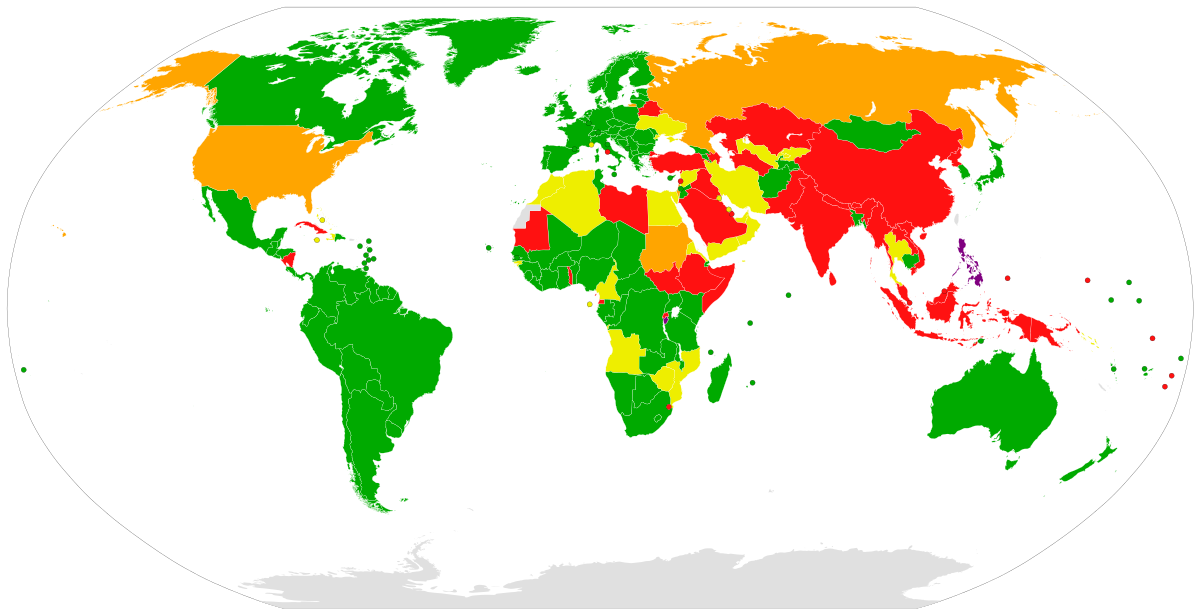
Well, one of the arguments that has been made is that the Trump administration objects to the ICC investigating citizens of countries that have not ratified the Rome Statute, which would include both Israel and the United States.
James GoldstoneGUEST
But there are a couple of problems there.
James GoldstoneGUEST
One is that the United States Congress almost unanimously recently supported, endorsed the ICC's actions against Vladimir Putin, who of course is the head of state of another country, Russia, that has not ratified the Rome Statute.
James GoldstoneGUEST
So there seems a great inconsistency there.
Imogen FoulkesHOST
So why really is the US position on the ICC so tough? Richard Goldberg's right-leaning Foundation for Defence of Democracies supports the US strategy.
Richard GoldbergGUEST
Obviously, they still participate in the court.
Richard GoldbergGUEST
We do not.

Navi PillayGUEST
We don't have a perfect system at all, Jeremy.
Navi PillayGUEST
We will have what one can call a universal permanent world court if all the states sign up to the Rome Statute.
Navi PillayGUEST
And they haven't.
Navi PillayGUEST
Big countries, in fact, three of the veto-holding states, that's Russia, China and the United States, are not parties.
7 MINS LATER
Jeremy MaggsHOST
What would you say directly to political leaders, Judge Pele, who believe they are above international law?
Navi PillayGUEST
I would say you passed these laws.
Navi PillayGUEST
You passed the Rome Statute.
Navi PillayGUEST
You passed the Convention Against Torture, very many treaties, the Conventions on Civil and Political Rights for everyone in the world, the Convention on Economic, Social and Cultural Rights.
Navi PillayGUEST
We don't have a perfect system at all, Jeremy.
Navi PillayGUEST
We will have what one can call a universal permanent world court if all the states sign up to the Rome Statute.
Navi PillayGUEST
And they haven't.
Navi PillayGUEST
Big countries, in fact, three of the veto-holding states, that's Russia, China and the United States, are not parties.
6 MINS LATER
Navi PillayGUEST
So more collective action from governments, and they will find that people on the streets are very ready to support them in stronger action against one or two countries trying to destroy the multilateral system, trying to destroy the international rule of law.
Jeremy MaggsHOST
What would you say directly to political leaders, Judge Pele, who believe they are above international law?
Navi PillayGUEST
I would say you passed these laws, you passed the Rome Statute, you passed the Convention against Torture, very many treaties, the Conventions on Civil and Political Rights for everyone in the world, the Convention on Economic, Social and Cultural Rights.
Navi PillayGUEST
Who passed these laws, these international laws? It was states.

Rowan DeanHOST
All three are also the direct result of federal governments, Liberal and Labor, disgracefully signing Australia up to idiotic international treaties when they should have known better.
Rowan DeanHOST
The Declaration of Human Rights, the Paris Climate Agreement and the Rome Statute.
Rowan DeanHOST
In my opinion, all three have proven to be an unmitigated disaster for Australia and have wreaked havoc on individual Australian lives.
Rowan DeanHOST
Without getting lost in the legal weeds, I'm not a lawyer.
Rowan DeanHOST
If we'd never signed up to that climate change nonsense in the first place, in my opinion, nearly every single Australian would today be far more relaxed, far more comfortable, and much, much wealthier.
Rowan DeanHOST
and Ben Robert Smith.
Rowan DeanHOST
Well, there the original sin was when Australia, under the Howard government, adopted the Rome Statute into Australian law to ensure that domestic laws were compatible with international standards.
Rowan DeanHOST
But this required that Australian military law be compatible with the International Criminal Court, the ICC.

Dirk GotinkGUEST
And that is something that I think we need to be very careful with.
Dirk GotinkGUEST
I don't think we should allow diplomatic efforts to change the Statute of Rome.
Dirk GotinkGUEST
We can talk about a lot of things, but actually rewriting the Statute of Rome would be a huge capitulation against this idea that somehow there are good and bad crimes against humanity, which I believe, I think we as Europeans, at least we can disagree with.
Sarah WheatonHOST
And the Statute of Rome is the treaty that set up the ICC.
Dirk GotinkGUEST
Yeah.
Sarah WheatonHOST
So, I mean, going back to what you just said, it struck me, you know, a Hague Invasion Act, that's a lot for one country to potentially take on.
10 MINS LATER
Dirk GotinkGUEST
because they can actually turn off the light here.
Dirk GotinkGUEST
Apart from that, like I said, my reading is that their goal is to make sure that the jurisdiction is limited to only signatory countries.

Rudy MartinezHOST
Rubio has argued that the court threatens American sovereignty.
Rudy MartinezHOST
Neither the United States nor Israel is a party to the Rome Statute, the treaty that created it.
Rudy MartinezHOST
EU institutions have condemned each round of U.S. measures.
Rudy MartinezHOST
In July, the 27 member states issued a declaration of support that did not name the United States.

speaker_4NARRATOR
They wanted a court that would ensure never again meant something.
speaker_4NARRATOR
The Rome Statute entered into force in 2002.
speaker_4NARRATOR
The International Criminal Court opened its doors.
speaker_4NARRATOR
And Africa celebrated.
speaker_4NARRATOR
But it marked a turning point, the moment when the AU began to openly challenge the court it had once championed.
speaker_4NARRATOR
In 2016, the frustration reached a boiling point.
speaker_4NARRATOR
South Africa announced it would withdraw from the Rome Statute.
speaker_4NARRATOR
The government argued that its obligations under the Rome Statute conflicted with its domestic laws and that it could not enforce ICC warrants without violating its own constitution.

Navi PillayGUEST
because the principle is to end impunity for these very serious, poor crimes.
Navi PillayGUEST
But unfortunately, powerful states have not signed up to the Rome Statute.
Navi PillayGUEST
Two of them hold veto power to protect themselves.
Navi PillayGUEST
in the Security Council, and that's Russia and the United States as well as China.
23 MINS LATER
Navi PillayGUEST
We need more delivery and implementation, but We suspect that political considerations, national or regional interests come into play.
Navi PillayGUEST
In some cases, there's also intimidation on small governments by powerful governments not to cooperate with the court.
Navi PillayGUEST
I was told that in many cases, India, for instance, Sri Lanka, when I was a judge on the International Criminal Court, we went to speak with governments to urge them to sign the Rome Statute.
Navi PillayGUEST
The only way that court, the ICC, can be successful, truly successful, is when it's truly universally recognized.

Diane Marie AmannGUEST
Furthermore, it will come as no surprise that conduct amounting to one of these six grave violations against children also may be a crime under international law.
Diane Marie AmannGUEST
Prosecutors, of course, must deduce evidence as required by the law that governs them, whether it be the Rome Statute of the International Criminal Court, the charter of an internationalized or hybrid tribunal, or the duly enacted provision of a national penal code.
Diane Marie AmannGUEST
Okay.
Diane Marie AmannGUEST
If prosecutors do meet that legal burden, proof of recruitment or use, of killing or maiming, of sexual violence, of attacks on schools or hospitals, of denial of humanitarian access, or of abduction, could support convictions in one or more categories of international crimes against and affecting children.

Nuala McGovernHOST
they've given.
Nuala McGovernHOST
But of course, the United States does not sign up to the ICC part of that Rome statute, particularly under Donald Trump, who has described how he sees the court.
Nuala McGovernHOST
These moves were announced just shortly after you had been awarded the prize Donald Trump expressed dissatisfaction with your win How do you interpret his words and the timing?
Navi PillayGUEST
I think there's some significance in the timing.
Navi PillayGUEST
We held the inquiry.
Navi PillayGUEST
In actual fact, those inquiries and investigations should have been held by Israel.
Navi PillayGUEST
That's what the Rome Statute says, that prior responsibility to investigate these crimes falls on the state concerned.
Navi PillayGUEST
I should inform you that I'm still serving as a judge ad hoc in this court where I am now, which is the International Court of Justice in The Hague.
34 more episodes mention Rome Statute.
Create an account to see the whole feed, search across every transcript, and follow the entities you care about.