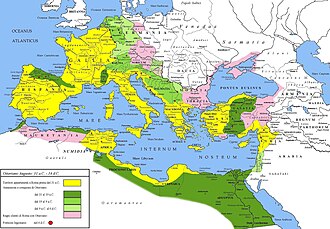
Roman province
8
MENTIONS
3
EPISODES
3
PODCASTS
Search complete. 8 mentions across 3 episodes found for "Roman province".
Nov 1, 2026

JordanHOST
And they land in the province of Pamphylia.
JordanHOST
Roman province of Pamphylia.
JordanHOST
And their first stop is the city of Perga or Pergia.
JordanHOST
Depending on how you see that rendered.
11 MINS LATER
JordanHOST
So a church was established.
JordanHOST
Now, we have to understand, where is Antioch? Antioch's right there in central Asia Minor, modern-day Turkey.
JordanHOST
Do you know what province, Roman province, Antioch is in? Galatia.
JordanHOST
You know, when Paul had to write a letter to some people, he wrote to the Galatians.

Andy StanleyHOST
In fact, the apostle Paul, who was a Pharisee who thought that this is not good news at all, became a Jesus follower and was like, oh my goodness, it's even better than I expected.
Andy StanleyHOST
The apostle Paul writes a letter to Christians living in Galatia, the Roman province of Galatia, And in that letter, if you've read the book of Galatians, it's in your New Testament.
Andy StanleyHOST
The entire book of Galatians, for the most part, is his defense of the goodness of the good news.
Andy StanleyHOST
Because Paul understood better than anyone because of what he was and what he became.
10 MINS LATER
Andy StanleyHOST
And once upon a time, and I'm done, once upon a time, once upon a time.
Andy StanleyHOST
That was the message that the church exported to the world.
Andy StanleyHOST
That's why Christianity, the message of Jesus, survived the first century, the second century, and the third century before eventually Rome capitulated and declared our king the king of kings, which was no small feat for the Roman Empire.
Andy StanleyHOST
That's what was exported to the world, the grace, the mercy, and the love of God for the entire world.

ScottHOST
And by the way, this is not a controversial, this is a very, um, uh, mainstream historical take, uh, f- through secular, secular anthropology.
ScottHOST
At the time of the destruction of the First Temple, uh, there was an exodus of Jews who'd, or, or Israelites I should say, who left, um, the, the Levant/Palestine, uh, to, i- because the, because of the Babylonian conquest, and they simply went west to, uh, cities that would had been constructed by the Phoenicians, such as Carthage, um, uh, what's it called? And then, and then also the, the Phoenicians had penetrated into what would b- later be known as Hispaniol or, um, Hispania, uh, w- the, uh, the, the Roman province.
ScottHOST
They would eventually be taken over by the Romans.
ScottHOST
But during this entire time, there was a m- migration of Semitic peoples, other Semitic peoples, 'cause again, the, uh, the Phoenicians also were Semitic.
ScottHOST
But, uh, into that area, who maintained their, uh, Israelite Jewish, air quotes, uh, identity.
21 MINS LATER
ScottHOST
Now, what is interesting is that, uh, when he moved both to, uh, Portugal first and then Spain in order to pursue, uh, his, uh, goal of exploring westward from Europe, uh, he immediately took on the name, the name Colon.
ScottHOST
Now, Colon is an inco- extremely common Morano Converso name in Spain and Portugal, and is also just a straight up Italian Jewish name in Italy.
ScottHOST
Um, so just for guys, if you didn't know this, the city of Cologne, C-O-L-O-G-N-E, in Germany, southern Germany, was originally called, uh, in the first century AD was called, uh, Colonia Agrippina, uh, which is in Latin, of course, and it was the Jer- uh, the Roman Empire's, um, city of Colo- uh, Co- the Co- Colonia.