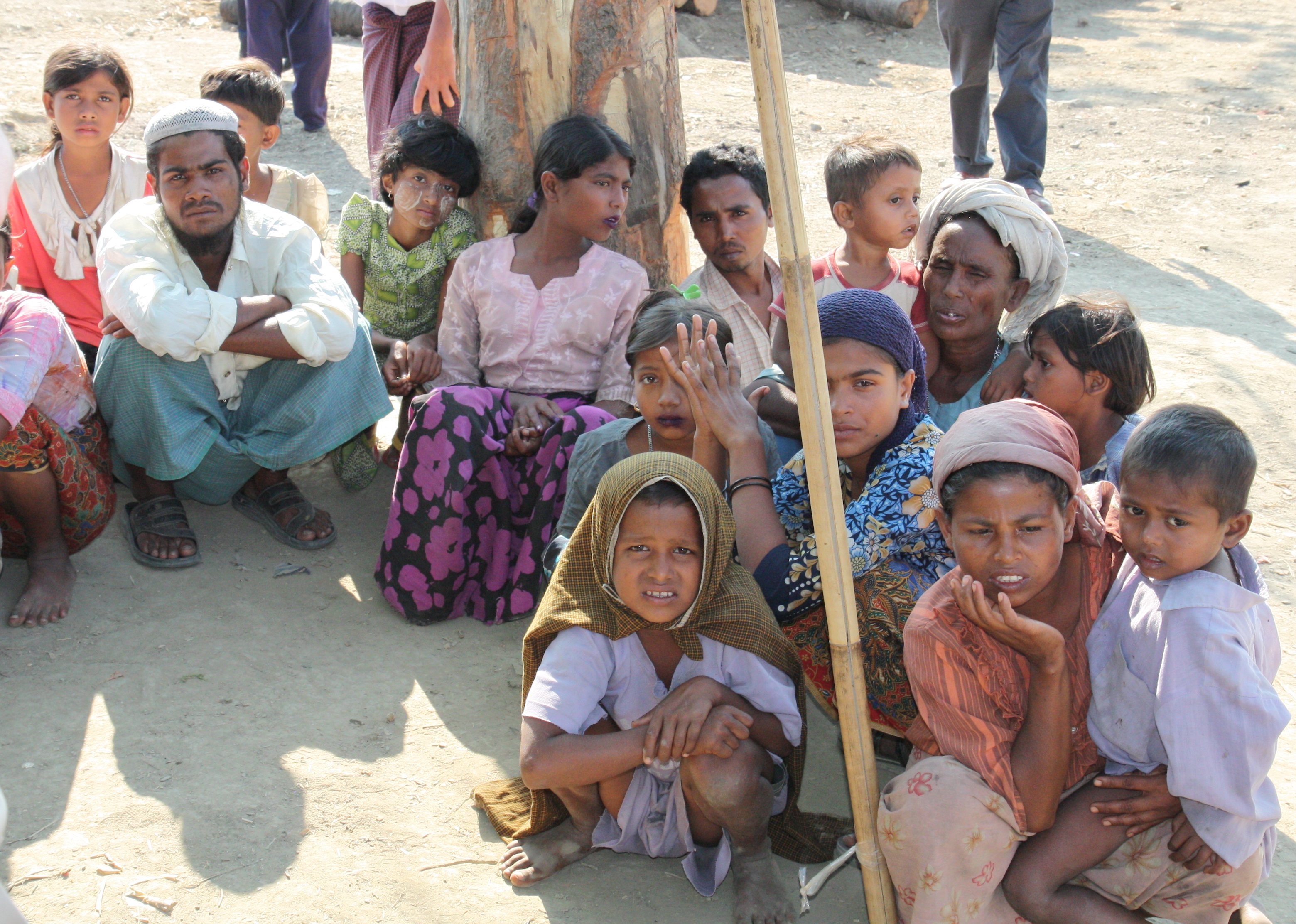
Rohingya people

Rohingya people

Ethnolinguistic groupWikipedia

Search complete. 652 mentions across 107 episodes found for "Rohingya people".

Sep 11, 2026

Muhammad JalalHOST
2:18
Um, I wanna talk about the internal issues, the primaries currently, uh, in America, in particular, uh, the rise of the Democratic socialists and, and sort of the anti-Zionist position within the Democrats.
Muhammad JalalHOST
2:32
Uh, I've got some questions about, uh, Syria and, and UAE, and, uh, I also wanna talk at the end about your trip to Bangladesh, which alhamdulillah, I think you've just returned, and, uh, your experience of the refugees in, the Rohingya refugees in particular, uh, in Bangladesh.
Muhammad JalalHOST
2:50
But let's start with the Mecca Agreement.
Muhammad JalalHOST
2:53
So on August the 7th, Saudi Arabia, Turkey, and Pakistan signed the Mecca Joint Defense Agreement, uh, a mutual defense pact modeled on NATO's Article 5, where an attack on one is supposedly treated as an attack on all.

22 MINS LATER

Muhammad JalalHOST
24:39
Yeah.
Sami HamdiGUEST
24:39
But Malaysia and Bangladesh, who need finances, who have their own issues They may suggest to the Mecca Alliance that instead of it being a defensive pact, we can offer something to the Saudis or to the Turks that will make this Mecca Alliance PR-wise look like it is actually something great in the eyes of those who are talking about it.
Sami HamdiGUEST
25:00
For example, you have the Rohingya crisis taking place where the Arakan Army in Rakhine has almost taken over all of Rakhine.
Sami HamdiGUEST
25:06
They are fighting the Myanmar army.
speaker_1ADVERTISER
0:29
Visit abc.net.au/top100books to cast your vote.
Laura TingleHOST
0:37
[tense music] It's been nine years since the Myanmar refugee crisis saw over a million Rohingya Muslims flee their home for neighboring Bangladesh.
Latika BourkeHOST
0:45
Now Bangladesh wants to send them back, but as Myanmar's civil war rages on, there is no haven for the Rohingyas.
Laura TingleHOST
0:53
Instead, they're stuck between a rebel militia and a military junta.
Laura TingleHOST
0:57
I'm Laura Tingle.
Latika BourkeHOST
1:01
[tense music] Laura, this episode we're going to study a conflict that is lesser studied, I think, in the global news media, and this is one that has been going on for some time, but surged again at the start of the pandemic.
Latika BourkeHOST
1:30
And I do wonder if maybe that's one of the many reasons why the world has not been able to pay as much attention to this conflict, and certainly not the level of attention that is warranted given the horrific crimes that are going on in Myanmar.
Laura TingleHOST
1:48
I think that's possibly one of the complex reasons, Latika, that Myanmar civil war is just sort of just one, one step too many, it seems, for us to actually be able to absorb and work out what we can do about it, but it's now nine years, uh, as of the end of August, since, um, the 2017, uh, push by, uh, Myanmar to throw a lot of Rohingya out of the country.
AneggaGUEST
101:26
Yeah
Joah McGeeHOST
101:26
... very well, but she did make certain very controversial decisions around the Rohingya, around her decision to go to ICJ and defend-
AneggaGUEST
101:36
Yeah
Joah McGeeHOST
101:36
...
Joah McGeeHOST
101:36
the military and, uh, and some of her personal views on the Rohingya, as well as...
Joah McGeeHOST
101:42
And I'm, I'm not sure how political we wanna get or how much, um, you were, y- you were, uh, looking at things through a political lens.
Joah McGeeHOST
101:48
But, um, you know, we, we've spoken to many, um, democracy, uh, academics and journalists who've looked at, uh, her administration through the prism of that.
AneggaGUEST
103:25
Because I also dig a lot of like how is the words came out, the words using ethnic cleansing.
Edward BlakeneyGUEST
9:29
... it's a major genera- generational issue, for sure.
Ravi VelloorHOST
9:32
Do you know, I mean, is it fair to say that there are possibly three types of Myanmar refugees? You know, f- I mean, we should talk about the Rohingya, the, uh, people from the Rakhine who fled, uh, uh, e- even much earlier than, uh-
Edward BlakeneyGUEST
9:47
Yes
Ravi VelloorHOST
9:47
... uh, the coup, right? And then there are the people who came after the coup, and, uh, lately the ...

10 MINS LATER

Ravi VelloorHOST
20:01
Right.
Ravi VelloorHOST
20:01
We'll, we'll come back to resilience in a second.
Ravi VelloorHOST
20:05
But Ted, could you talk a little bit about the people who have fled the Rakhine, the Rohingya? Uh, you know, w- these days when there is talk about the refugees, too much, uh, focus is, uh, placed on people who come across to Thailand and to Southeast Asia and all that.
Ravi VelloorHOST
20:22
But the Rohingya in Bangladesh particularly, they've been around for even much more longer.
Ravi VelloorHOST
9:32
I mean, is it fair to say that there are possibly three types of Myanmar refugees.
Ravi VelloorHOST
9:38
I mean, we should talk about the Rohingya, the people from the Rakhine who fled even much earlier than the coup, right? And then there are the people who came after the coup.
Ravi VelloorHOST
9:51
And lately, I'm told there are young men who are trying to escape from being conscripted in the army.
Ravi VelloorHOST
9:58
So that makes for at least three categories of people.

10 MINS LATER

Ravi VelloorHOST
20:01
right.
Ravi VelloorHOST
20:02
We'll come back to resilience in a second.
Ravi VelloorHOST
20:05
But Ted, could you talk a little bit about the people who have fled the Rakhine, the Rohingya? These days when there is talk about the refugees, too much focus is placed on people who come across to Thailand and to Southeast Asia and all that.
Ravi VelloorHOST
20:22
But the Rohingya in Bangladesh particularly, they've been around for even much more longer.
ShahnazGUEST
49:53
So I am ...
ShahnazGUEST
49:54
Yeah, so for our daughters, uh, we are looking for what to give them those beautiful memories and let them know that we are proud Canadian Rohingyas, and, uh, also let them enjoy their own life.
Nahlah AyedHOST
50:14
What a beautiful gift.
ShahnazGUEST
50:15
Yeah.
Geraldine DoogueHOST
28:10
Uh, thank you to producer Aston Brown, supervising producer Pat Sunderland, and executive producer Laura McAuliffe.
Geraldine DoogueHOST
28:16
Latika and Laura Tingle will be back with you tomorrow, and they're looking at the Myanmar civil war and the Rohingya refugee crisis.
Geraldine DoogueHOST
28:26
You can't look at that enough.
Geraldine DoogueHOST
28:27
Nick, I hope you've enjoyed yourself.
Geoffrey HowardGUEST
37:40
I, I think that these duties are, are central to moral life, and there's no reason to think that corporate agents are immune to these, these particular duties.
Geoffrey HowardGUEST
37:47
So I think the, the one really obvious reason why, uh, say, Meta or then Facebook had a moral obligation to, uh, intervene to take down content inciting genocide against the Rohingya ethnic group in Myanmar is 'cause it was exceptionally well-placed to do it.
Geoffrey HowardGUEST
38:03
It was the actor in the right place at the right time.
Geoffrey HowardGUEST
38:06
Now, that, that's a quite minimal responsibility.
Jagruti DaveCORRESPONDENT
13:34
The theme of UNGA's 81st session is restoring trust, managing transformation, a United Nations that delivers for all.
Jagruti DaveCORRESPONDENT
13:42
The theme was selected by the assembly's new president, Khalilur Rahman, Bangladesh's foreign minister and a seasoned diplomat who's previously served as Bangladesh's high representative for the Rohingya issue.
Jagruti DaveCORRESPONDENT
13:54
Rahman outlined his six priorities for the year ahead, which include strengthening peace and security and accelerating sustainable development.
Jagruti DaveCORRESPONDENT
14:03
But underpinning all that, he said, is restoring trust in multilateralism.
Nabeel AhmadGUEST
8:35
I had many Spanish speakers, people from the Congo.
Nabeel AhmadGUEST
8:38
I had the Rohingya from Myanmar.
Nabeel AhmadGUEST
8:40
I had a lot of Iraqis.
Nabeel AhmadGUEST
8:41
And so, like, you know, it was a lot of variety of languages.

97 more episodes mention Rohingya people.

Create an account to see the whole feed, search across every transcript, and follow the entities you care about.

We value your privacy

We use cookies to understand how you use our platform and to improve your experience. Click “Accept All” to consent, or “Decline non-essential” to opt out of non-essential cookies. Read our Privacy Policy.