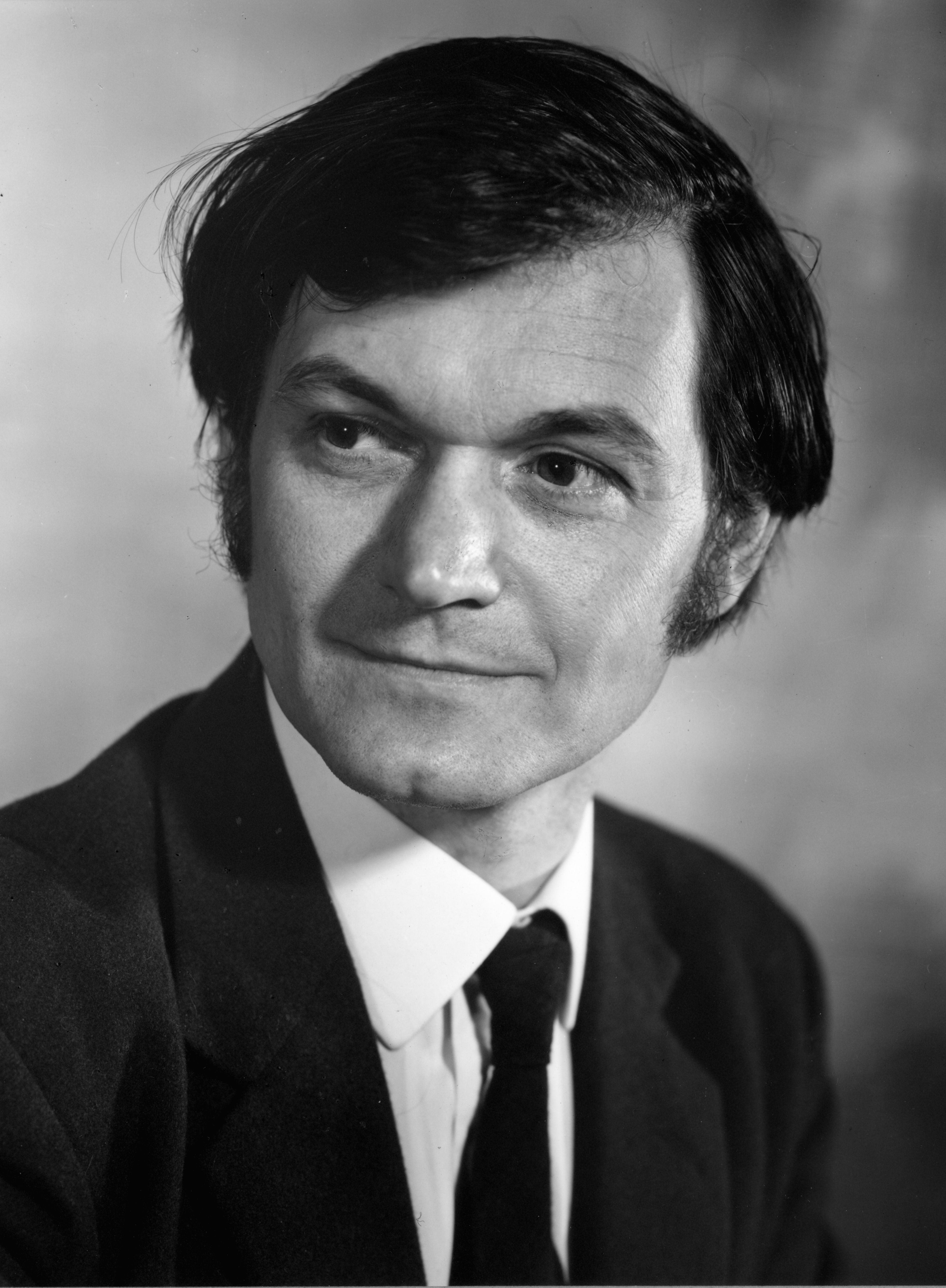
Roger Penrose
MathematicianWikipedia
146
MENTIONS
63
EPISODES
55
PODCASTS
Search complete. 146 mentions across 63 episodes found for "Roger Penrose".
Sep 23, 2026

Matthew James BaileyGUEST
So intelligence requires consciousness, which AI does not have.
Matthew James BaileyGUEST
And if we go to the likes of Sir Roger Penrose, who is a Nobel laureate from Oxford University, he taught Stephen Hawking and mentored Stephen Hawking.
Matthew James BaileyGUEST
He absolutely agrees with this approach, that consciousness is fundamental and therefore AI is not an intelligence.
Matthew James BaileyGUEST
It's a form of, he calls it cleverness.

Paul M. SutterHOST
Rotation is compulsory, and we can use this to our advantage, as soon as we get back from this commercial break.
Paul M. SutterHOST
In 1969, Roger Penrose was thinking about what physics you could actually do inside the ergosphere, and he realized something remarkable.
Paul M. SutterHOST
Because objects in there are forced to co-rotate with the black hole, and because that forced co-rotation carries energy, you can in principle extract some of that energy and take it with you.
Paul M. SutterHOST
Here's all you have to do.
Paul M. SutterHOST
All we need is a black hole and some empty pizza boxes and we're done.
Paul M. SutterHOST
Now, I mean, don't get too excited, there isn't-- this isn't exactly an efficient process.
Paul M. SutterHOST
A single Penrose event is fantastically inefficient.
Paul M. SutterHOST
Real analyses show you'd extract only a percent or two per go of the energy of the object you kick, of your payload.

Paul M. SutterHOST
It's the three hundred sixty-five days of astronomy podcast coming in three, two, one.
Paul M. SutterHOST
[rock music] In nineteen sixty-nine, Roger Penrose, yes, that Penrose, the one who'd later win a Nobel Prize, worked out a way to steal energy from a black hole.
Paul M. SutterHOST
It's easy.
Paul M. SutterHOST
You fly a spacecraft close to a spinning black hole, drop a payload at just the right angle, and you come back with more energy than you started with.
19 MINS LATER
Paul M. SutterHOST
There is quite literally no such thing as stationary inside the ergosphere.
Paul M. SutterHOST
Rotation is compulsory, and we can use this to our advantage.
Paul M. SutterHOST
In 1969, Roger Penrose was thinking about what physics you could actually do inside the ergosphere, and he realized something remarkable.
Paul M. SutterHOST
Because objects in there are forced to co-rotate with the black hole, and because that forced co-rotation carries energy, you can in principle extract some of that energy and take it with you.

Avshalom ElitzurGUEST
It works, so don't ask questions.
Avshalom ElitzurGUEST
A minority of, of, uh, physicists like Roger Penrose or my mentor, Yakir Aharonov, who is now, uh, 94 and still-
Michael ShermerHOST
Mm
Avshalom ElitzurGUEST
... very active and extremely prolific-
Avshalom ElitzurGUEST
Well, here probably it is not correct.
Avshalom ElitzurGUEST
There should be a very tiny...
Avshalom ElitzurGUEST
This is Roger Penrose's idea.
Michael ShermerHOST
Mm-hmm.

speaker_4HOST
Jordano suggests that some individuals possess neurological architecture tuned to perceive incredibly subtle environmental cues that the rest of us just filter out.
speaker_5HOST
This ties into quantum biology and theories like orchestrated objective reduction, which was proposed by Roger Penrose and Stuart Hameroff.
speaker_4HOST
Oh, I've heard of that.
speaker_4HOST
That argues that microscopic structures inside our neurons called microtubules maintain quantum coherence, right?

Sebastian HassingerHOST
He is a fellow of the Royal Society, a CBE, a recipient of the Institute of Physics Dirac Gold Medal, and a lead author of the IPCC.
Sebastian HassingerHOST
He did his PhD in general relativity at Oxford, partly under Roger Penrose.
Sebastian HassingerHOST
He then spent most of his career at the UK Met Office and the European Centre for Medium-Range Weather Forecasts, where he pioneered the probabilistic ensemble forecasting methods that are now standard in operational weather prediction worldwide.
Sebastian HassingerHOST
That is a lot of biography, and I mention it very much on purpose because I think it's particularly relevant here.
5 MINS LATER
Tim PalmerGUEST
Um, you know, maybe I should just take a few seconds to just talk a little bit about my background.
Tim PalmerGUEST
Um, I, you know, you can probably tell from my accent I'm from the UK.
Tim PalmerGUEST
I did my PhD at, at Oxford in general relativity theory, actually, um, under a cosmologist called Dennis Sciama and, uh, and also under Roger Penrose, who you probably have heard about.
Tim PalmerGUEST
Um, and, uh, uh, you know, I guess I started to get, um...

EricAUDIENCE
It's just a branching situation that kind of holds the structure of the cell.
EricAUDIENCE
And the two guys that came up with that theory was Roger Penrose, Sir Roger Penrose, who holds the seat at Oxford in physics, and Stuart Hammerhoff, who was an anesthesiologist.
EricAUDIENCE
And the concept about it is that...
EricAUDIENCE
Roger Penrose is saying that this is a non-materialistic view because consciousness doesn't arrive as an emergent property from a number of calculations.
EricAUDIENCE
You can't just do a whole bunch of calculations and have consciousness pop up out of that.
EricAUDIENCE
And if that was the case, we already have computers that can compute more than humans can now and still haven't developed any consciousness at all.
EricAUDIENCE
And so Roger Penrose has always maintained that consciousness is a non-computational thing.
EricAUDIENCE
It has to come from someplace else.

John LennoxGUEST
And when it was discovered, his reaction was nothing shook my atheism like that discovery.
John LennoxGUEST
Now Sir Roger Penrose is one of the most brilliant mathematicians in the world, worked with Stephen Hawking and so on.
John LennoxGUEST
And he has an analogy in his book where he says, if you want a universe with the second law of thermodynamics, where even your Cadillac will rust, everything is running down.
John LennoxGUEST
The Creator's aim, and those are His words.

Gurumurthy SwaminathanGUEST
And the theory is that when that heat reduces, it'll come back and settle in that point one million, one, one one-millionth of the atom.
Gurumurthy SwaminathanGUEST
In fact, Roger Penrose, another Nob-Nobel laureate who got the prize in 2020, he said, "No, it will not come back.
Gurumurthy SwaminathanGUEST
It'll go like this and again rebegin." That is the latest theory, which is almost equal to what we are conceptualizing.
Gurumurthy SwaminathanGUEST
Now I am going to tell you what the AI says about this.
8 MINS LATER
Gurumurthy SwaminathanGUEST
Nobody looks into the-- a helicopter view Because everybody is interested only in mechanics.
Gurumurthy SwaminathanGUEST
They want to translate the whole philosophy into mathematical formula.
Gurumurthy SwaminathanGUEST
In fact, Roger Penrose says, "A preexisting universal cal-- ca-- uh, consciousness which cannot be reduced into mathematical formula is the origin of the universe." Now, the intersection of truth.
Gurumurthy SwaminathanGUEST
The alignment between these two tracks of human thought is striking.

Mark BoothGUEST
He had to be patient and wait till they reached their fullest, most elaborate form.
Mark BoothGUEST
And Roger Penrose, who was Stephen Hawking's best pal with him, you know, made great advances in understanding black holes.
Mark BoothGUEST
He is another of these mathematics driven physicists and he described, he has the same experiences as Dirac and he describes these mathematical patterns coming to him as being like an explorer coming across a range of mountains that no one has ever seen before.
Mark BoothGUEST
So that pattern has existed before humans discovered it.
Mark BoothGUEST
It's perhaps existed before the creation of the material universe.
Mark BoothGUEST
And Penrose would see, I mean, the esoteric way of looking at this would be to see that these evolving patterns are thought beings.
Mark BoothGUEST
And that a thought being swims into the mental space of Roger Penrose.
Mark BoothGUEST
And his job is to kind of throw a net over it and pull it into the human realm and when he does that he's doing the same thing that great religious leaders and saints and mystics and artists have done through the ages he is to use your phrase downloading something for the human spirit something to make our lives more wonderful And I think, you know, it's interesting to speculate.
53 more episodes mention Roger Penrose.
Create an account to see the whole feed, search across every transcript, and follow the entities you care about.