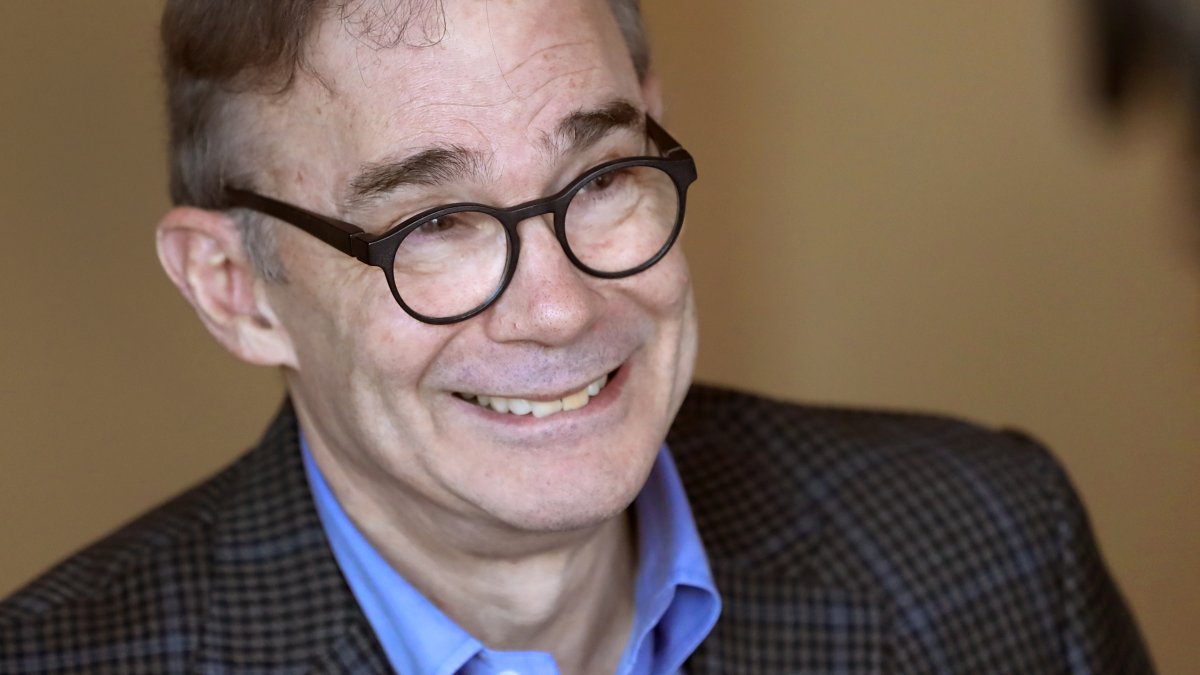
Roger Berkowitz
Fishmonger and former CEO of Legal Sea Foods
4
APPEARANCES
3
PODCASTS
Sep 9, 2026


Roger BerkowitzGUEST
Why not? Because Logan had a reputation at that time, food-wise, was mediocre.
Roger BerkowitzGUEST
But the people at Logan really wanted illegal seafoods, so they kept on bugging Roger about it.
8 MINS LATER

Ian CossHOST
At least in the U.S. context, 9-11 really was the turning point in terms of airports becoming more of a dining, shopping destination.


Roger BerkowitzGUEST
So Adolf Eichmann had been a lower middle class, you know, salesman, uh, in, in Austria.
Roger BerkowitzGUEST
He was trying to join something because he feel, felt like he needed to join something to give his life meaning.
Roger BerkowitzGUEST
He almost did, and then a friend of his said, "Why don't you come and join this new thing that's happening called the National Socialist Party?" And he did.
Roger BerkowitzGUEST
He originally was put in charge of, um, of, of Freemasons and other things and then became the head of the Jewish, uh, section.
8 MINS LATER
speaker_8UNKNOWN
Mm-hmm.


Mike CosperHOST
What is a revolutionary movement, and what makes you think that Trump is the leader of one?
Roger BerkowitzGUEST
He is the leader of a revolution, but not the way we typically think of a revolution today, right? We think of a revolution as the pursuit of a kind of utopia or, you know, like, think the socialist revolution is often in the back of people's minds, and that the violent means, uh, should be mobilized in order to get to, uh, some noble end of justice.
Roger BerkowitzGUEST
And the typical proverbial way of expressing that is that you can't make an omelet without breaking eggs.
Roger BerkowitzGUEST
Stalin would often say something a little bit different, right? Which is that you can't break eggs without making an omelet.
Roger BerkowitzGUEST
And Hannah Arendt picks up on this and says that this is a fundamentally different idea.
Roger BerkowitzGUEST
Instead of having violence as a means to some end, a kind of Stalinist revolution starts with simply breaking eggs, violence, and hopes that something will come out of it.
7 MINS LATER
Mike CosperHOST
They're coming for you faster than they're coming for DC bureaucrats." The capitalists who have, you know, access to this enormous amount of wealth and access to this enormous amount of power and influence in our culture through the organizations and institutions that they run, they are much more the Ancien Régime of kind of the world as we know it now, certainly than elected officials.
Mike CosperHOST
You wrote about Rod in a newsletter, and I thought that might be a good place for us to jump off.
Roger BerkowitzGUEST
I came across a piece he wrote in The Free Press, and in it, he started off saying, "I have a new movie out.
Roger BerkowitzGUEST
I flew from Hungary to be at the opening or the premiere in Washington, DC, and one of my heroes, Vice President J.D. Vance, gave the introduction."And he said, "This was one of the highlights of my life." And yet, I think it was the next day was Liberation Day, tariffs came down, and he said, "Suddenly many people in the audience who, you know, had been fans of mine and fans of the President's and fans of J.D.
Roger BerkowitzGUEST
Vance suddenly lost their livelihoods, their businesses basically went almost bankrupt overnight." And he's like, "W- what's going on? Why is this happening? We didn't elect President Trump for this." At the same time, Rod Dreher said, "You start to see just unbelievable cruelty in the deportation regime." Not only is it un-Christian, he thinks, to deport people who are legally in the country and innocent, but to do so without due process, without any evidence that they've committed a crime.
Roger BerkowitzGUEST
And Rod Dreher said, "Again, I voted for this president, but I certainly didn't think he was gonna be deporting people without due process." And so he asks in this essay, "If this isn't tyranny, what is?" And he basically makes the case, he's increasingly alarmed by the president's abuses of power.
Roger BerkowitzGUEST
He recognizes the dangers of what he calls a tyrannical executive overreach, and yet he says, "I'm gonna remain loyal to President Trump." 'Cause he says, "That President Trump is a president dedicated to freedom.
Roger BerkowitzGUEST
Trump is pushing back against establishment tyrannies but are now troubled by his excesses." And so first of all, I thought it was interesting and important to pick up someone who has been a Trump supporter, who I think has principles and clearly does believe in freedom, who recognizes the situation for what it is, is that, "I don't think we're living in a tyranny yet, but I think we're very close.
9 MINS LATER
Mike CosperHOST
This is something Richard Dawkins actually has spoken about recently, that part of what frightens him about what's happening in, in the world with political violence in the West and radical stuff on the right and the left, is the erosion of the Judeo-Christian tradition as kind of this assumed shared set of values in our world.