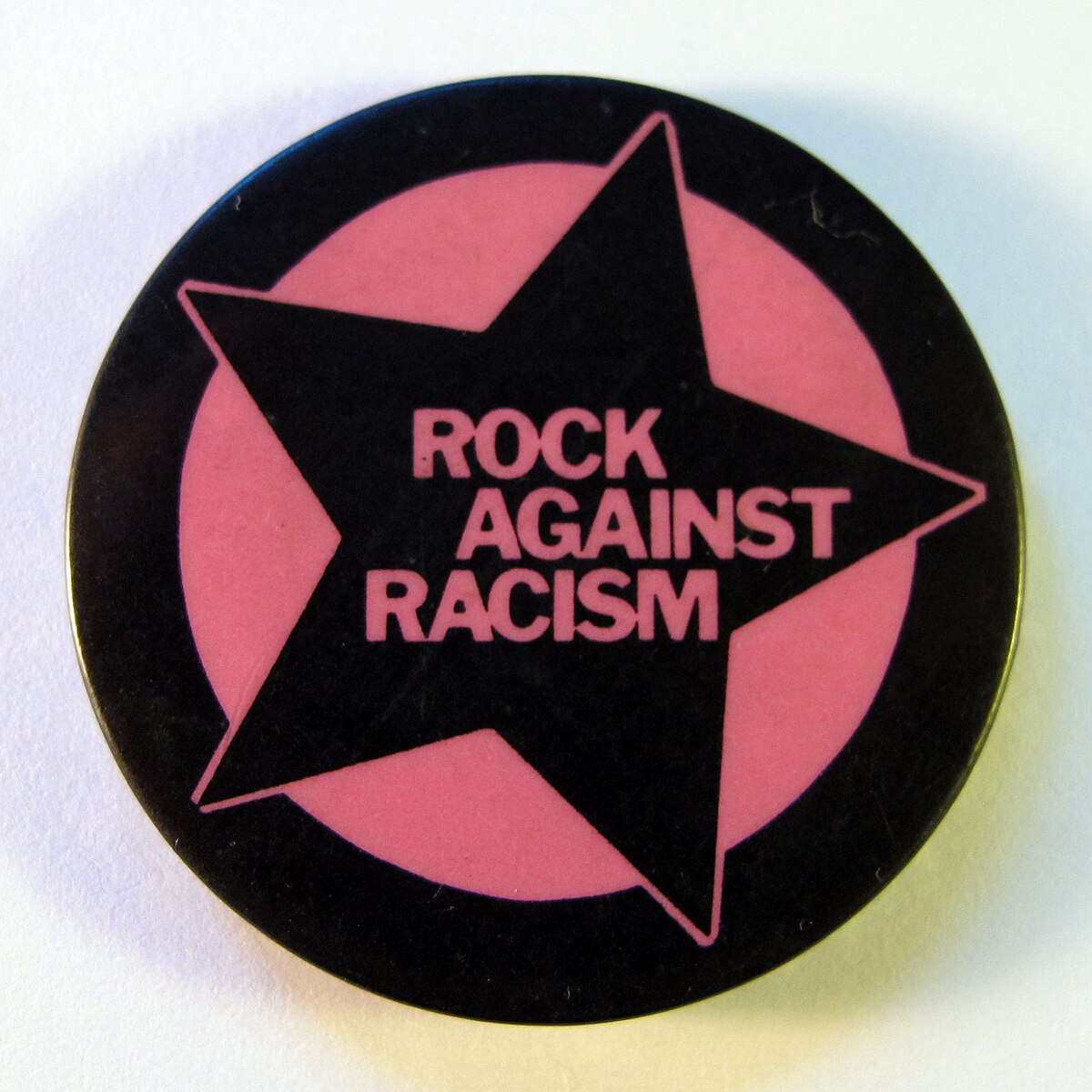
Rock Against Racism
26
MENTIONS
17
EPISODES
17
PODCASTS
Search complete. 26 mentions across 17 episodes found for "Rock Against Racism".
Oct 21, 2026

Steve EconomouGUEST
Right, right.
Steve EconomouGUEST
I mean, there's, you know, back in the, uh, '70s, you, in the early '80s, you had the Rock Against Racism thing, you know.
Steve EconomouGUEST
I'd like to see a rock for, you know, the working class, you know, whatever, something like that, you know, some kind of great, you know, thing where all different kinds of musicians come together and really support, uh, you know, the working people of, of the country, you know? So.
Jedd BeaudoinHOST
Yeah.

speaker_4SOUNDBITE_SPEAKER
Commuter in the Bahamas Front Street, Hamilton Doing more than growing bananas They got tax cuts going on I'll show back to business International pride
Ray KoobHOST
Next up from London was Au Pairs, a part of Rock Against Racism.
Ray KoobHOST
And then the L.A. moment, the ultimate version maybe anywhere of tear it up from the cramps, baby.
speaker_4SOUNDBITE_SPEAKER
Well, come on, little mama, let's tear this damn place up.

Ammo TalwarGUEST
You know, so if you've got like a far-right group that wants to hire a venue, you know, what protection is there for venue owners? owners to kind of say well i want to say this or i want to work with that so i think um i think there's there's there's a couple of things that we could do as um people who care about music and care about british music and also rebel music uh so i think and also with the advancement of the far right movement whether it's reform restore uh i think the music industry has got a role to play in all of this
Mark SutherlandHOST
Are you surprised there hasn't been like a new rock against racism?
Ammo TalwarGUEST
I am.
Ammo TalwarGUEST
Yeah, I am.
Ammo TalwarGUEST
I think there would have been a modern day Gen Z version of that, but maybe next year.
Mark SutherlandHOST
Why do you think it hasn't happened
Ammo TalwarGUEST
yet? I think with Rock Against Racism, it was a beautiful space where people came together and different genres really said, we don't care about genres, we care about class and race and what that looks like.
Ammo TalwarGUEST
And I think the polarisation of communities has been amplified so much that It's almost like stopped the activists collectively saying we want to do something new, but I do think something will synthesize in the next year, two years, and there'll be a new version of it, but it won't be Rock Against Racism.

Simon RaymondeGUEST
I was going to the race.
Simon RaymondeGUEST
I was going to the march, the, the Rock Against Racism marches.
Simon RaymondeGUEST
I was doing all that stuff.
Simon RaymondeGUEST
We managed to kind of get rid of Thatcher and we, you know, we, we looked like we were gonna change the world.

DaveHOST
I think it's a great snapshot of, of British reggae from, you know, from '78.
DaveHOST
Um, and Steel Pulse were one of the bands who played at the Rock Against Racism, uh, Festival.
DaveHOST
The, um, the big one with, uh, uh, um, Victoria Park with, uh, The Clash, Tom Robinson Band, and X-Ray Spex, which lots of people, I think, um, Billy Bragg always, uh, points to that as, as a turning point in his life-
JakeHOST
Mm
DaveHOST
I know he saw The Clash.
DaveHOST
Um, but there are lots of people talk about, you know, going to that particular gig and, um, being cha- you know, being kind of inspired.
DaveHOST
Um, and the whole Rock Against Racism thing, um, back in the day, uh, uh, that was, um, uh, inspired by Eric Clapton's racist rant on stage in London-
JakeHOST
Yeah.

Richard Boyd BarrettGUEST
And, uh, uh, so I would start to be politicized by that.
Richard Boyd BarrettGUEST
And I remember going to gigs to raising money for the miners when they were on strike and going to Rock Against Racism things in the UK, you know.
Richard Boyd BarrettGUEST
So that's where I would've started to get involved in politics and become, I suppose, a bit of a rebel, you know?
Sam AssadHOST
Did you embrace the whole punk look?

Spencer IdeGUEST
And then there was other anti-Nazi rallies.
Spencer IdeGUEST
Rock Against Racism was a label that was used to organise these things.
Spencer IdeGUEST
I saw...
Spencer IdeGUEST
They had them in various cities around the country in one or two ways as well.

David GlanzHOST
Victoria Park is quite important to me because I was one of tens of thousands of people who marched to Victoria Park in 1978 against the National Front, the Nazis of the 1970s.
David GlanzHOST
and the Anti-Nazi League and Rock Against Racism organised the first carnival, a multiracial celebration of music and unity that went a long way to demobilising the Nazis in the 1970s.
David GlanzHOST
And as we march through the East End, the same sort of territory that I've been talking about in this talk, there were people there who either were old enough to have supported mosley or whose parents supported mosley they still had a serious vestige of support in the east end and they stood outside the pub watching us we as we march past with hate in their eyes but also despair because there were handfuls of them there were tens of thousands of us That's how the left won in 1936.
David GlanzHOST
That's how we won in 1978.

Simon TeslerHOST
They really made the song their own.
Simon TeslerHOST
Before that though, Prodigal Son from Steel Pulse, arguably the first British-born reggae band to achieve commercial success in the UK, despite, or possibly because of, the often incendiary and politically engaged lyrics of songs like their breakthrough single Ku Klux Klan Uh, key to their appeal in the late 1970s was the way in which Steel Pulse aligned themselves more closely, at first at least, with emerging white punk and new wave bands, and also the newly formed Rock Against Racism movement.
Simon TeslerHOST
Whereas their label mates on, uh, Island Records, Aswad, tended to stand apart from any such affiliations.
Simon TeslerHOST
Ironically, of course, the two bands gradually swapped places with Steel Pulse becoming ever more politically motivated during the 1980s, while Aswad attained even greater success with a shift towards a more commercial style of reggae.

David RentonGUEST
Yeah, well, and, and it happens again in the '70s, not particularly with novels, more with music then.
AlexHOST
Yeah, yeah, yeah, which you obviously, you've written about with, about rock against racism and all this kind of stuff.
David RentonGUEST
Yeah.
AlexHOST
How, like, how, how important is that kind of- That kind of cultural setting to a movement and, and how have you, what ideas have you of, of us building it? Because I do think it gives...
AlexHOST
It's not just about, you know, building community.
AlexHOST
There's also very practical, very kind of logistical almost support systems that those kind of movements represented and could represent again.
AlexHOST
And so how do we, you know, is it possible for us to, you know, how, there's a lot of talk about how atomized we are, how, how separate we are from each other, and a lot of kind of Rock Against Racism, for example, was built on togetherness and bringing, you know, these big gigs and smaller gigs in, in, in far-flung places around the country and, and building that kind of a collective experience.
AlexHOST
Um, so I was really interested in your thoughts about that just to finish up this section.
7 more episodes mention Rock Against Racism.
Create an account to see the whole feed, search across every transcript, and follow the entities you care about.