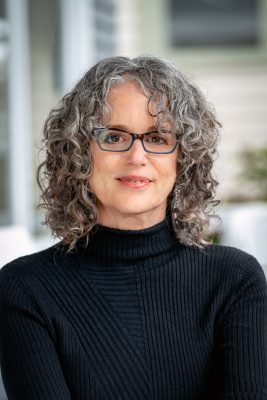
Robin DiAngelo
American authorWikipedia
11
MENTIONS
10
EPISODES
10
PODCASTS
Search complete. 11 mentions across 10 episodes found for "Robin DiAngelo".
Sep 25, 2026

Gary NullHOST
is that there was never born in history a decent man, just like critical race theory.
Gary NullHOST
If you're born Caucasian, according to D'Angelo, who's been challenged on her views, but not enough, you can never overcome your racism.
Gary NullHOST
If you try to deny you're racist, no matter what your background, that just confirms you're a racist.
Gary NullHOST
This is the kind of simplistic thinking that only a fool would accept.

Ben ShapiroHOST
"You chose to use your time to spill tears and censor your feelings," Noire posts in the chat.
Ben ShapiroHOST
"This is incredibly racist and deflecting behavior." Ah, the Robin DiAngelo white lady tears.
Ben ShapiroHOST
You can't have that, or white adjacent tears.
Ben ShapiroHOST
Eventually, after three and a half hours of discussion, a full return of the king worth of discussion, the meeting wraps up.

Tom PenningtonHOST
Webster's defines racism this way, it is the belief or doctrine that inherent differences among the various human races determine cultural or individual achievement, usually involving the idea that one's own race is superior and has the right to rule others." That is the traditional definition and understanding of racism.
Tom PenningtonHOST
Robin DiAngelo, a leading academic and voice for the critical race theory, has an entirely different definition of racism.
Tom PenningtonHOST
She writes, racism is a far-reaching system that functions independently from the intentions or self-images of individual actors.
Tom PenningtonHOST
Now, when you look at those definitions and you look at others out there that are offered to describe the justice, or excuse me, to describe racism in CRT, you'll find some key differences between a traditional definition of racism and the new definition.

Kara JesellaGUEST
And as you know, we most certainly have ideas about how different groups are allowed to talk to each other.
Kara JesellaGUEST
This all got, all of the things from, like, Kendi and from Robin DiAngelo, like, that was done by feminists in the 1980s.
Kara JesellaGUEST
This is, woke started much earlier in the feminist movement, and people just haven't really realized it yet.
Kara JesellaGUEST
Um, and so this was-

NoorHOST
But the idea of white fragility is actually like an academic concept.
NoorHOST
It was like studied and understood by like a Ph.D. holding professor named Robin DiAngelo.
NoorHOST
And it was it was part of an academic paper that came out in like the 2010s.
NoorHOST
But, you know, the idea of it is this.

Matthew SolomonGUEST
People posted black squares.
Matthew SolomonGUEST
People read Robin DiAngelo, white fragility when they could have read like any number of books from black authors.
Matthew SolomonGUEST
Yes.
Matthew SolomonGUEST
Within a year, there was the pushback against critical race theory, which was.
Matthew SolomonGUEST
Here for another, like, I don't know how long.
Mary HoulihanHOST
Yeah, I don't know when this will come out, but yeah, this just happened the other week that AOC was interviewed, and she said Woke One was crazy.
Mary HoulihanHOST
And I think you hear that, and you're like, of course, it was stupid for people to have black squares and reading Robin DiAngelo.
Mary HoulihanHOST
I'm on board.

JohnHOST
This next part doesn't come from the book, it comes from me.
JohnHOST
And so for me, one reason racism persists and one reason conversations about racism become so difficult is that that thing that Robin DiAngelo named when she was here, twice, and later on after she got famous, we helped make her famous, she called it the good-bad binary.
JohnHOST
But I want to go further and add some religious context to it.
JohnHOST
Now the good-bad binary, if you don't remember, is that if I discover that I have a racist thought or an assumption or a preference, or I have done something racist, an action, then I may immediately conclude that I must be a bad person.

Chuck MarvinGUEST
And I ended into a DEI course.
Chuck MarvinGUEST
I read the reading list, Michelle Alexander, Tanisha Coates, Ibram X. Kendi, D'Angelo, all of them.
Chuck MarvinGUEST
And then I read countering views.
Chuck MarvinGUEST
And I went back to 1942 with Ashley Montague, who you might remember.

Matthew BrownGUEST
Who were they, Chris? Yeah.
Chris KavanaghGUEST
Robin DiAngelo, Ibram X.
Chris KavanaghGUEST
Candy.
Chris KavanaghGUEST
That's right.

Adam FranciscoHOST
I have to tell you about – well, someday I should tell you about our – I think they called it the Dean's Meeting of the suburbs of Chicago or whatever.
Adam FranciscoHOST
And I went to one where Robin DiAngelo, the sort of white fragility kind of...
Adam FranciscoHOST
Oh, yeah.
Adam FranciscoHOST
And she just ranting and raving about how whiteness has been done to us and we must...