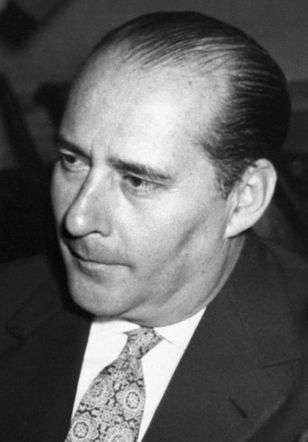
Roberto Rossellini
Italian film director and screenwriterWikipedia
44
MENTIONS
16
EPISODES
15
PODCASTS
Search complete. 44 mentions across 16 episodes found for "Roberto Rossellini".
Sep 21, 2026

Dany JoshuvaHOST
But anyway, one of the talks about how like Mitsuguchi, oh yeah, it was Ty Gallagher.
Dany JoshuvaHOST
He says, like Rossellini, Mitsuguchi gives the illusion that events are occurring beyond his intervention and that he's just trying to film them.
Luke SeayHOST
Yeah.
Dany JoshuvaHOST
And I brought that up with Rossellini.
Dany JoshuvaHOST
I also brought that up with Revett.
Dany JoshuvaHOST
who said something very similar where he's like, like, I'm basically trying to create this like world and then, you know, film it from the outside by almost like a documentary, you know, keeping certain aspects of it, et cetera.
52 MINS LATER
Dany JoshuvaHOST
It's like where this film becomes a great film, you know, not the more ideological aspects of like loyalty or
Luke SeayHOST
anything.

Renzo PianoGUEST
Con dei limiti incredibili.
Renzo PianoGUEST
Ho conosciuto Rossellini.
Renzo PianoGUEST
Mi diceva che loro alla mattina mandavano uno a cercare la pellicola e a secondo quanta pellicola aveva trovato, 30 metri o 50, 300, decidevano cosa girare.
Renzo PianoGUEST
Con 30, 40 metri di pellicola tu al più fai una scena d'amore, un bacio, finito.
19 MINS LATER
Mario CalabresiHOST
L'ispirazione arriva in primo luogo dalla vita e dal mondo che ci circonda.
Mario CalabresiHOST
Lo ha ribadito più volte Renzo Piano durante questo episodio.
Mario CalabresiHOST
Lo sapeva Rossellini quando lavorava coi suoi trenta metri di pellicola scaduta.
Mario CalabresiHOST
E lo sapeva Gianni Berengo Gardin, che si alzava alle cinque per studiare la luce del mattino.

Jason HarrisHOST
And I believe Billy Wilder had The Lost Weekend.
Jason HarrisHOST
And we also had a movie from Roberto Rossellini.
Jason HarrisHOST
So tons of heavy hitters in this festival.
Josh BellHOST
Yeah, and interestingly, most of those things that you named were not among the 11 that tied for the first prize, which was not yet called the Palme d'Or.
Josh BellHOST
And of course, Brief Encounter was that we talked about.
Josh BellHOST
Roberto Rossellini's Rome Open City and Billy Wilder's The Lost Weekend were among those.
Josh BellHOST
But the rest... of these winners were pretty much all movies that I had not heard of and I'm not familiar at all.
Josh BellHOST
One of them, Torment, directed by Alf Sjöberg, was actually written by Ingmar Bergman.

Adam GlassHOST
Particularly, this is more of a Rasson casting a non-actor than a
John Patrick Owatari-DorganHOST
Rossellini
Adam GlassHOST
casting a non-actor.
Adam GlassHOST
It's someone who is not necessarily going for realism so much as going for someone you can control how they're going to present it.

Howard BryantGUEST
Like they were scared.
Howard BryantGUEST
You know, Americans, you know, it's, I, I, I've spent a lot of time watching, um, a lot of the Italian New Wave cinema, and one of the beauties of those films, whether it's Rossellini or Fellini or Visconti or any of those directors, they're actually filming in post-war Europe.
Howard BryantGUEST
That place is bombed to shit, right? I mean, those aren't movie sets, [chuckles] right? That's actually what it looked like.
Howard BryantGUEST
And when people go to Ground Zero, not anymore, but when they were going to Ground Zero, this is what it looked like.
John Patrick Owatari-DorganHOST
So I don't know.
John Patrick Owatari-DorganHOST
I'm just sort of under the impression that when we hear them talk about him, he's being sort of paired alongside Fellini and Rossellini as though they're all doing the same kind of thing.
John Patrick Owatari-DorganHOST
Or at least that's the sort of message that the bonus materials are trying to send to the audience.
Adam GlassHOST
Well, it is trying to dichotomize...
Adam GlassHOST
And trying to economize that with art films such as La Ventura.
John Patrick Owatari-DorganHOST
Right, but they're sort of treating La Ventura and Antonioni's films as the singular comparison point.
John Patrick Owatari-DorganHOST
They're not really doing the same kind of comparison with Fellini or Rossellini.
John Patrick Owatari-DorganHOST
They're ignoring Pasolini for the most part, I think probably because...

Craig NeesonHOST
And, you know, like part of me kind of like bristled at it insofar as, like, it really got under my skin.
Craig NeesonHOST
I mean, this is kind of how, you know, I wasn't poor like this ever, and I don't, you know, I'm not claiming to have, like, this experience, but, like, you know, we played in the fucking dirt and shit, and, like, there's something about the, you know, like, the looming threat of adulthood that, you know, that's how we opened the film, you know, this, you know, young boy getting kind of, like, lectured by his parents like the US you know fucking step up for your little brother you grab a rock you grab a brick whatever but you defend him yeah no I like the way that this film carries it's um you know of course like I want to point to and and I'm sure I'm fucking sure like if I google that I'm sure that it would come up Like Rossellini or Bicycle Thieves or something that's kind of like, you know, Italian neorealism of just like, here's the world.
Craig NeesonHOST
And I think it does a really masterful job of like, you know, contriving, of course, through actors and scenes and sets and whatever.
Craig NeesonHOST
like a mise-en-scene that feels really fucking real um and of course you know the the world isn't um like fully a misery parade though it's like not ideal you know like this um uh this america like there's one there's one needle drop and i think all the needle drops here are so fucking critical the one needle drop about how you know there's this like kind of patriotic you know um idealist like you know uh you know no matter your race color creed or religion it's america and i'm like are we sure about that you know um we sure it's just um the uh rendering of these lives is like aesthetically kind of beautiful in its quietness in its like banality you know the little girl you know listening to music while while you know like holding her doll or like um you know hanging that other little girl hanging the clothes up to dry um um you know, just these, like, these small, like, something like insignificant moments, um, being rendered, and especially in black and white, it has this, like, striking, um, eternal quality to it, um, I think it arrives at this really elegant rendering of, at least in the director's eyes, what life is like for these people at this time.

Zeth LundyHOST
This may have been the end of the road for Roscoe Fatty Arbuckle, the comedian, and his unprecedented career as an entertainer, but it was just the beginning for Hollywood's scandal.
Zeth LundyHOST
Just the next year, in 1922, the director William Desmond Taylor was found dead, murdered inside his Los Angeles bungalow.
Zeth LundyHOST
What followed was a media circus of witnesses and suspects and motives and missing evidence and ultimately no answers.
Zeth LundyHOST
If Fatty Arbuckle was Hollywood's first great sex scandal, then William Desmond Taylor was its first great murder mystery.
Zeth LundyHOST
And it's a mystery that remains unsolved to this day.
Zeth LundyHOST
One of William Desmond Taylor's good friends, the actress Mabel Normand, the last person to see the director alive, was interrogated by the LAPD, but was ultimately eliminated as a suspect in that murder.
Zeth LundyHOST
Mabel Normand was no stranger to scandal by this time.
Zeth LundyHOST
She had starred alongside Fatty Arbuckle in some of his films and was a defense witness at his trial.

Katie CokinosGUEST
And they were taking those narratives and fusing it through this post-World War II narrative.
Katie CokinosGUEST
Psyche you know I mean this it is not even 10 years after World War II has ended and they are you know 400 Blows is coming out what 1958 I mean Robert Bresson was making films before that and of course they were looking to the Italian neorealism of Rossellini but Again, it's that fusing it through your own person, your own experience, your own psyche, and saying, this is my story.
Damien SwabyHOST
This
Katie CokinosGUEST
is what it is to live right now in post-World War II France.

Federico SpolettiHOST
Angela Prudenzi fra poco con me per raccontarvi appunto un po' di, di notizie dietro le quinte su quello che sta succedendo.
Federico SpolettiHOST
E poi chiudia-- ci sarà anche Alessandro Rossellini a parlarci di Viaggio in Italia, il restauro di Rossellini, e poi chiudiamo con il mercato insieme a Carolina, eh, Mancini che è già qui.
Federico SpolettiHOST
Lo sai che fra poco parlerai di mercato in italiano.
Angela PrudenziHOST
Certamente sì.
Angela PrudenziHOST
Tra poco.
Angela PrudenziHOST
Ah.
Federico SpolettiHOST
E gli Oasis, tutti, tutti con-co-colpiti anche positivamente da questo documentario degli Oasis, Miu Miu, Viaggio in Italia di Rossellini, un sacco di cose.
Angela PrudenziHOST
Allora, è arrivato ieri un comunicato stampa a tutti i giornalisti da parte della Biennale, un avviso che dice che fino a cinque minuti dopo l'inizio della proiezione non si può dire una parola sui film.
6 more episodes mention Roberto Rossellini.
Create an account to see the whole feed, search across every transcript, and follow the entities you care about.