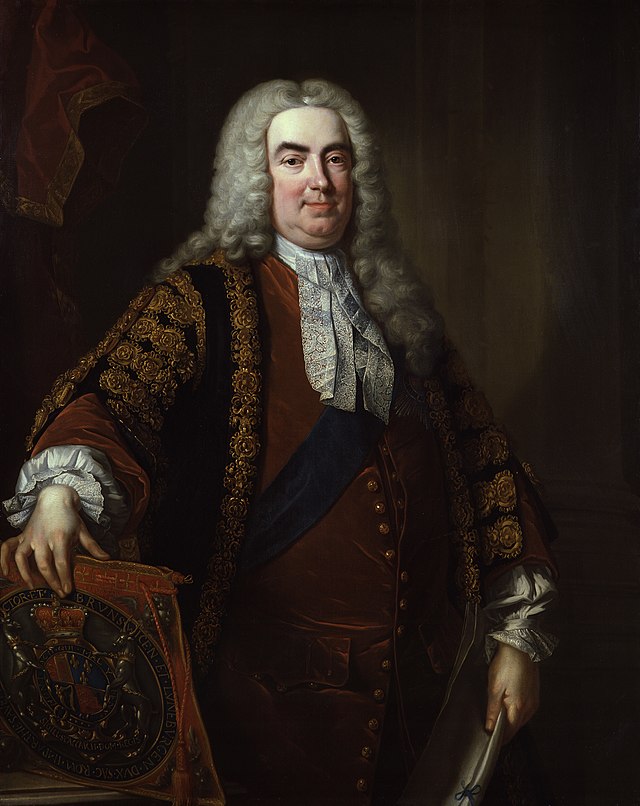
Robert Walpole

Robert Walpole

Former Prime Minister of the United KingdomWikipedia

Search complete. 231 mentions across 23 episodes found for "Robert Walpole".

Oct 19, 2026

David WomersleyGUEST
35:41
I thought it was quite nice, so I thought I'd print this.
David WomersleyGUEST
35:44
In the case of Gulliver's Travels, there are all sorts of details there which would have angered the administration, and particularly Robert Walpole, the then First Minister, who is satirised pretty bitterly in Part 1, and some of whose policies are satirised also in Part 2 and then also in Part 3.
David WomersleyGUEST
36:07
So Swift takes extraordinary precautions to conceal his authorship.
David WomersleyGUEST
36:13
And also, of course, I mean, just before I move on to saying what those were, it's often assumed that the lapse of the Licensing Act in 1694 initiated a kind of free-for-all of British printing.
SarahHOST
62:10
Of course not.
SarahHOST
62:11
And there was other media too, right? The Pope burning processions of the exclusion crisis in the late 1670s and early 1680s, and a theater so political that the prime minister, Robert Walpole, decided he needed to censor plays.
SarahHOST
62:25
But Speck focuses on what one writer in 1710 called, quote, the print, the canto, and the libel grave.
SarahHOST
62:32
In other words...
MarissaHOST
66:58
By the 1730s, politics, quote, was no longer seen primarily as a clash between tyrants and regicides, but as a conflict between outs and ins, honest men and knaves, wise men and dunces, end quote.
SarahHOST
67:13
So mockery actually lowered the temperature.
SarahHOST
67:16
When your prime minister is King Bob, he's not a tyrant anymore.
SarahHOST
67:20
He's just a guy you make fun of, right? Propaganda can civilize as well as inflame.
speaker_3NARRATOR
90:41
A nation is happy when a born statesman with a truly liberal mind and a genuine love of his country comes to the front in its affairs.
speaker_3NARRATOR
90:51
Such a man was Sir Robert Walpole.
speaker_3NARRATOR
90:54
He was a Whig squire, a plain country gentleman with enough of culture to love good pictures and the ancient classics but delighting chiefly in sports and agriculture, hard drinking, and politics.
speaker_4ADVERTISER
91:06
politics.This episode is brought to you by Spreaker, the platform responsible for a rapidly spreading condition known as podcast brain.
Pamela NagamiNARRATOR
3:58
Between the death of Anne and the arrival of George I, the country was governed by a council of regency composed of Whigs, which gave way to an exclusively Whig ministry under Lord Townsend, who, as principal secretary of state, was practically chief minister.
Pamela NagamiNARRATOR
4:16
With him were associated Robert Walpole, who, at first paymaster of the forces, became in October 1715 chancellor of the exchequer.
Pamela NagamiNARRATOR
4:27
Pulteney, Shrewsbury, Sunderland, and all the other recognized chiefs of the party, including Marlborough.
Pamela NagamiNARRATOR
4:34
With the appointment of the new government began a period of Whig ascendancy which continued unbroken till the accession of George III.

8 MINS LATER

Pamela NagamiNARRATOR
13:03
Parliament ceased to represent the nation, parliamentary contests degenerated into greedy struggles for place and power, and the dominant majority, those supplying admirable administrators, rested on an oligarchy of great Whig nobles.
Pamela NagamiNARRATOR
13:21
Secure of their position, the Whigs at once fell to quarrelling among themselves in 1717.
Pamela NagamiNARRATOR
13:28
They soon broke up into two parties, the one headed by Stanhope and Sunderland, and the other by Townsend and Walpole.
Pamela NagamiNARRATOR
13:39
Various circumstances had concurred to bring about misunderstandings between the two sections of Whig leaders and to alienate the king from Walpole and Townsend.
Simon WhistlerHOST
2:17
[dramatic music] When Charles Cornwallis was born on December the 31st, 1738, it was into a family that was spectacularly well-connected.
Simon WhistlerHOST
2:31
His grandfather was brother-in-law of the great Robert Walpole, while his father would soon be made both an earl and viscount.
Simon WhistlerHOST
2:37
The family also stood in good grace with the monarchy.
Simon WhistlerHOST
2:40
Despite likely having Cornish-Irish roots, the Cornwallises were famously loyal to the British throne.
Pamela NagamiNARRATOR
12:42
its social influence was bad for the country gentlemen who had to spend a considerable portion of the year in london because they were no longer compelled to devote as much time to cultivating good relations with their constituents as when elections were more frequent nor could it be denied that parliament in extending its own tenure was acting in a very high-handed and illegal manner in favour of the measure it has been urged that in lessening the number of elections it has relieved the country from much expense turmoil and agitation that it helped to secure the establishment of the house of hanover that it increased the power of the house of commons that it gives greater independence to members and a fair trial to the policy of ministers that it has rendered english foreign policy more stable in short the circumstances of the time fully justified the passing of the bill the rebellion had thus given the whigs an opportunity of consolidating their power parliaments ceased to represent the nation parliamentary contests degenerated into greedy struggles for place and power and the dominant majority those supplying admirable administrators rested on an oligarchy of great whig nobles Secure of their position, the Whigs at once fell to quarrelling among themselves in 1717.
Pamela NagamiNARRATOR
14:13
They soon broke up into two parties, the one headed by Stanhope and Sunderland, and the other by Townsend and Walpole.
Pamela NagamiNARRATOR
14:23
Various circumstances had concurred to bring about misunderstandings between the two sections of Whig leaders and to alienate the King from Walpole and Townsend.
Pamela NagamiNARRATOR
14:35
In 1716, George had crossed the seas, taking Stanhope with him to look after his electorate of Hanover, which had become involved in a war with Sweden.
Pamela NagamiNARRATOR
14:47
During his absence, Lord Townshend had sought the favour of the Prince of Wales, who was on very bad terms with his father, and had thus made himself odious to the Hanoverian courtiers in England.
Pamela NagamiNARRATOR
15:00
moreover he had opposed his master's policy with regard to the czar peter the great who though nominally our ally was regarded by the king with grave distrust in addition george personally disliked townshend and had quarrelled with walpole over a hanoverian money matter the payment of some electoral troops brought over to aid in suppressing the jacobite rising of seventeen fifteen The Earl of Sunderland, who was discontented at having been made Lord Lieutenant of Ireland, joined the King and Stanhope at Hanover, and by his intrigues largely contributed to the overthrow of existing political arrangements.
Pamela NagamiNARRATOR
15:47
In December 1716, Townsend was dismissed from his secretaryship of state and sent into honourable banishment as Lord Lieutenant of Ireland.
Pamela NagamiNARRATOR
15:59
Early in April 1717, in consequence of a strong opposition being made in Parliament by Townsend's party to a money grant for an attack on Sweden, George dismissed Townsend even from that office and the next day Walpole and Pulteney resigned.

Unknown podcast

Chronicles of America Volume 11 - Eve of the Revolution-Carl L. Becker

Oct 15 · 1 Mention

speaker_3UNKNOWN
29:50
most crown officials in america and the governors above all finding themselves little more than executive agents of the colonial assemblies had long clamored for the remodeling of colonial governments the charters they said should be recalled the functions of the assemblies should be limited and more precisely defined judges should be appointed at the pleasure of the king and judges and governors alike should be paid out of a permanent civil list in England drawn from revenue raised in America.
speaker_3UNKNOWN
30:22
in urging these changes crown officials in america were powerfully supported by men of influence in england by halifax since the day some fifteen years before when he was appointed to the office of colonial secretary by the brilliant charles townshend who in the year seventeen sixty three as first lord of the treasury in bute's ministry had formulated a bill which would have been highly pleasing to governor bernard had it been passed into law and now similar schemes were being urged upon grenville by his own colleagues notably by the earl of halifax who is said to have become in a formal interview with the first minister extremely heated and eager in the matter but all to no purpose mr grenville was well content with the form of the colonial governments being probably of pope's opinion that the system that is best administered is best in grenville's opinion the massachusetts government was good enough and all the trouble arose from the inattention of royal officials to their manifest duties and from the pleasant custom of depositing at governor bernard's back door sundry pipes of wine with the compliments of mr most men in england agreed that such pleasant customs had been tolerated long enough to their suppression the first minister accordingly gave his best attention and while mr rigby continued to enjoy great perquisites in england many obscure customs officials such as grosvenor bedford were ordered to their posts to prevent small peculations in america to assist them or their successors in this business ships of war were stationed conveniently for the intercepting of smugglers general writs were authorized to facilitate the search for goods illegally entered and the governors his excellency governor bernard among the number were newly instructed to give their best efforts to the enforcement of the trade acts all this was but an incident to be sure in the minister's general scheme for ameliorating the revenue it was not until the ninth of march seventeen sixty four that grenville not disguising how much he was hurt by abuse opened his first budget fully for brevity was not as failing and still with great art and ability although ministers were to be congratulated he thought on the revenue being managed with more frugality than in the late reign the house scarcely need be told that the war had greatly increased the debt an increase not to be placed at a lower figure than some seventy odd millions and so on account of this great increase in the debt and in spite of gratifying advances in the customs duties and the salutary cutting off of the german subsidies taxes were now the house would easily understand necessarily much higher than formerly our taxes he said exceeded by three millions what they were in seventeen fifty four much money doubtless could still be raised on the land tax if the house was at all disposed to put on another half-shilling in the pound ministers could take it quite for granted however that country squires sitting on the benches would not be disposed to increase the land tax but would much prefer some skilful manipulation of the colonial customs provided only there was some one who understood that art well enough to explain to the house where such duties were meant to fall and how much they might reasonably be expected to bring in and there in fact was mr grenfell explaining it all with art and ability for which task indeed there could be none superior to his majesty's chancellor of the exchequer who had so long studied the revenue with professional assiduity the items of the budget rather dull reading now and none too illuminating fell pleasantly upon the ears of the country squire sitting there on the benches and the particular taxes no doubt seemed reasonably clear to them even if they had no perfect understanding of the laws of incidents inasmuch as sundry of the new duties apparently fell upon the distant americans who were known to be rich and were generally thought on no less an authority than jasper agent of the province of massachusetts bay to be easily able and not unwilling to pay considerable sums towards ameliorating the revenue it was odd perhaps that americans should be willing to pay but that was no great matter if they were able since no one could deny their obligation and so country squires and london merchants too listened comfortably to the reading of the budget so well designed to relieve the one of taxes and swell the profits flowing into the coffers of the other that a duty of two pounds nineteen shillings nine pence per hundredweight avoirdupois be laid upon all foreign coffee imported from any place except great britain into the british colonies and plantations in america that a duty of sixpence per pound weight be laid upon all foreign indigo imported into the said colonies and plantations that a duty of seven pounds per ton be laid upon all wine of the growth of the madeiras or of any other island or place lawfully imported from the respective place of the growth of such wine into the said colonies and plantations that a duty of ten shillings per ton be laid upon all portugal spanish or other wine except french wine imported from great britain into the said colonies and plantations that a duty of two shillings per pound weight be laid upon all wrought silks bengals and stuffs mixed with silker herba of the manufacture persia china or east india imported from great britain into the said colonies and plantations that a duty of two shillings sixpence per piece be laid upon all calicoes the list no doubt was a long one and quite right too thought country squires all of whom to a man were willing to pay no more land tax other men besides country squires were interested in mr grenville's budget notably the west indian sugar planters virtually and actually represented in the house of commons and voting there this day many of them were rich men no doubt but sugar-planting they would assure you in confidence was not what it had been and if they were well off after a fashion they might have been much better off but for the shameless frauds which for thirty years had made a dead letter of the molasses act of seventeen thirty three it was notorious that the merchants of the northern and middle colonies regarding neither the acts of trade nor the dictates of nature had every year carried their provisions and fish to the foreign islands receiving in exchange molasses cochineal medical drugs and gold and silver in bullion and coin with molasses the thrifty new englanders made great quantities of inferior rum the common drink of that day regarded as essential to the health of sailors engaged in fishing off the grand banks and by far the cheapest and most effective instrument for procuring negroes in africa or for inducing the western indians to surrender their valuable furs for some trumpery of colored cloth or spangled bracelet all this thriving traffic did not benefit british planters who had molasses of their own and a superior quality of rum which they were not unwilling to sell such traffic since it did not benefit them british planters were disposed to think must be bad for england they were therefore willing to support mr grenville's budget which proposed that the importation of foreign rum into any british colony be prohibited in future and which further proposed that the act of george the second chapter thirteen be continued with the modifications to make it effective the modifications of chief importance being the additional duty of twenty two shillings per hundredweight upon all sugar and the reduction by one-half of the prohibitive duty of sixpence on all foreign molasses imported into the british plantations it was a matter of minor importance doubtless but one to which they had no objection since the minister made a point of it that the produce of all the duties which should be raised by virtue of the said act made in the sixth year of his late majesty's reign be paid into the receipt of his majesty's exchequer and there reserved to be from time to time disposed of by parliament towards deferring the necessary expenses of defending protecting and securing the british colonies and plantations in america end of chapter two part one chapter two part two of eve of the revolution by carl becker chapter two part two with singularly little debate honorable and right honorable members were ready to vote this new sugar act having the minister's word for it that it would be enforced the revenue thereby much improved and a sudden stop put to the long-established illicit traffic with the foreign islands a traffic so beneficial to the northern colonies so prejudicial to the empire and the pockets of planters thus it was that mr grenville came opportunely to the aid of the spanish authorities who for many years had employed their garda costas in a vain effort to suppress this very traffic conceiving it oddly enough to be injurious to spain and highly advantageous to britain it may be that the spanish authorities regarded the west indian trade as a commercial system rather than as a means of revenue this aspect of the matter the commercial effects of his measures mr grenville at all events managed not to take sufficiently into account which was rather odd seeing that he professed to hold the commercial system embodied in the navigation and trade acts in such high esteem as a kind of english palladium no one could have wished less than grenville to lay sacrilegious hands on this palladium have less intended to throw sand into the nicely adjusted bearings of the empire's smoothly working commercial system if he managed nevertheless to do something of this sort it was doubtless by virtue of being such a good man of business by virtue of viewing the art of government too narrowly as a question of revenue only for the moment preoccupied as they were with the quest of revenue the new measures seemed to mr grenville and to the squires and planters who voted them well adapted to raising a moderate sum part only of some three hundred and fifty thousand pounds for the just and laudable purpose of defraying the necessary expenses of defending protecting and securing the british colonies and plantations in america the problem of colonial defence so closely connected with the question of revenue was none of grenville's making but was a legacy of the war and of that peace of paris which had added an immense territory to the empire when the diplomats of england and france at last discovered in some mysterious manner that it had pleased the most high to diffuse the spirit of union and concord among the princes the world was informed that as the price of a christian universal and perpetual peace france would cede to england what had remained to her of nova scotia canada and all the possessions of france on the left bank of the mississippi except the city of new orleans and the island on which it stands that she would cede also the islands of grenada and the grenadines the islands of st vincent dominica and tobago and the river senegal with all its forts and factories and that she would for the future be content so far as her activities in india were concerned with the five factories which she possessed there at the beginning of the year seventeen forty nine the average briton as well as honourable and right honourable members of the house had known that england possessed colonies and had understood that colonies as a matter of course existed to supply him with sugar and rice indigo and tobacco and in return to buy at a good price whatever he might himself wish to sell beyond all this he had given slight attention to the matter of colonies until the great pit had somewhat stirred his slow imagination with talk of empire and destiny it was doubtless a liberalizing as well as a sobering revelation to be told that he was the heir-apparent of the romans with the responsibilities that are implied in having a high mission in the world now that his attention was called to the matter it seemed to the average briton that in meeting the obligation of this high mission and in dealing with this far-flung empire a policy of efficiency such as that advocated by mr grenville might well replace a policy of salutary neglect and if the national debt had doubled during the war as he was authoritatively assured why indeed should not the americans grown rich under the fostering care of england and lately freed from the menace of france by the force of british arms be expected to observe the trade acts and to contribute their fair share to the defence of that new world of which they were the chief beneficiaries if americans were quite ready in their easy-going way to take chances in the matter of defence hoping that things would turn out for the best in the future as they had in the past british statesmen and right honorable members of the house viewing the question broadly and without provincial illusions understood that a policy of preparedness was the only salvation a policy of muddling through would no longer suffice as it had done in the good old days before country squires and london merchants realized that their country was a world power in those days when the shrewd robert walpole refused to meddle with schemes for taxing america the accepted theory of defense was a simple one if britain policed the sea and kept the bourbons in their place it was thought that the colonies might be left to manage the indians fur traders whose lure the red man could not resist and settlers occupying the lands beyond the mountains so it was said would do the business in seventeen forty nine five hundred thousand acres of land had been granted to the ohio company in the king's interest and to cultivate a friendship with the nations of indians inhabiting those parts and as late as seventeen fifty four the board of trade was still encouraging the rapid settling of the west inasmuch as nothing can more effectively tend to defeat the dangerous designs of the french on the eve of the last french war it may well have seemed to the board of trade that this policy was being attended with gratifying results in the year seventeen forty nine la galissonire the acting governor of canada commissioned cloron de blainville to take possession of the ohio valley which he did inform descending the river to the maumee and so to lake erie and home again having at convenient points proclaimed the sovereignty of louis the fifteenth over that country and having laid down as evidence of the accomplished fact certain lead plates bearing all inspiring inscriptions some of which have been discovered and are preserved to this day it was none the less a dangerous junket everywhere blamville found the indians of hostile mind everywhere in every village almost he found english traders plying their traffic and cultivating a friendship with the indians so that upon his return in seventeen fifty in spite of the lead plate so securely buried he must needs write in his journal all i can say is that the nations of those countries are ill-disposed towards the french and devoted to the english during the first years of the war all this devotion was nevertheless seen to be of little worth Like Providence, the Indians were shirred aside with the big battalions.
speaker_3UNKNOWN
47:10
For want of a few effective garrisons at the beginning, the English found themselves deserted by their quantum allies.
speaker_3UNKNOWN
47:17
And although they recovered this facile allegiance as soon as the French garrisons were taken, it was evident enough in the late years of the war that fear alone inspired the red man's loyalty.
Patrick BoyleHOST
18:18
It took the Whig leadership three years to even work out how much money was owed and to whom.
Patrick BoyleHOST
18:24
This was calculated by one of the youngest new ministers, Robert Walpole, who would later go on to be Britain's first and longest serving Prime Minister.
Patrick BoyleHOST
18:34
Walpole came up with a comprehensive plan to improve the nation's finances by consolidating and refinancing the debt at the new lower interest rates.
Patrick BoyleHOST
18:45
A big problem though was that one-third of the total outstanding loans were irredeemable bonds.
Patrick BoyleHOST
18:52
they had been issued with a legally binding promise that they couldn't be repaid ahead of schedule without their owner's consent, and these were the highest interest rate bonds with rates about double the prevailing rate.
Patrick BoyleHOST
19:22
These irredeemable bonds had one real downside for investors.
Patrick BoyleHOST
19:27
They couldn't be transferred to another person.
Patrick BoyleHOST
19:30
So the one thing Walpole could offer the investors was liquidity in exchange for a lower interest rate.
Pamela NagamiNARRATOR
3:12
Between the death of Anne and the arrival of George I, the country was governed by a council of regency composed of Whigs, which gave way to an exclusively Whig ministry under Lord Townshend, who as principal secretary of state was practically chief minister.
Pamela NagamiNARRATOR
3:31
With him were associated Robert Walpole, who at first paymaster of the forces became in October 1715 chancellor of the exchequer, Pulteney, Shrewsbury, Sunderland, and all the other recognized chiefs of the party, including Marlborough.
Pamela NagamiNARRATOR
3:49
With the appointment of the new government began a period of Whig ascendancy which continued unbroken till the accession of George III.
Pamela NagamiNARRATOR
3:59
The Whig party, which after a sharp struggle with the Tories now entered upon a long tenure of power, found its chief support among the mercantile classes and the non-conformists, and in the parliamentary influence of the House of Lords.

8 MINS LATER

Pamela NagamiNARRATOR
12:18
Parliament ceased to represent the nation, parliamentary contests degenerated into greedy struggles for place and power, and the dominant majority, though supplying admirable administrators, rested on an oligarchy of great Whig nobles.
Pamela NagamiNARRATOR
12:35
Secure of their position, the Whigs at once fell to quarrelling among themselves in 1717.
Pamela NagamiNARRATOR
12:43
They soon broke up into two parties, the one headed by Stanhope and Sunderland, and the other by Townsend and Walpole.
Pamela NagamiNARRATOR
12:53
Various circumstances had concurred to bring about misunderstandings between the two sections of Whig leaders and to alienate the King from Walpole and Townsend.
Rosemary HillHOST
9:04
Um, those who were very much on the back foot during this period because they had backed the Jacobite cause as it had become and were desperately struggling to get back into power.
Rosemary HillHOST
9:15
So I think it's important to see behind the architecture, the politics, and the most political house of all, what became Number 10 Downing Street, which, um, Robert Walpole moved into.
Rosemary HillHOST
9:29
And Robert Walpole was the key political figure in this period.
Markman EllisGUEST
9:32
He was definitely, yeah.
Markman EllisGUEST
9:33
He comes from a, a gentry background, so prosperous, important political family and, uh, was an MP for a family seat in, in Norfolk.

13 more episodes mention Robert Walpole.

Create an account to see the whole feed, search across every transcript, and follow the entities you care about.

We value your privacy

We use cookies to understand how you use our platform and to improve your experience. Click “Accept All” to consent, or “Decline non-essential” to opt out of non-essential cookies. Read our Privacy Policy.