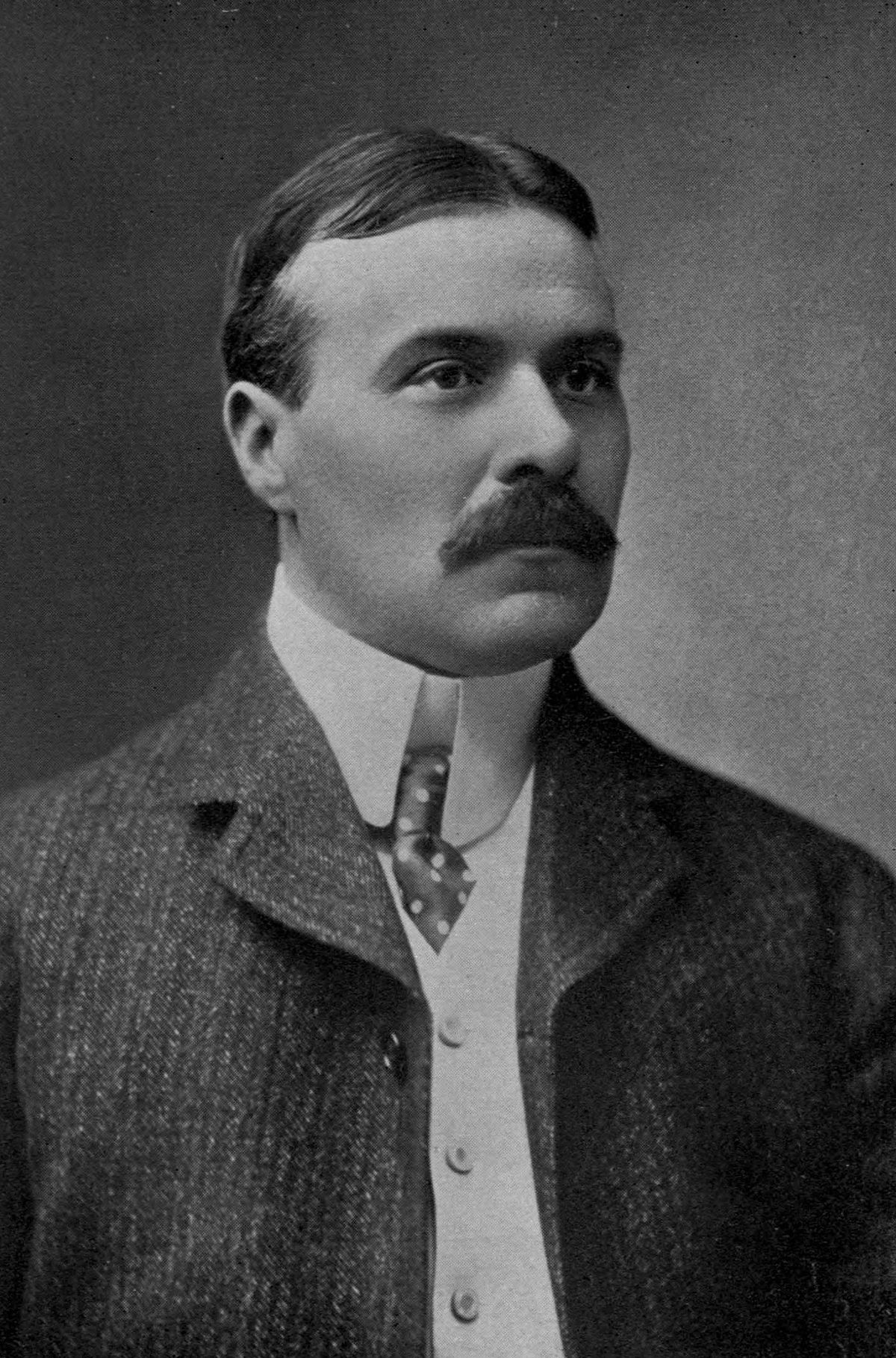
Robert W. Chambers
American artistWikipedia
8
MENTIONS
5
EPISODES
5
PODCASTS
Search complete. 8 mentions across 5 episodes found for "Robert W. Chambers".
Sep 25, 2026

Addison AndersonNARRATOR
But they were largely popularized by a single author, one whose name has become an adjective for the particular type of terror he inspired.
Addison AndersonNARRATOR
Born in Providence, Rhode Island in 1890, Howard Phillips Lovecraft grew up admiring the Gothic horror stories written by Edgar Allan Poe and Robert Chambers.
Addison AndersonNARRATOR
But by the time he began writing in 1917, World War I had cast a long shadow over the arts.
Addison AndersonNARRATOR
people had seen real horrors and were no longer frightened of fantastical folklore.

Mike HillHOST
Like he mentioned him in a, you know, a couple of interviews I heard.
Mike HillHOST
And of course, you know, Lovecraft, all that stuff has to like, you know, Robert Chambers, like the King in Yellow, like all that stuff has to come together.
Mike HillHOST
And it just, there isn't that sort of backstory or mythology to something like Lanterns, like which doesn't detract from it.
Mike HillHOST
I just think that the PR machine, was a little bit out of line by using that comparison.

MartyHOST
But the other thing is this, as you were saying, the fiction becoming reality sort of s- sort of thing that's sometimes called hyperstition.
MartyHOST
I mean, in terms of the first point, think about The Yellow King, Robert Chambers.
MartyHOST
If you read it, you go nuts or whatever.
MartyHOST
And so-
MartyHOST
You, you f- find out something that you shouldn't find out or know and it just drives you insane.
MartyHOST
Uh, but the other thing is that, like, the book becomes a part of reality, so fiction becomes reality.
MartyHOST
So this was a big theme for H.P. Lovecraft, and he knew about Robert Chambers and, uh, said that he, you know, uh, modeled, uh, you know, some of his stories on The Yellow King's ideas.
MartyHOST
Uh, even though The Yellow King is not really all that well executed of a book.

Carol GyzanderGUEST
Yeah.
Carol GyzanderGUEST
There's one of the things I like to look at, you know, with all of these last century authors in the previous century, you know, Robert Chambers and Lovecraft, most of the stories, because of the time period in which they were writing, they're male-centered.
Carol GyzanderGUEST
They're talking about the male as the main character and the male as the one facing the cosmic world.
Carol GyzanderGUEST
the horror or the dread or whatever, not every single story.
Carol GyzanderGUEST
But I like what's going on in current times where we're doing a little bit more focus on seeing a female perspective.
Carol GyzanderGUEST
That's one of the things I did with my story based on Robert Chambers.
Carol GyzanderGUEST
And I have a female protagonist in this and other ones in Ellen's anthology as well.
Carol GyzanderGUEST
I think that's broadening the appeal and the relevance to people.

speaker_2NARRATOR
If all the rest of the words in this sentence were made ten times as large as they are, and "did" and "thought" were kept at their present size, they would still be emphatic because different.
speaker_2NARRATOR
Take the following from Robert Chambers' novel, The Business of Life.
speaker_2NARRATOR
The words "you," "had," "would" are all emphatic because they have been made different.
speaker_2NARRATOR
"He looked at her in angry astonishment.