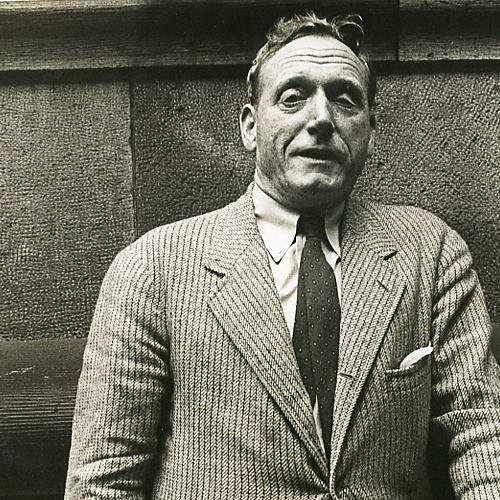
Robert Penn Warren
American poet and novelistWikipedia
25
MENTIONS
18
EPISODES
14
PODCASTS
Search complete. 25 mentions across 18 episodes found for "Robert Penn Warren".
Sep 27, 2026

speaker_8HOST
Gilead by Marilyn Robinson.
speaker_8HOST
All the King's Men by Robert Penn Warren.
speaker_8HOST
And finally, Tinker Tailor Soldier Spy by John Le Carré.
speaker_5HOST
It is a staggering collection of literature, and primarily because of the extreme friction between these titles.
speaker_5HOST
So you have this very heavy structural institutional block of reading on the one hand.
speaker_8HOST
Exactly.
speaker_8HOST
Yes, Le Carré and Warren serve as the macro mechanical texts.
speaker_8HOST
They dissect the machinery of power.
speaker_0HOST
Exactly.
speaker_0HOST
And she is brought in to discuss Robert Penn Warren's novel, All the King's Men.
speaker_1HOST
This pairing is just a master class in crossing analytical wires.
speaker_1HOST
I mean, you take a premier historian, and you literally ask her to analyze a work of fiction.

John GreenHOST
But she's best known for Ariel, a collection of poems written in something of a poetic frenzy in the months before she died and published in 1965.
John GreenHOST
Robert Penn Warren called Ariel a unique book.
John GreenHOST
It scarcely seems a book at all, rather a keen, cold gust of reality as though somebody had knocked out a windowpane on a brilliant night.
John GreenHOST
In the introduction to Ariel, Robert Lowell says that in this book, Plath becomes herself.

Laura CranehillGUEST
You got to make it out of badness because there isn't anything else to make it out of.
Laura CranehillGUEST
And apparently Robert Penn Warren said that.
Laura CranehillGUEST
But yeah, it does talk about this idea of being good out of a bad universe that is actively harming you.
Laura CranehillGUEST
And even the end part is like... is a human soul good or not? And I don't know if it totally lands somewhere or not.

Michael BerryHOST
Or Marlowe, or Keats, or Shaw, Tennyson.
Michael BerryHOST
We understand that they're, Oscar Wilde, that they're great writers, and we love their, or if you want the more modern, Hemingway, Hunter S. Thompson, Faulkner, Robert Penn Warren.
Michael BerryHOST
But then, but can you name a poet today? it odd to you that we have great poets throughout history going back a thousand years but not today and then and then because we want to seem cultural that's a culture we we bring someone in and we we bring them to the white house and the kennedy center and we say oh this is a great poet and then that person usually a lesbian gets up and reads and what they read has no appeal to me, and I would argue probably anybody else.
Michael BerryHOST
It is always an angst-ridden, long-suffering, I'm strong, I'm the proud victim-survivor, and that's what we call now poetry.

David BlightHOST
Because by circa 1965, the understanding of the American Civil War and the broad mainstream not among most African Americans, and now a new young generation of historians who came of age in the wake of World War II and were deeply interested in the problem of race in American history as never before, and deeply inspired by an anthropological, sociological, psychological revolution in the study of race, were beginning to write about it differently.
David BlightHOST
The great southern poet who lived much of his life, much of the second half of his life, right here, and whose papers are right there at the Beinecke, Robert Penn Warren, wrote brilliantly about this in a little book, a little essay, actually a big essay, in a little book that he wrote in 1961, called The Legacy of the Civil War.
David BlightHOST
He wrote it for Life magazine and was later published as a In that book, trying to capture what the meaning of the Civil War was in American culture a hundred years after, Penn Warren said that somewhere in their bones, and I quote him, most Americans have a storehouse of lessons drawn from the Civil War.
David BlightHOST
Now exactly what those lessons has been, I think, the most contested question in America's historical memory, over and over again, at least since 1865 and probably even since 1863, when the war underwent a revolution.
David BlightHOST
Among all the possible lessons of our Civil War, wrote Robert Penn Warren, is the realization, his words, that slavery looms up mountainously in the story and cannot be Our culture has spent nearly now a century and a half, and it is still at it, of talking away the place of slavery in this event and its place in the aftermath.
David BlightHOST
When one is happy in forgetfulness, said Penn Warren, facts get forgotten.
David BlightHOST
Or as William Dean Howells put it in 1900, and I think I quote this in the essay you've read, what the American people always like is a tragedy as long as they can give it a happy ending.

Jeff O'NealHOST
Yeah.
Jeff O'NealHOST
Uh, speaking of things that are elite, Jill Lepore on "All the King's Men" by Robert Penn Warren.
Jeff O'NealHOST
"All the King's Men" which I just picked as one of mine-
Rebecca SchinskyHOST
Mm-hmm
Rebecca SchinskyHOST
"The Fire Next Time" is what? The '50s? Maybe '60s.
Jeff O'NealHOST
'50s, early '60s.
Jeff O'NealHOST
"All the King's Men" by Robert Penn Warren I believe is 1947.
Jeff O'NealHOST
Um, so yeah, the, it's, we're, we're a good 30 years on, which is, which is fine.
David BlightHOST
Anyway, since Appomattox 65, you know what that is? That's more than one per day have been published in this country on this event.
David BlightHOST
Why? What does Robert Penn Warren mean when he said the Civil War darkly unriddled and portentous of our personal and our national fate." That's pretty grandiose language, but what did Warren mean? What did Gertrude Stein mean when she said, there never will be anything more interesting than that American Civil War? Of all people, Gertrude Stein was There never will be anything more interesting than that American Civil War," she said.
David BlightHOST
Why are so many people into this? Why do people want to read about it, reenact it, go play it, go visit it? Is it just heritage tourism? Is it just the attraction of military history? What is it that compels us to remember the most divisive, the most bloody, the most tragic event in our national history? And how do we remember it? Have we sometimes cleaned it up with such pleasing mythology that we've just made it fun? Why is the Confederate flag a problem? Why doesn't it just go away? It's the second most ubiquitous American symbol across the world, especially since Michael Jordan quit playing.
David BlightHOST
Other than the U.S. flag, the Confederate flag is the most ubiquitous symbol of the United States, maybe Coca-Cola, okay, but Coca-Cola is an international symbol.

Philip BunnGUEST
There are people like like there are some of the you know, these figures that we call the Southern agrarians.
Philip BunnGUEST
Many of them were like prominent advocates for segregation, some of them like Robert Penn Warren.
Philip BunnGUEST
sort of came around towards the end of their lives and were like, Oh no, this is actually a bad thing.
Philip BunnGUEST
And then like what you're describing, same thing.

Rebecca SchinskyHOST
All right, Jeff.
Jeff O'NeillHOST
Oh, where do I wanna go next? Um, I don't know that I have a good segue from you, Sharyn, but I was thinking about All the King's Men recently by Robert Penn Warren, um, which is a...
Jeff O'NeillHOST
It's been a while since I've read it, but it's a loose but serious historical fiction, sort of, but it's, it's the story of Huey Long, who's a real person.
Jeff O'NeillHOST
In the book, the character's name is Willie Stark, a populist governor who rises through the ranks in the '30s, riding a wave of populism and quasi-nationalism, um, and how that works and what happens.
Jeff O'NeillHOST
... where you've got Gatsby and Carraway right at the same time with Willie Stark and Jack Burden.
Jeff O'NeillHOST
He's sort of watching them and learning from them, inspired and horrified by them.
Jeff O'NeillHOST
But at the same time, Sharyn, I think one thing Robert Penn Warren is interested in is the specifics of these people, right? Th- these movements, these big movements can feel like a mob, but they're made up of specific people, and who's at the head of them matters for the shape, uh, and direction that they take, and what happens when they go sideways, and how do they go sideways, and how does everyone sort of just start going along, and why does the throng get caught up in these, um, kinds of movements? And, you know, when I was in high school and college, like, this was on all of the reading lists.
Jeff O'NeillHOST
I don't think it is anymore, but I've gotta tell you, going back, I picked up my coffee off the sh- copy off the shelf the other day and looked at my notes, and this stuff about the will and just wanting power, this happens, this comes around and goes around from time to time, and it's one of those helpful reminders of while any specific current event is specific and unique in its own way, it's also related to other underlying dynamics in America and around the world about power, about populism, um, and how th- what kinds of things can go wrong in these certain situations.
8 more episodes mention Robert Penn Warren.
Create an account to see the whole feed, search across every transcript, and follow the entities you care about.