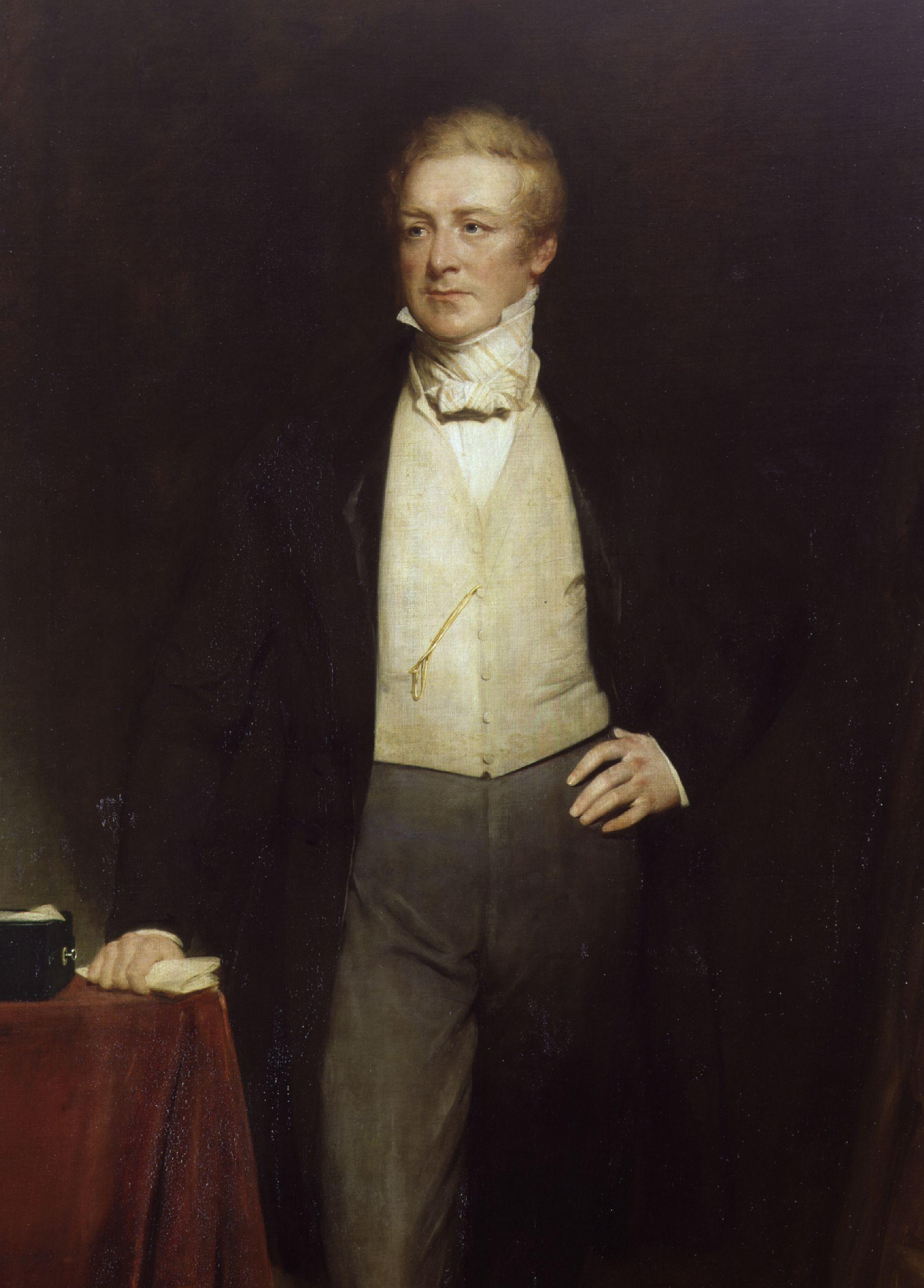
Robert Peel
Former Prime Minister of the United KingdomWikipedia
174
MENTIONS
52
EPISODES
39
PODCASTS
Search complete. 174 mentions across 52 episodes found for "Robert Peel".
Sep 22, 2026

Pamela NagamiNARRATOR
Cavour had the cast of mind which admires in others its own qualities.
Pamela NagamiNARRATOR
As he revered Pitt's vast and puissant intelligence, so he sympathized with Peel's logic and courage.
Pamela NagamiNARRATOR
Peel was his favorite among his contemporaries.
Pamela NagamiNARRATOR
He called him the statesman who more than any other had the instinct of the necessity of the moment.
Pamela NagamiNARRATOR
He foretold Peel's abolition of the corn laws at a time when no one else anticipated it.
Pamela NagamiNARRATOR
When he himself was charged by his old friends in the Turin chamber with desertion and treason, he reminded them that the same charges had been made against Peel, but that he was largely compensated by the knowledge that he had saved England from socialist commotions, which in that country were in reality even more threatening in their scope and extent than in the rest of agitated Europe.
Pamela NagamiNARRATOR
He used to say that if Pitt had lived in times of peace, he would have been a reformer after the fashion of Peel and Canning, adding his own venturesomeness to the largeness of views of the one and the capable sound sense of the other.
Pamela NagamiNARRATOR
These scattered judgments were drawn from the essays written by Cavour in the years 1843 through 46.

ClaraHOST
Yes, which is central to understanding British policing.
AdrianHOST
Now, I know those principles are named after Sir Robert Peel, who founded the modern London police force in 1829.
AdrianHOST
But what do those principles actually look like in practice on the street?
ClaraHOST
The absolute core of Peelian principles is the concept of policing by consent.

speaker_8ADVERTISER
For a family operation that treats you right, transfer to Midas.
Julie BurksNARRATOR
During the administration of Sir Robert Peel, he received, in recognition of his great eminence in botanical science, a pension on the civil list of £200 per annum, and shortly afterwards the King of Prussia decorated him with the cross of the highest Prussian civil order, Pour le Merite.
Julie BurksNARRATOR
Of Mr. Brown's later publications, the most important are his Botanical Appendix to Captain Burt's Expedition into Central Australia, published in 1849, and his Memoir on Trilospherite, an undescribed fossil fruit, published in the Linnaean Transactions for 1851.
Julie BurksNARRATOR
The pervading and distinguishing character of all these writings is to be found in the combination of the minutest accuracy of detail with the most comprehensive generalization, and no theory is propounded which does not rest for its foundation on the most circumspect investigation of all attainable facts.
1 HR 2 MINS LATER
Ava YeeNARRATOR
Here he farmed several acres of land and kept three or four cows, while in the upper storey of the house was erected his spinning mule, upon which he continued to spin with as much privacy as possible.
Ava YeeNARRATOR
He was, nevertheless, still troubled by many curious visitors, who were desirous of seeing the improvements he was supposed to have made on it.
Ava YeeNARRATOR
Among others he received two visits from the first Sir Robert Peel, then an eminent though untitled manufacturer, who came with the hope of inducing Crompton to join his establishment, and on his second visit made him an offer of partnership.
Ava YeeNARRATOR
It is much to be regretted that this offer was declined, as Mr Peel's enterprising business character was exactly that most suited for supporting Crompton's great inventive genius.

Bryn RobertsNARRATOR
The protests of powers co-signatories of the Treaty of Vienna have been made in vain.
Bryn RobertsNARRATOR
In England, the language of Lord Palmerston has not been more explicit than that of Sir Robert Peel, in declaring the present condition of Poland an infraction of the engagements of 1815. and in France each annual meeting of the chambers under all phases of administration has reiterated its declaration of the rights of Poland.
Bryn RobertsNARRATOR
A less formal but still more earnest demonstration in favour of Polish nationality took place in 1848 on the 15th of May and the use that was made of that excitement by a few designing men in no way affects the sincerity of the movement.
Bryn RobertsNARRATOR
having been accidentally a witness to the whole events of that day in the National Assembly, I can testify that the treason against the Majesty of the Nation, which followed the Polish petition, was as great a surprise to the motley multitude that filled the hall as to the members of the Assembly.

Thomas777GUEST
Okay.
Thomas777GUEST
You know, and I think this is all very ill understood, but, um, you know, I think the point a lot that, um, the American system like really mirrors the UK system, you know, politically and otherwise the father quite literally of, uh, of modern policing was Robert Peel.
Thomas777GUEST
He was also kind of the founder of the modern conservative party in Britain.
Thomas777GUEST
Like the Tories existed before Peel's tenure as prime minister.
Thomas777GUEST
know, there, it actually was, um, the UK was rabidly anti-Catholic until the 20th century.
Thomas777GUEST
In a lot of ways, they still are, although obviously the situation has come up flex in, in ways that wasn't because, you know, it's no longer a sovereign country.
Thomas777GUEST
And there's this kind of constellation of, uh, ethnicities that don't have any meaningful you know historical um experience in the uk but um you know incidentally the reason why like in the uk you know cops are called bobbies because you know of robert peel and in ulster they're called peelers which is interesting i think there's You know, the former kind of almost suggests like a mascot role.
Thomas777GUEST
The latter, you know, kind of suggests that they're ops.

BluffADVERTISER
know,
ThomasGUEST
I think the point a lot that, um, the American system like really mirrors the UK system, you know, politically and otherwise the father quite literally of, uh, of modern policing was Robert Peel.
ThomasGUEST
He was also kind of the founder of the modern conservative party in Britain.
ThomasGUEST
Like the Tories existed before Peel's tenure as prime minister.
ThomasGUEST
And there's this kind of constellation of ethnicities that don't have any meaningful roots.
ThomasGUEST
you know, historical experience in the UK.
ThomasGUEST
But, you know, incidentally, the reason why, like in the UK, you know, cops are called bobbies because, you know, of Robert Peel.
ThomasGUEST
And in Ulster, they're called peelers, which is interesting.

Emily JonesGUEST
So he kind of, you know, his early life is already very colourful and kind of, you know, very kind of multifaceted.
Emily JonesGUEST
As a kind of Tory, then kind of Conservative MP, and then kind of Chancellor and later Prime Minister, he really, really... hates this move that Peel makes in the 1830s to kind of towards this label of conservative.
Emily JonesGUEST
And this is Robert Peel.
Emily JonesGUEST
Yes, Robert Peel.
Emily JonesGUEST
Who is a prime
Paul LayHOST
minister, founder of the police, of modern policing.
Emily JonesGUEST
Yeah.
Emily JonesGUEST
So I think we kind of have to forget what we think we know about what these terms mean to start off with, particularly coming from a 20th century perspective and a 21st century perspective, where these labels are very much tied to positions on marketization and welfare and kind of distribution and things like that.

John ReynoldsHOST
partially politically through the representatives, but also physical force to try and get better conditions for tenant farmers.
John ReynoldsHOST
Robert Peel, who was the Chief Secretary of Ireland at the time, he decided to bring in a new force of policemen to deal with it.
John ReynoldsHOST
And that was a radical idea.
John ReynoldsHOST
The new police were called the Peace Preservation Force, or PPF, and they operated on horseback as a heavily armed constabulary force.

Bryn RobertsNARRATOR
The protests of powers, co-signatories of the Treaty of Vienna, have been made in vain.
Bryn RobertsNARRATOR
In England, the language of Lord Palmerston has not been more explicit than that of Sir Robert Peel in declaring the present condition of Poland an infraction of the engagements of 1815.
Bryn RobertsNARRATOR
And in France, each annual meeting of the chambers, under all phases of administration, has reiterated its declaration of the rights of Poland.
Bryn RobertsNARRATOR
A less formal, but still more earnest demonstration in favor of Polish nationality took place in 1848 on the 15th of May, and the use that was made of that excitement by a few designing men in no way affects the sincerity of the movement.

Cheralyn DarceyHOST
Goonoo.
RenataGUEST
The name Tamworth was apparently chosen because of the connection between Sir Robert Peel and Tamworth in Staffordshire, England, of course.
RenataGUEST
The AA company established its own settlement on the western side of the Peel.
RenataGUEST
It was essentially a company town created to service its enormous pastoral operations.
42 more episodes mention Robert Peel.
Create an account to see the whole feed, search across every transcript, and follow the entities you care about.