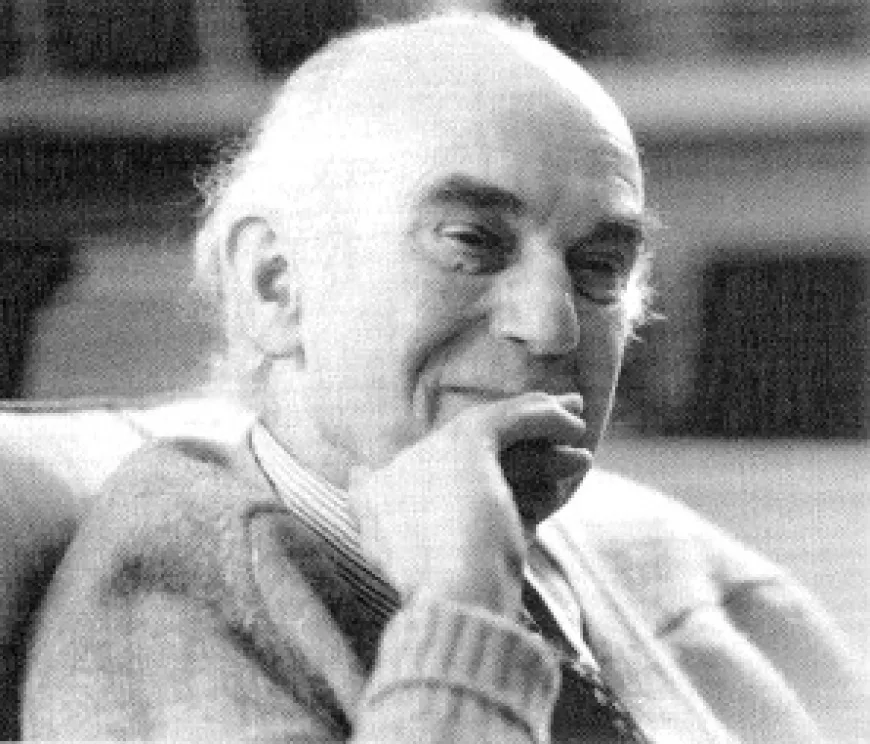
Robert A. Nisbet
American sociologist and professorWikipedia
7
MENTIONS
6
EPISODES
5
PODCASTS
Search complete. 7 mentions across 6 episodes found for "Robert A. Nisbet".
Oct 7, 2026

Jonah GoldbergHOST
Like one of the things I'm stunned by is basically de Tocqueville was almost completely forgotten in the first half of the 20th century.
Jonah GoldbergHOST
Robert Nisbet probably more than anybody else is the guy who brought him back.
Jonah GoldbergHOST
Yeah.
Jonah GoldbergHOST
And he talked about how like no one talked about de Tocqueville in grad school and all of that, which is weird because de Tocqueville was pretty popular at the end of the 19th century.

speaker_0HOST
Peter Van Buren argues the Taiwan status quo forged in the 1970s has quietly held for nearly half a century, and the silence on Taiwan at the Trump-Xi summit was diplomacy working as designed, not failing.
speaker_0HOST
Jack Hunter contends that Pete Hakeseth's apparent relish for war, from his new Pentagon Office of Religious Affairs to his no-quarter rhetoric, places the Defense Secretary outside the conservative tradition of Nisbet, Kirk, and Taft.
speaker_0HOST
And now for the details.
speaker_0HOST
We begin this morning with Taiwan and an argument against the drumbeat of war that has become familiar in Washington foreign policy circles.
speaker_0HOST
Hunter writes that there is nothing inherently wrong with invoking faith in military affairs, but he pairs that rhetoric with Hegseth's past declarations of no quarter, and no mercy for enemies, and with the February bombing of an Iranian girls' school, to argue that the secretary carries a bully-with-a-badge zeal for war-making.
speaker_0HOST
Hunter grounds his case in the words of traditional conservatives.
speaker_0HOST
He cites the sociologist Robert Nisbet, who wrote that no conservative can relish war and its attendant militarization.
speaker_0HOST
He draws on Russell Kirk, Edmund Burke, James Madison, Robert Taft, and H.L. Mencken, all of whom warned that war undermines civilization, centralizes power, and erodes liberty.

Paul GottfriedGUEST
But another important thing to keep in mind is that most of the paleoconservative leaders were not necessarily the people who were in front of the old movement.
Paul GottfriedGUEST
I mean, there were people like Russell Kirk and Robert Nisbet, Forrest McDonald and others who were sympathetic to our side.
Paul GottfriedGUEST
But the people who became leaders like Tom Fleming or myself, Lou Rockwell, we were not really leaders of what had been the Buckleyites before, the Buckley conservative movement or the amalgamation of conservative thinkers and conservative opinion around anti-communism.
Paul GottfriedGUEST
which of course was the linchpin of the National Review conservatism organized in the mid 1950s through William F. Buckley and former communists.

Paul MuellerGUEST
And it's meant to be, you know, if your next door neighbor was an economist and you had conversations with them about different issues, what would they say? What would they talk about? So we focus a lot on economic issues, but as I mentioned at the beginning of the show, I'm very interested in other things.
Paul MuellerGUEST
So the podcast, the episode that came out last week was talking about the sociologist Robert Nisbet and the quest for community and how human beings desire and really need for communities and the deterioration of community in modern societies, Western countries leads to either deaths of despair and isolation or or people jumping into radicalization, radical communities.
Paul MuellerGUEST
So if you think about like the rise of Democratic Socialists of America, it's not because they have good ideas.
Paul MuellerGUEST
It's not because, you know, they're going to make the economy work.

Paul GottfriedGUEST
But another important thing to keep in mind is that most of the paleo-conservative leaders were not necessarily the people who were in front of the old movement.
Paul GottfriedGUEST
I mean, there were people like Russell Kirk and Robert Nisbet, Forrest McDonald and others who were sympathetic to our side, but the people who became leaders like Tom Fleming or myself, Lou Rockwell, we were not really... leaders of what had been the Buckleyites before, the Buckley conservative movement, or the amalgamation of conservative thinkers and conservative opinion around anti-communism.
Paul GottfriedGUEST
which of course was the linchpin of the National Review conservatism organized in the mid 1950s through William F. Buckley and former communists.
Paul GottfriedGUEST
We were not the leaders of that movement, but rather we were conservatives who came along maybe two decades later and came to dominate what became paleo-conservatism for a while because we were crushed by the conservative establishment by the mid 1990s.
Stephanie SladeGUEST
And that is, I think, a really huge thing.
Stephanie SladeGUEST
And also by eroding, I was just reading some Robert Nisbet.
Stephanie SladeGUEST
He's a conservative sociologist from that same mid-century period.
Stephanie SladeGUEST
And he talks a lot about how actually if an institution doesn't have a purpose, if it's not people coming together to solve a problem together because they feel like, well, this problem is somebody else's to solve, then they will no longer feel like they're a part of that community.