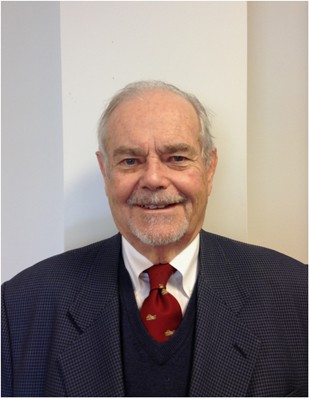
Robert McCarley
Professor and psychiatristWikipedia
3
MENTIONS
3
EPISODES
2
PODCASTS
Search complete. 3 mentions across 3 episodes found for "Robert McCarley".
Oct 2, 2026

speaker_2NARRATOR
By the mid-twentieth century, the discovery of REM shifted dream research away from purely psychological theories and toward neuroscience.
speaker_2NARRATOR
In nineteen seventy-seven, the psychiatrists J. Allan Hobson and Robert McCarley proposed the activation-synthesis theory, one of the most influential neurobiological models.
speaker_2NARRATOR
According to this theory, dreams are the brain's attempt to make sense of random electrical signals generated by the brain stem during REM.
speaker_2NARRATOR
The theory proposed that the cortex receives these essentially meaningless signals and tries to synthesize them into a coherent narrative, which is what the dreamer experiences as a dream.
speaker_2HOST
By the mid-20th century, the discovery of REM shifted dream research away from purely psychological theories and toward neuroscience.
speaker_2HOST
In 1977, the psychiatrists J. Allen Hobson and Robert McCarley proposed the activation synthesis theory, one of the most influential neurobiological models.
speaker_2HOST
According to this theory, dreams are the brain's attempt to make sense of random electrical signals generated by the brainstem during REM.
speaker_2HOST
The theory proposed that the cortex receives these essentially meaningless signals.

HowardHOST
No one knows exactly why we dream, but we do know that your thalamus, the structure in your brain which translates information from sense into memory, is active during REM, along with the amygdala, which houses fear and anger reactions, and the prefrontal cortex, which controls short-term memory.
HowardHOST
The most popular theory of why we dream, stipulated by John Allen Hobson and Robert McCarley, argues that dreams are a byproduct of lower functions of the brain during REM sleep, like heart and blood pressure, translated by our higher functions, like memory and speech, into visual and auditory hallucinations, which were used by our ancestors to practice being conscious.
HowardHOST
Think of it like a virtual reality game that you can use to practice being a human while you sleep.
speaker_8UNKNOWN
How is your day? I love you.