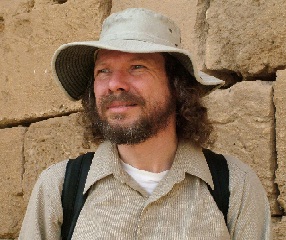
Robert M. Schoch
American professor
6
APPEARANCES
4
PODCASTS
Oct 19, 2026

speaker_5ADVERTISER
Just like that at Lowe's.

Robert SchochGUEST
You know, if you were just faking it and the dogs were just faking it and the humans were just faking it, you know, there's no easy way to determine what the geomagnetic flux is and to consistently all these different people and animals to be consistently faking it in correlation with that.
Robert SchochGUEST
There's a fellow named Cleve Baxter, and he's still alive, but and still doing research and his expertise is lie detectors.
28 MINS LATER
JamesHOST
that as something

Robert SchochGUEST
One of the major factors is solar activity, and more active sun, um, versus less active sun tracks climate change, you know, very, very accurately actually over, uh, long periods of time.
Robert SchochGUEST
As it gets warmer, you tend to have higher carbon dioxide levels in the atmosphere.
Robert SchochGUEST
But interestingly, geologically, well before humans were on the scene as industrial, you know, m- m- builders of factories and pumping out carbon dioxide and all that type of thing, what you find is that when temperature goes up, there's a little bit of a lag time, and then carbon dioxide goes up, not vice versa.
Robert SchochGUEST
And this makes perfect sense to me geologically, because as you warm the oceans, they can hold less carbon dioxide, so they start outgassing it.

Robert ClotworthyNARRATOR
Robert Schoch, PhD, is a geologist and author of Forgotten Civilization.
Robert SchochGUEST
True metallurgy in the sense of putting different metals together as alloys dates back to maybe 3800 BC when bronze was first discovered as an alloy of tin and copper.
Robert ClotworthyNARRATOR
Robert Schoch, PhD, is a geologist and author of Forgotten Civilization.
Robert SchochGUEST
17th century Dutch traders recorded this legend, and modern archeologists, modern scientists have generally dismissed it.
Robert ClotworthyNARRATOR
Upon closer inspection, they were found to be manmade structures and quite possibly the ruins of the lost pagodas of Mahabalipuram.
Robert SchochGUEST
It ties in with the legends and myths of these ancient temples having been inundated by the ocean.
Robert SchochGUEST
We don't have all six yet, but I suspect that the legends may be correct and there really are six more temples out there to be found.
Robert ClotworthyNARRATOR
Robert Schoch, a worldwide cataclysm and the resulting layer of ash was likely created by a solar flare, a sudden flash of increased brightness on the sun.
Robert SchochGUEST
Based on my analysis of the evidence is that there was a major, major solar outburst.
Robert SchochGUEST
This not only led to the rising sea levels flooding the coastal areas and torrential rains, we have physical evidence of, of this in the geological record.


Alan SteinfeldHOST
So there's an asteroid at a certain size that That did what? I mean, how big was it? And how did that kill probably hundreds of thousands or maybe millions of creatures on the planet? Can you talk about that a little bit? Oh, it
Robert SchochGUEST
But, you know, it left the crater hundreds of, I want to say hundreds of kilometers in diameter, just the crater.
6 MINS LATER