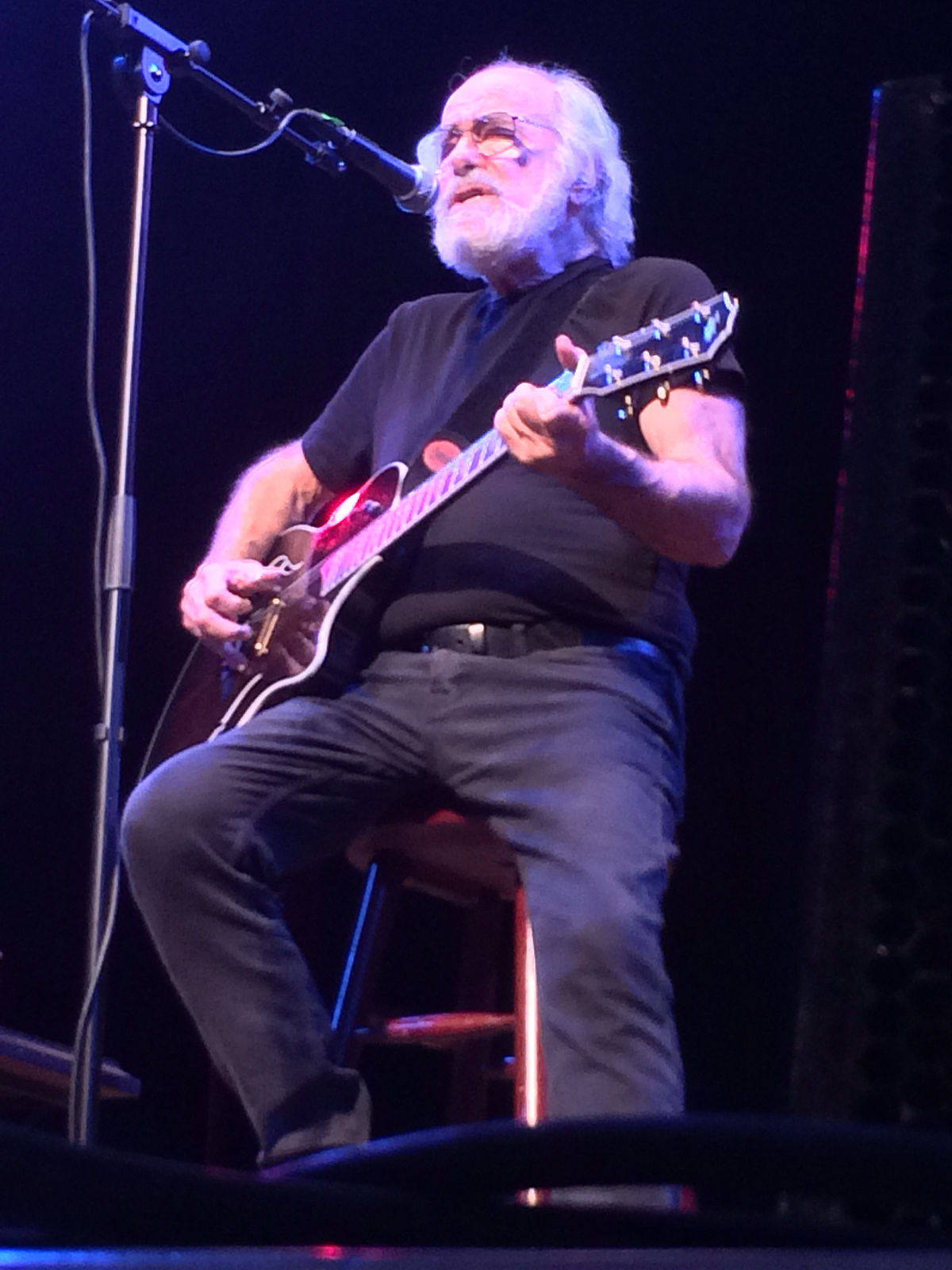
Robert Hunter
American lyricist and singer-songwriterWikipedia
82
MENTIONS
33
EPISODES
18
PODCASTS
Search complete. 82 mentions across 33 episodes found for "Robert Hunter".
Nov 4, 2026

Alex PappademasGUEST
Yeah, it's Hunter.
Alex PappademasGUEST
It's Robert Hunter, who's
Pete RiehlHOST
the
Alex PappademasGUEST
lyricist.

Rich BonnifaceNARRATOR
Around December 20th, 1969, the exact date gets fuzzy in the records, but it was roughly two weeks after the disaster.
Rich BonnifaceNARRATOR
While everyone else was still pointing fingers about what happened at that free concert, Robert Hunter sat down and wrote what he later called musical journalism.
Rich BonnifaceNARRATOR
Not a protest song, not an indictment, just...
Rich BonnifaceNARRATOR
New Speedway boogie showed up in the setlist and the refrain said everything.

speaker_0HOST
It also was inspired by their friendship with Crosby, Stills, Nash, and Young.
speaker_0HOST
And it had songwriters, Robert Hunter, their lyricist.
speaker_0HOST
Jerry Garcia, Bob Weir, Phil Lesh, and Ron Pigpen McKernan.
speaker_0HOST
It had a whole lot of Americana music on it.

Eric SenichHOST
All right, now on to our show.
Eric SenichHOST
What connects a forgotten prison singer, a psychedelic television appearance, and a lightning storm that helped inspire one of the Grateful Dead's most ambitious songs? In their book, Friends of the Devil, writer Alex Pappademas and artist Joan LeMay uncover the remarkable stories behind the Dead's music, from Jerry Garcia's creative partnership with Robert Hunter to the colorful characters and mysteries that inspired their songs.
Eric SenichHOST
Alexander and Joan, thank you for being here.
Eric SenichHOST
I referred you as Alexander because that's the way it is in all the descriptions, right,
Eric SenichHOST
Jerry was quite an artist, wasn't he?
Joan LeMayGUEST
Yeah, absolutely.
Joan LeMayGUEST
And he and Robert Hunter first bonded over watching Harry Smith films.
Joan LeMayGUEST
So, you know, thinking about just the universe of psychedelic art as it was part of the larger culture there, there's a great relationship always between art making and music making.

Bruce HornsbyGUEST
So I always loved that.
Bruce HornsbyGUEST
There's a song I wrote with Robert Hunter called Tropical Cashmere Sweater.
Bruce HornsbyGUEST
And it's in your tropical cashmere sweater.
Bruce HornsbyGUEST
So then I'll go sweater, sweater, puller, puller.
Rich BonnifaceNARRATOR
After that came news, tour dates, record releases, and a great deal of something stranger.
Rich BonnifaceNARRATOR
Robert Hunter, the band's lyricist, remembered that he would get stoned and draw what he called hypnocracy, the musings of a Zen clown he invented named St. Dilbert.
Rich BonnifaceNARRATOR
Then they would add some information about what was going on, most of which Hunter wrote, some of which Alan Trist wrote.
Rich BonnifaceNARRATOR
Garcia might add a drawing.
Rich BonnifaceNARRATOR
And then, sometime around the late spring or the very start of summer, Jerry Garcia wrote a new song that went straight toward it.
Rich BonnifaceNARRATOR
The words were Robert Hunter's.
Rich BonnifaceNARRATOR
The music was Garcia's.
Rich BonnifaceNARRATOR
That was how the two of them usually worked.
12 MINS LATER
Rich BonnifaceNARRATOR
when the record company put out an expanded edition of the album decades later it included an outtake of good lovin from the sessions and the lead vocal on it belongs to lowell george the producer singing the band's song on the band's own tape stranger still the outtake is dated a few days before the dates the credits give for the whole recording so the earliest good lovin from these sessions may not have the band's singer on it at all people have been arguing about this for a long time and they are no closer in the later years weir would add a little spoken rap of his own in the middle of the song the way pigpen used to and sometimes in that rap he would mention a friend of his a friend who used to say that a person needs a bit of tenderness daily or they wither one writer who studied the song always took that as a quiet salute to pigpen a nod across the years to the man who used to stand there but the same writer admitted it might not be Maybe Bobby was just talking about some other guy he knew.
Rich BonnifaceNARRATOR
So who was the friend? A tribute tucked into a cover song, night after night for years to the man who made it theirs, or just a line an old friend from anywhere said because it scanned, the song never stopped long enough to say.
Rich BonnifaceNARRATOR
out on the winterland floor the old beat rolls on toward the end of the night and the lights over the stage stay low a barn on a ranch outside novato in marine county inside the barn a recording studio a mixing desk tape machines racks of electronics that as mickey hart told it were built from old navy parts pulled off destroyers and battleships drums of every size along the walls and on the floor gongs a tumpany and through the barn door the dry hills of a california summer gold and brown and very still this is where fire on the mountain began hart had been away from the band for a while in the early 70s and he spent much of that time in this barn recording he had a record deal of his own for a second album he made a rhythm track all drums and pulse and no melody to speak of and he handed it to robert hunter hunter remembered it plainly micky just gave him the track he said and told him to make it a song so hunter did he wrote the words at the ranch and the hills around it were on fire a wildfire was moving across the slopes near the studio close enough to worry about hunter took what was in front of him he wrote a song about a fire on a mountain and about someone who keeps on going while everything around him burns that early version was recorded in the barn with the words chanted more than sung a kind of spoken rhythm over the drums the album it was meant for never came out the record company turned it down But the groove did not go away.
Rich BonnifaceNARRATOR
It turned up again as an instrumental, on a record by Hart's percussion group, the Diga Rhythm Band.
Rich BonnifaceNARRATOR
here's the part that makes no sense in his bluegrass days garcia's little string band played the monterey folk festival in the amateur division they won best group and garcia won best banjo player Dylan was on that same festival, a new singer whose song Peter, Paul and Mary were about to make a hit, and Garcia by Dennis McNally's account left early in his set.
Rich BonnifaceNARRATOR
Robert Hunter, who was there, blamed the lousy sound system.
Rich BonnifaceNARRATOR
McNally suspects Garcia's purism had something to do with it, too.
Rich BonnifaceNARRATOR
Either way, the man who would spend thirty years singing Bob Dylan songs walked out on Bob Dylan very nearly the first time he ever heard of him.
1 HR 9 MINS LATER
Rich BonnifaceNARRATOR
The boombox in Malibu clicks off.
Rich BonnifaceNARRATOR
Somewhere in a box in San Rafael the reels sit in their cardboard sleeves, all six nights of them, every song nobody picked.
Rich BonnifaceNARRATOR
waiting in the dark the way tape waits patient and quiet you sink into the couch before you notice anything else it is soft in the wrong places and it has seen better decades and it sighs as it takes your weight then the room assembles itself around you amplifier cases coiled cable a high window letting in a square of afternoon and on a low table in front of the couch a scatter of paper typed sheets and handwritten ones some of them clipped together some of them loose a coffee ring on the top page those sheets are lyrics they belong to robert hunter the poet who wrote the words to most of jerry garcia's songs for the grateful dead before the dead made in the dark he brought them a song-book by his own count fifteen to seventeen songs the band picked a couple when push comes to shove black muddy river hunter took about three for an album of his own and the book stayed there at front street in the room where the band rehearsed which that spring meant the room where they rehearsed with bob dillon Dylan, as Hunter told the story in an interview book later on, just flipped through it.
Rich BonnifaceNARRATOR
He liked a couple of the lyrics, put them in his pocket, went off, set them to music, recorded them, and sent Hunter a tape.

Stu LevitanHOST
Well, Tambourine Man is in my pantheon of Dylan lyrics, and then take me disappearing through the smoke rings of my mind down the foggy ruins of time.
Stu LevitanHOST
Seemed appropriate for the history book, as does Lately It Occurs to Me, What a Long Strange Trip It's Been, which Robert Hunter actually wrote when The Grateful Dead was only five years old.
Stu LevitanHOST
And what was involved was tracking down the rights holder, which actually took some doing, getting a quote and paying it.
Stu LevitanHOST
And there is a lesson here in the economics of publishing.

Eli AmdurHOST
Today, aside from some colorful history well told, I'm going to ask some brutally tough questions to those who aspire to or already hold leadership positions in AI.
Eli AmdurHOST
They would do well to heed the advice of Robert Hunter, chief lyricist for the Grateful Dead, when he wrote the Dead song, Ripple.
Eli AmdurHOST
And he said, You who choose to lead must follow.
Eli AmdurHOST
If you fall, you fall alone.
23 more episodes mention Robert Hunter.
Create an account to see the whole feed, search across every transcript, and follow the entities you care about.