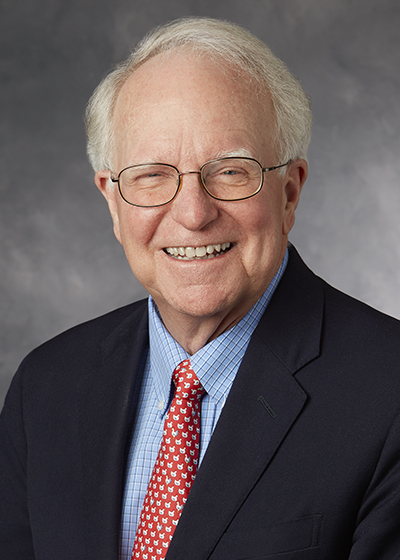
Robert Hall
American economistWikipedia
99
MENTIONS
69
EPISODES
52
PODCASTS
Search complete. 99 mentions across 69 episodes found for "Robert Hall".
Oct 18, 2026

speaker_0NARRATOR
Because today it happened.
speaker_0NARRATOR
This year's EconNobel went to Bob Hall and Mike Woodford, two of the theory's most important creators.
speaker_0NARRATOR
First, let me say that this prize is long overdue.
speaker_0NARRATOR
In 2009, I asked my PhD advisor, Miles Kimball, who was the greatest living macroeconomist.
speaker_0NARRATOR
Without hesitation, he answered Bob Hall and said he would be very surprised if Hall didn't win the Nobel at some point.
speaker_0NARRATOR
Hall's work is breathtakingly broad.
speaker_0NARRATOR
If you want good summaries, I recommend Alex Tabarrok and Tyler Cowen, as usual.
speaker_0NARRATOR
Basically, people generally know how the economy works, and they plan accordingly.

AksharaHOST
It's really awarded by the Swedish Central Bank.
AksharaHOST
And this year they've awarded the prize to economists Robert Hall and Michael Woodford.
AksharaHOST
Their work provided much of the intellectual foundation to the policies pursued by most central banks in the world, from the RBI to the US Federal Reserve.
AksharaHOST
Well, maybe the Federal Reserve is having second thoughts about that now.
AksharaHOST
Now, if true, it would mean that the old idea of giving people money today and they'll spend a predictable chunk of it didn't stand up to scrutiny, even if it sounded legitimate in theory.
AksharaHOST
So if, say, a government cuts interest rates, the spending boost would get spread out over a lifetime of spending rather than being immediate.
AksharaHOST
That's where Robert Hall enters the story.
AksharaHOST
So in a landmark 1978 paper, Hall said that if consumers are rational and forward-looking and can borrow and save freely, what they spend today contains all the information you need about what their future consumption looks like.

Cameron AbadiHOST
And behind that shift lies a development in economic science, and that development was recognized by The Royal Swedish Academy this past week.
Cameron AbadiHOST
On Monday, the Nobel Prize for Economics was awarded to two Americans, Michael Woodford of Columbia and Robert Hall of Stanford, for, quote, "microeconomic foundations of macroeconomic stabilization."
speaker_4NARRATOR
Robert E.
speaker_4NARRATOR
Hall and Michael Woodford's research has helped governments and central banks make better managed periods of economic boom and recession.

Robert MurphyHOST
So let me just try to give some intuition on what's going on.
Robert MurphyHOST
So Robert Hall, one of his big contributions is, you'll see it described as, oh, he took Milton Friedman's permanent income hypothesis and showed that consumption was a martingale or a random walk, you might see people say.
Robert MurphyHOST
All right, so let me just give a little bit of the background on what's going on with those claims.
Robert MurphyHOST
So in the, let's say fifties and sixties, that was the heyday of what you might call hydraulic Keynesianism.
9 MINS LATER
Robert MurphyHOST
So that's the idea.
Robert MurphyHOST
So that was Friedman's permanent income hypothesis.
Robert MurphyHOST
So then Robert Hall piggybacks on that and was saying even like the Chicago School free market types who were then trying to do more sophisticated and they thought more micro-founded statistical analyses to predict like current consumption spending, they were doing stuff like, oh, rather than just doing it as a crude thing of what, what percentage, you know, what's your current income, and then trying to come up with the ratios to say, you know, what percentage of that do you consume? They were doing more th- things like looking at past income trends and then trying to say, "Okay, so here, like we're trying to like come up with a proxy for how are households now estimating their future income," 'cause strictly speaking, that's what they should be doing right now when they're deciding how much to consume that really bygones are bygones.
Robert MurphyHOST
That should really be just a function of what do they think their future income streams are gonna be, and then that should guide what they do today.

AdamHOST
Um, I'm tempted to read this slide, uh, and, and make fun of a language I don't understand, but I guess I won't.
AdamHOST
Um, the Swedes gave the prize this year to Robert E. Hall-
Bob MurphyGUEST
That first one, I thought I was having a stroke.
AdamHOST
Right? [laughs]

Dave AnthonySOUNDBITE_SPEAKER
Two Americans are sharing the Nobel Prize for economics.
Dave AnthonySOUNDBITE_SPEAKER
Robert Hall, who's affiliated with Stanford, and Michael Woodford with Columbia University honored for their economic models, helping governments deal with issues like inflation or an energy crisis.
Dave AnthonySOUNDBITE_SPEAKER
President Trump says he's considering helping Saudi Arabia battle Houthi militants after weekend bombings at the airport in Riyadh killed fourteen people.
speaker_4SOUNDBITE_SPEAKER
Houthi attacks on the international airport serving Saudi Arabia's capital are causing chaos in the kingdom.

speaker_1NARRATOR
Hoover scholars explain the details and potential trade-offs of Proposition 38, a measure intended to advance health-focused scientific research.
speaker_1NARRATOR
And Stephen Davis discusses the intellectual contributions of his colleague Robert Hall, who this week was awarded the Nobel Prize in Economics.
speaker_0NARRATOR
A little boring may actually be useful, Taiwan ex-president tells Hoover Gathering.
speaker_0NARRATOR
In a world increasingly characterized by politicians insulting each other at lecterns and on social media, Taiwan's former president Tsai Ing-wen told an audience at the Hoover Institution that there is much to be said for leaders staying out of the limelight.
speaker_1NARRATOR
One main trade-off, however, is an uncertain return on investment for the state and its taxpayers.
speaker_0NARRATOR
Stephen Davis on Robert Hall's contributions to economics.
speaker_0NARRATOR
One of the great benefits of an academic career is the opportunity to learn from and engage brilliant colleagues.
speaker_0NARRATOR
Senior fellow and director of research Stephen J. Davis reflects in this post on LinkedIn.

Ryan McMakenNARRATOR
This year's co-winners of the Nobel Memorial Prize in Economics helped put that answer together.
Ryan McMakenNARRATOR
Robert Hall, whose paper I linked earlier, developed a new consumption function based on optimizing forward-looking consumers.
Ryan McMakenNARRATOR
Michael Woodford used a version of Hall's consumption equation and added equations for firms and interest rates.
Ryan McMakenNARRATOR
Those three equations are included in the written version of this article, RE produced from NobelPrize.org.
13 MINS LATER
Ryan McMakenNARRATOR
Zigs and zags.
Ryan McMakenNARRATOR
It's easy for Austrian economists to take potshots at the mainstream, so let me soften my critique of new Keynesianism with this.
Ryan McMakenNARRATOR
Robert Hall and Michael Woodford certainly deserve the Nobel Memorial Prize.
Ryan McMakenNARRATOR
Their work has had a substantial impact on the way governments and central banks view their role in stabilizing the macroeconomy.

Kerby AndersonHOST
And one of the articles you have posted here is flat tax scholar wins Nobel Prize.
Kerby AndersonHOST
Now, I am familiar with Robert Hall, and he was one of the two that were actually honored to receive the Nobel Prize in economics.
Kerby AndersonHOST
And I'm, first of all, shocked that some of the officials in Stockholm actually did that.
Kerby AndersonHOST
But more importantly, I just think it shows that some of these scholars Very conservative, very reasonable, common sense kinds of ideas are reaching a level at which one of those individuals wins the Nobel Prize.
Kerby AndersonHOST
I need to tax us more.
Kerby AndersonHOST
Most of them are saying, and a lot of them are saying, especially around April, this tax code is entirely too complex.
Kerby AndersonHOST
And I just think it's worth mentioning that Robert Hall, who we know of, actually won the Nobel Prize.
Kerby AndersonHOST
So congratulations.

Kyla ScanlonHOST
How should people feel about high gas prices? And we were recently reminded of the importance of the Fed's role in setting expectations like this.
Kyla ScanlonHOST
The Nobel Memorial Prize in Economics went to Robert Hall and Michael Woodford for work showing what households and businesses expect is a big part of what holds an economy steady.
Kyla ScanlonHOST
Shaping those expectations is a big part of setting policy.
Kyla ScanlonHOST
Fed Chair Warsh has put aside forward guidance, one of the tools his predecessors used to steer those expectations.
59 more episodes mention Robert Hall.
Create an account to see the whole feed, search across every transcript, and follow the entities you care about.