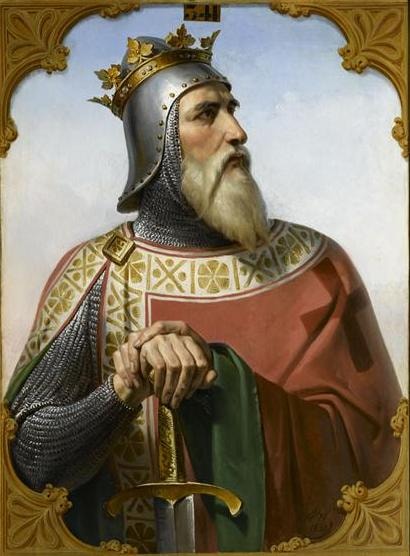
Robert Guiscard
AdventurerWikipedia
37
MENTIONS
12
EPISODES
9
PODCASTS
Search complete. 37 mentions across 12 episodes found for "Robert Guiscard".
Oct 24, 2026

Pamela NagamiNARRATOR
Richard, with three hundred horsemen, marched toward Rome and on the way reduced all the strongholds of the refractory nobles, Tusculum, Mentana, Palestrina, and finally Galeria, as soon as Benedict was given up.
Pamela NagamiNARRATOR
At the same time Desiderius, Abbot of Monte Cassino, who was made a cardinal and apostolic vicar in Campania, Apulia, and Calabria, strengthened the alliance of the papacy with the Normans by establishing friendly relations with Robert Guiscard.
Pamela NagamiNARRATOR
Whilst Hildebrand had been busy in the south of Italy, securing the bravest warriors of the age for the defence of the papacy, Peter Damiani had been vigorously establishing papal authority in Lombardy.
Pamela NagamiNARRATOR
A fierce contest had long been raging in Milan between the clergy, led by the archbishop and a body of zealous, not to say fanatical reformers who denounced clerical marriage as if it were a deadly sin.
Pamela NagamiNARRATOR
But if the papacy was backed by the moral force of public opinion in France, Aquitaine, Burgundy, Flanders, and northern Italy, it was to the Normans in the south of the peninsula that it looked for the material strength which only valor and skill in arms could supply.
Pamela NagamiNARRATOR
In the summer of 1059, the pope, accompanied by Hildebrand, went to Monte Cassino, thence to Melfi in Apulia, where a great synod was held at which the decrees were proclaimed forbidding clerical marriage, especially common in that region, owing partly to Greek influence.
Pamela NagamiNARRATOR
More important was the formal removal of the ban which Leo IX had imposed upon the Normans, and a confirmation of the alliance between pope and the Norman chiefs Robert Guiscard and Richard of Capua.
Pamela NagamiNARRATOR
Both took the oath of fealty to the pope as suzerain, who now invested Robert with the dukedom of Apulia, Calabria, and Sicily, although the first two regions were not thoroughly conquered, and in Sicily he did not possess a foot of land.

Pamela NagamiNARRATOR
He had not struck the right chord, and Hildebrand failed to see the West gird itself for the great conflict with the enemies of the faith.
Pamela NagamiNARRATOR
For a time he may have supposed that the great fire was already kindled, when with a fleet of one hundred and fifty ships and an army of thirty thousand men Robert Guiscard set sail from Brundusium in 1081.
Pamela NagamiNARRATOR
But the conqueror who had done so much in Italy was to do but little to the east of the Adriatic.
Pamela NagamiNARRATOR
While his army put forth its whole strength before the walls of Dyrrachium, his fleet under the command of his son Bohemond was miserably defeated, and nothing but the wretched jealousy felt by the emperor Alexios for his general Palaeologus saved the army of Guiscard from ruin and turned the threatened disaster into victory.
Pamela NagamiNARRATOR
When being compelled to return to Italy he left Bohemond to carry on his enterprise in 1082, the latter overran Epirus and had well-nigh succeeded in reducing the Thessalian Larissa when he too was compelled to hasten to Italy for reinforcements both in men and money in 1083.
Pamela NagamiNARRATOR
In his absence his deputy Brienne, the constable of Apulia, was constrained to abandon the siege of Castoria in 1085 and to bind himself not to invade again the territories of the Byzantine emperor.
Pamela NagamiNARRATOR
Not many months later Robert Guiscard gathered another armament for the conquest of the east.
Pamela NagamiNARRATOR
He raised the siege of Corfu and had reached Cephalonia when his career was cut short by death and his scheme for the time seemed utterly brought to naught.

William DalrympleHOST
Now, in the next episode, uh, we are getting our old friend Peter Frankopan, who always keeps Anita and I in our place and corrects our many errors as he sees fit.
William DalrympleHOST
Uh, and, uh, Peter, um, is gonna be telling us about stuff that I think, again, is, is much less well-known than Hastings and, uh, the story of William the Conqueror, which is the story of the Normans first in South Italy, uh, Robert Guiscard, uh, conquering Puglia.
William DalrympleHOST
Then the extraordinary story of the Normans conquering the, uh, the Arab Sicilian kingdom, the Fatimid kingdom in Sicily, and, and, uh, the, the story of Roger II, the baptized sultan, and his extraordinary Cappella Palatina with its very Muslim-looking roof and its Byzantine mosaics.
William DalrympleHOST
And finally, the furthest shore of all, we're following Bohemond, um, who, uh, has always been rather a hero of mine, but I know Peter Frankopan doesn't like at all, this, uh, uh, this rather swaggery, uh, uh, Norman, um, uh, conqueror and, uh, I think Frankopan would probably call him a pirate.

speaker_3NARRATOR
Anna Komnene, the daughter of Alexios, John Kinnamos, a bureaucrat and confidant of Manuel I, Niketas Choniates, a judge and civil servant, Michael Psellos, a savant and counselor, and finally George Akropolites, a chancellor and commander.
speaker_3NARRATOR
The first major challenge that Alexios Komnenos faced was the Norman invasion of Robert Guiscard in 1081 which had three major implications.
David Patrick HarryHOST
And this is the Beaumond who is going to betray Alexios.
David Patrick HarryHOST
So thi- this Norman, uh, king right here who rules the southern part of Italy, not only is he going to invade Byzantium, but he's going to be one of the Crusaders.

Pamela NagamiNARRATOR
William of the Iron Arm and Drogo seem to have arrived in the south about 1036, and soon signalized themselves in the first invasion of Sicily and in the conquest of northern Apulia, where William was chosen leader or count by the other Normans, and at his death in 1046 succeeded by Drogo, who was soon afterwards invested with the county by the emperor Henry III.
Pamela NagamiNARRATOR
It was apparently in this year that Robert Guiscard first came to Italy.
Pamela NagamiNARRATOR
Refused assistance by his brothers, he hired himself out to various barons until he was left by Drogo in charge of a small garrison in the mountains of Calabria.
Pamela NagamiNARRATOR
Here he lived like a brigand, carrying off the cattle and sheep of the inhabitants and holding the people themselves for ransom.
Pamela NagamiNARRATOR
Indeed, they seem to have felt a certain embarrassment in the situation, and after humbling themselves before the pope, they treated him with respect and deference, which did not prevent their keeping him for some months in honorable detention at Benevento.
Pamela NagamiNARRATOR
Plainly, the Normans were not to be subdued by force of arms, and it soon became evident to the reforming party that they would be useful allies against the Roman nobles and the unreformed clergy, as well as against the dangerous authority of the German emperor.
Pamela NagamiNARRATOR
Accordingly, in 1059, the year in which the College of Cardinals received its first definite constitution as the electors of the pope, Nicholas II held a council at the Norman hill fortress of Melfi, attended by the higher clergy of the south, and also by the chief Norman princes, Richard of Aversa and Robert Guiscard.
Pamela NagamiNARRATOR
In return for the pope's investiture of their lands, these princes took an oath of allegiance and fealty to the Holy See, and agreed to pay an annual rent to the pope for their dominions.

Romney SmithGUEST
At, at what point does that... 'Cause I, I'm particularly curious.
Romney SmithGUEST
What I was thinking about is in the year, I wanna say 1083, something like that, we've got the Normans under Robert Guiscard doing their thing in Italy, setting up their own mini state in Italy, and Guiscard, being a Viking at heart, is like, "Well, I wanna raid somebody else." So he attacks Byzantium.
Romney SmithGUEST
He crosses the Adriatic and attacks around Dyrrachium, so the, the Balkans.
Romney SmithGUEST
And what happens is Emperor Alexios is there to defend Byzantium, and with him he has his Varangian guards.
2 more episodes mention Robert Guiscard.
Create an account to see the whole feed, search across every transcript, and follow the entities you care about.