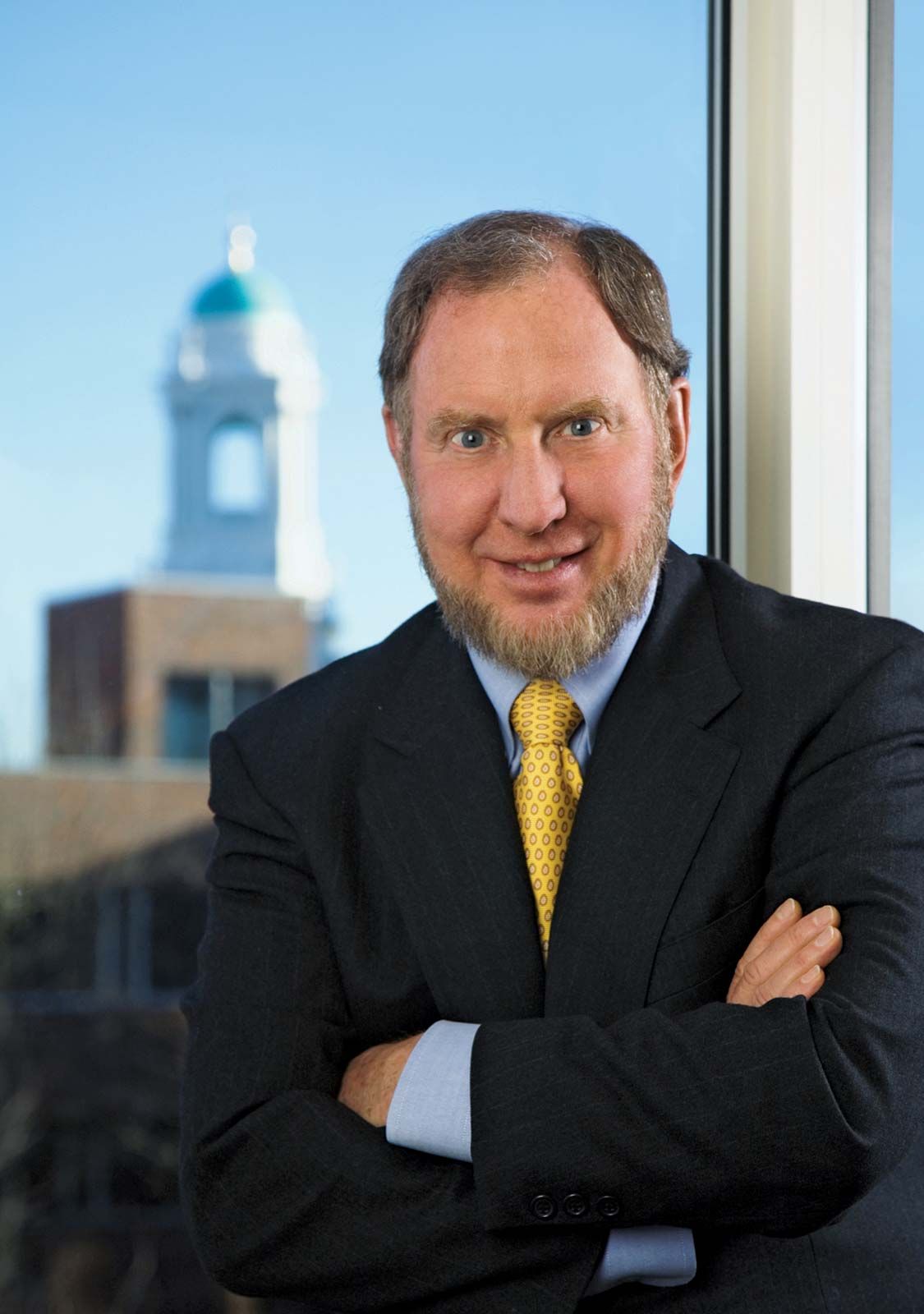
Robert D. Putnam
American political scientistWikipedia
117
MENTIONS
70
EPISODES
67
PODCASTS
Search complete. 117 mentions across 70 episodes found for "Robert D. Putnam".
Sep 12, 2026

Spencer CoxGUEST
Go back to, uh, Bowling Alone, um, and-
Jonathan MartinHOST
The Robert Putnam book, right?
Spencer CoxGUEST
Dr. Putnam, uh, the, the, The Loneliness Factor.
Spencer CoxGUEST
So w- w- we moved away from the, um, the healthy tribes in our country.

Randy CohenHOST
And the people that are excited about that maybe are the people you hang out with.
Ben FurnasGUEST
Yeah, and there's a social element to it, whether it's Robert Putnam talking about the decline of bowling leagues or all these other ways in which literally anything at all, any activity that brings people together...
Ben FurnasGUEST
in a particular place with some particular common cause, I think is a really lovely thing to be cultivating and encouraging so we're not all just isolated and interacting with each other only via screens.
Randy CohenHOST
This is Person Plays Thing.

Emily JashinskyHOST
Oh, where'd it go? Uh, "You field a lot of questions about the importance of reading to our democracy.
Emily JashinskyHOST
However, I recently started reading Robert Putnam's Bowling Alone, which argues that joining clubs is an integral part of a healthy politics.
Emily JashinskyHOST
I've been trying to wrap my head around how a solitary activity like reading and a communal activity like joining a bowling league, two activities which to my mind have nothing in common, can both be so important to our country.
Emily JashinskyHOST
Have you thought about what activities or hobbies, solitary or communal, are especially important to a healthy politics? Maybe joining a book club or Bible study which combines both is the best thing a person can do to save America.

Mike JackaGUEST
Perhaps you've heard about it.
SoniaHOST
Bowling Alone, The Collapse and Revival of American Community is a 2000 nonfiction book by Robert D. Putnam.
SoniaHOST
In it, Putnam surveys the decline of social capital in the United States since the 1950s.
Mike JackaGUEST
Bowling alone basically talks about the disaffection in Western society among people.

speaker_8HOST
A researcher named Sarah Conrath found that empathy among young Americans dropped 40% between the late 1970s and 2009.
speaker_8HOST
Robert Putnam had already mapped the retreat.
speaker_8HOST
We were becoming more connected by screen and more isolated in every way that counts.
speaker_8HOST
It is not a comfortable thing to say today, but I think the people who died that morning deserve our honesty.

Julia Freeland FisherGUEST
And so I started digging around a little bit in the idea of social capital.
Julia Freeland FisherGUEST
Robert Putnam and some other researchers had been writing about this idea for decades before that.
Julia Freeland FisherGUEST
And I also started to pay attention to education entrepreneurs who were sort of thinking more about the social side of opportunity.
Julia Freeland FisherGUEST
I took a very expensive detour through law school, determined I did not want to be a lawyer, and found by both luck and my network a role at the Clayton Christensen Institute in 2013.
26 MINS LATER
Julia Freeland FisherGUEST
And while those are often for potentially private school tuition, I'm most excited for ways in which those dollars could be used to close the extracurricular gap.
Julia Freeland FisherGUEST
so that students of all backgrounds, regardless of their family income, have access to engaging extracurriculars aligned to their interests.
Julia Freeland FisherGUEST
Because we know, all the way back to Robert Putnam's research, that those are the spaces where deep, affective, emotional bonds and friendships form, where you access non-family adult role models who share your interests and give you a vision of a future possible self.
Julia Freeland FisherGUEST
They're such rich environments, and they're woefully underfunded.

Jim VandeHeiGUEST
Yeah
Michael SmerconishHOST
... ways to instill common experience, or as Robert Putnam would describe, social capital.
Jim VandeHeiGUEST
Yeah.
Michael SmerconishHOST
Are you taking me out of my mingling world with this book?

Bruce FeilerGUEST
Another 25 million people left Europe and came, for a whole bunch of reasons that we all know, and came largely to urban areas along the East Coast.
Bruce FeilerGUEST
That's 50 million people, okay? And if you look at what we might think of as the modern ritual calendar, Mother's Day, Father's Day, Thanksgiving, wedding showers, baby showers, some of the things that we've been talk- 4H clubs, bowling clubs, all the stuff that Robert Putnam said 100 years later left in bowling alone were invented in that period.
Bruce FeilerGUEST
So what happened was there was this widespread dislocation, change, and just upheaval, and the human response was to create new ways of gathering and connecting where the people found themselves largely in cities, and to create a whole calendar that we now think of as the kind of bedrock of the American family.
Bruce FeilerGUEST
So if it can happen in that time, I think it can also happen in this time.

Douglas AtkinGUEST
So when I was doing the re- doing a lot of research on, on cults and religions, for that matter, it- I was interviewing all these people, but I was also reading a lot of, um, uh, books by sociologists of religion, uh, and, and so on.
Douglas AtkinGUEST
And sociologists like, um, Robert Putnam, uh, who wrote Bowling Alone, and, and others.
Douglas AtkinGUEST
Um, th- the general consensus amongst those, those academics and experts is that there is a...
Douglas AtkinGUEST
A- and I would, a- and this is, and not just academics of religion, but also sociologists, psychologists, is there is a, a need to belong in the human, um, in the human species.
37 MINS LATER
Michael EisenbergHOST
Do, do you think there's more social anxiety today than there was in the past? And if so, why?
Douglas AtkinGUEST
Um, I don't know.
Douglas AtkinGUEST
But I'm sure that's being measured by the likes of, um, you know, Robert Putnam and other sociologists.
Douglas AtkinGUEST
And, um, th- there may well be because there's more fear that has been stoked by, um, you know, demonization basically.

Ashley C. GibsonGUEST
I think about it more from the, I think, the more traditional sense, if you were thinking.
Ashley C. GibsonGUEST
Robert Putnam, who wrote Bowling Alone, talks about the value of our weak and our strong ties in the same way that we have financial capital or physical capital or employee capital.
David HatchHOST
Okay, that was going to be my next question was what's the better way to describe it? The better
Ashley C. GibsonGUEST
definition of it.
60 more episodes mention Robert D. Putnam.
Create an account to see the whole feed, search across every transcript, and follow the entities you care about.