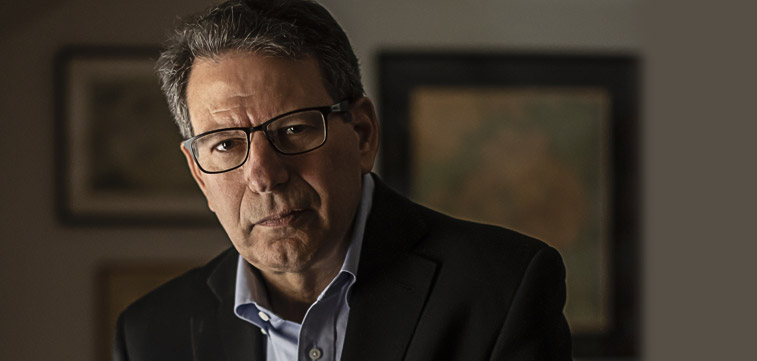
Robert D. Kaplan
American authorWikipedia
12
MENTIONS
8
EPISODES
8
PODCASTS
Search complete. 12 mentions across 8 episodes found for "Robert D. Kaplan".
Sep 25, 2026

Bronwen MaddoxHOST
How would you see their relative influence at this point, Ben?
Ben BlandGUEST
The analyst's answer would be, it depends on what you're looking to measure, right? So you can look at a whole different range of factors.
Ben BlandGUEST
If you're thinking about finance, the dollar, that's clearly America out on top.
Ben BlandGUEST
If you're thinking about manufacturing, China's clearly winning that game.
13 MINS LATER
Yu JieGUEST
I mean, partially what Ben said was right.
Yu JieGUEST
And really on the sense of how much United States should care about Asia security, how much United States should care about Asia allies.
Yu JieGUEST
And for me, judging from current Trump's policy, I found very confused as a policy analyst.
Yu JieGUEST
So secondly, what China really wants.

Carlos LozadaGUEST
When I'm trying to figure out something, I just read a bunch of books on it.
Carlos LozadaGUEST
So I went back and I read The Post-American World by Fareed Zakaria or The Rise and Fall of Great Powers by Paul Kennedy from the 80s, The Coming Anarchy, Robert Kaplan's book.
Carlos LozadaGUEST
And I was trying to look at books that kind of explained hinge moments in the life of a nation, of a power.
Carlos LozadaGUEST
And essentially what I came up with there is that When you're a superpower, you have certain responsibilities.

Pankaj SaranGUEST
there are many.
Pankaj SaranGUEST
I mean, of late, I've been reading this book by Robert Kaplan, The Revenge of Geography.
Pankaj SaranGUEST
And I'm also reading this book, The Rise and Fall of Great Empires.
Pankaj SaranGUEST
And it's good to read India's China War to understand the history of our relationship with China.

Chris GalipeauGUEST
Okay
Steve SanduskiHOST
... that were connected to, uh, geopolitics and experts in that area, and one of the gentlemen that I had on was a guy named Robert D. Kaplan.
Steve SanduskiHOST
He's written lots of books, uh, about geopolitics.
Steve SanduskiHOST
And, and I asked him a similar question to what I just asked you.

Hugh HewittHOST
Yemen has always been the afterthought.
Hugh HewittHOST
Robert Kaplan opened a book in Yemen, right, not long after 9/11, and the basic, uh, through line of that book was it's ungovernable.
Hugh HewittHOST
Uh, as I, I did my research this weekend, the Houthis have 200,000 men under arms.
Hugh HewittHOST
The Saudis and the UAE can't control that?
38 MINS LATER
Mark MontgomeryGUEST
M-more than 100,000.
Hugh HewittHOST
Okay.
Hugh HewittHOST
So Admiral, uh, long ago when the war on terror began, Robert Kaplan, for whom I have a great deal of respect, was a guest on this show.
Hugh HewittHOST
He put out one of his many books that opened in Yemen, and it made the case that we needed our, our special forces there, and we were there.

Indranil ChakrabortyHOST
Unfortunately, my experience when talking about strategy communication with clients is that in very few organizations does the true understanding of strategy go beyond the boardroom.
Indranil ChakrabortyHOST
It's almost as if nothing much has changed since Robert Kaplan and David Norton wrote a piece in Harvard Business Review in 2005. where they observed via a 15-year study that on average, 95% of a company's employee were unaware of or did not understand its strategy.
Indranil ChakrabortyHOST
If employees are unaware of the strategy or don't understand it, they surely cannot help the organization implement it effectively.
Indranil ChakrabortyHOST
In my work with stories, we know that one of the ways to correct this is through the use of strategy stories.

speaker_0NARRATOR
But Trump's instincts, preferences, priorities, and practices have been noxious since he entered politics, and no one should be surprised that he is who he always said he was.
speaker_0NARRATOR
Sims's thesis acts as the spiritual successor to the sober warnings issued by Robert Kagan and Robert Kaplan a generation ago.
speaker_0NARRATOR
Like Kagan in The Return of History, Sims understands that the liberal order was never a natural evolution.
speaker_0NARRATOR
It was a contingent reality, backed by a very specific kind of American power that has since grown brittle and deformed under the weight of insularity and illiberalism.

Danita CumminsHOST
She just needed to stop leading alone.
Danita CumminsHOST
Leadership researchers Robert Kaplan and Robert Kaiser have studied what happens when leaders overuse their strengths.
Danita CumminsHOST
Their work on leadership versatility shows how a strength, when it's pushed too far, can actually become a weakness.
Danita CumminsHOST
Decisiveness can become force.