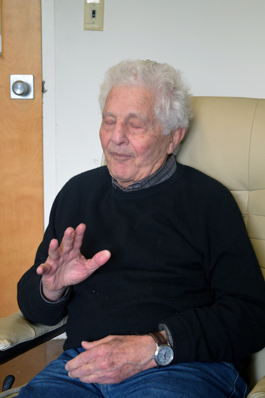
Robert Alter
American professorWikipedia
33
MENTIONS
21
EPISODES
17
PODCASTS
Search complete. 33 mentions across 21 episodes found for "Robert Alter".
Sep 14, 2026

Mike DayHOST
All these verses, if you've ever read them and you're like, what is going on with these crisping pins and round tires like the moon and the nose rings and the jewels? I remember reading this going, what is going on? Well, there's a lot of different interpretations of Isaiah 3.
Mike DayHOST
Robert Alter sees this as a description of the disparity between the rich and the poor.
Mike DayHOST
And we give you his take in the show notes.
Mike DayHOST
Victor Ludlow, who's an LDS commentator, he sees these passages as a description of the immodesty of the daughters of Zion contrasted with the slavery they're soon going to face.

Yaakov Ginsberg-SchreckGUEST
At the end of creation, it says, Shabbat Vayina Fash, God re-ensouls God's self, God re-Nefesh's God's self.
Yaakov Ginsberg-SchreckGUEST
And Robert Alter translates this as a great living translator, translates this as God took a deep breath as that commentary.
Yaakov Ginsberg-SchreckGUEST
So yes, neshama, nefesh, and rurach, which rurach is an interesting one because like neshama, it means both breath and spirit, and it has uniquely a third meaning, which is wind.
Yaakov Ginsberg-SchreckGUEST
So breath, wind, spirit is all captured in this term.

Paul WhiteHOST
To comfort those who mourn, to provide for those who mourn in Zion, to give them a garland instead of ashes.
Paul WhiteHOST
One translator, I think Robert Alter, writes, a crown of garland rather than a head covered in ash, the oil of gladness instead of mourning.
Paul WhiteHOST
So prophetically, the arrival of the one upon whom was the Spirit of the Lord, and that is Jesus, through a Christian lens.
Paul WhiteHOST
This is how we interpret that text, that Jesus is the anointed one, and through his arrival, an anointing lies upon him to bring comfort to people who mourn, to crown their head with garland rather than covered in the ash of mourning.

Mark ClarkHOST
Not true.
Mark ClarkHOST
There's a guy named Robert Alter.
Mark ClarkHOST
He's a Jewish scholar, brilliant Jewish scholar.
Mark ClarkHOST
And he points out this.
Mark ClarkHOST
It's called narrative theology in theological circles.
Mark ClarkHOST
It's that sometimes God just doesn't sit us down and go, he tells a story.
Mark ClarkHOST
And here's what Robert Alter points out.
Mark ClarkHOST
Every Old Testament man who has multiple wives, if you read the story, is having a terrible time of it.

John McKeeHOST
Betza 16a The specific command which dominates Yom Teruah is the command to blow the trumpet, or shofar, as seen in Leviticus 23, 23, and 24.
John McKeeHOST
Robert Alter The term used for trumpet blasts, New International Version, or loud blasts, New Jewish Publication Society version, is teruah, meaning shout or blast of war, alarm or joy, applied in various contexts, including battle cry of king, blast for march, and shout of joy with religious impulse.
John McKeeHOST
Brown Driver Briggs.
John McKeeHOST
While various emotions are involved in blowing or even blasting out to the Lord, the idea conveyed is that one is not only to blow the shofar for recognizing His holiness and awesomeness, but also that others can be drawn to Him.

Noach LawrenceHOST
And here's what the story says.
Noach LawrenceHOST
This is Robert Alter's translation, Robert Alter from UC Berkeley.
Noach LawrenceHOST
And they rose early in the morning and went up to the mountaintop, saying, Here we are, and we shall go up to the place that Adonai has said, for we have offended, meaning they now realize the error of their ways.
Noach LawrenceHOST
And Moses said, Why is it that you are overstepping Adonai's word when it will not succeed? Do not go up, for the Lord is not in your midst, lest you be routed before your enemies." And they strove to go up to the mountaintop, meaning nonetheless, Moses has said, no, God made a different decision.
Noach LawrenceHOST
There's actually a plan, God decides it has to be a different plan, and there's a faction who says, no, no, no, no, no, now we're gonna go.
Noach LawrenceHOST
And what we find is that this doesn't work because they're just saying, well, we're going to do it defiantly anyway, and that turns out not to be how this game works.
Noach LawrenceHOST
There's this fascinating verb that Robert Alter translates as strove, and they strove to go up to the mountaintop, Vayapilu.
Noach LawrenceHOST
This verb appears only once in the entire full Hebrew Bible, the entire Tanakh.
Noach LawrenceHOST
Perhaps also a rabbinic commentator as well.
Noach LawrenceHOST
Robert Alter, a current, say, professor emeritus of UC Berkeley, he comments in particular, we remember the fish we used to eat in Egypt for free, chinam, to this day in Israel, you know, the free not-so-good newspapers they hand out on the bus for free is chinam, right? We remember the fish we used to eat in Egypt for free.
Noach LawrenceHOST
And Robert Alter comments, This term is a striking instance of selective memory.
Noach LawrenceHOST
The slaves did not have to pay for their food, which was provided by their owners, but of course a brutally high price was exacted through the punishing labor imposed upon them by their taskmasters.
Noach LawrenceHOST
And that's exactly what it is, it's selective memory.
Noach LawrenceHOST
And so here we are.
Noach LawrenceHOST
This is Robert Alter's translation, Robert Alter of UC Berkeley, who really evokes the Hebrew beautifully in his English.
Noach LawrenceHOST
And here's what we find here, that Moses is in the midst of herding his father-in-law's flock deep in the wilderness.
Noach LawrenceHOST
And the Lord's messenger appeared to him, to Moses, in a flame of fire from the midst of the bush.
5 MINS LATER
Noach LawrenceHOST
And he's curious about what's going on with the bush.
Noach LawrenceHOST
Initially, it doesn't have anything to do with slavery.
Noach LawrenceHOST
As Robert Alter points out in the commentary that accompanies his translation, Robert Alter of UC Berkeley, Professor Emeritus, He writes, Moses is initially drawn by curiosity about the anomalous site, scarcely imagining what he is getting into.
Noach LawrenceHOST
So the test isn't per se about slavery.

Matthew HalsteadHOST
It's just a thought, something to think about.
Matthew HalsteadHOST
I wanna read to you from Robert Alter's translation.
Matthew HalsteadHOST
If you're not familiar with Robert Alter, I've interviewed him on the podcast.
Matthew HalsteadHOST
I don't remember, forgive me.
Matthew HalsteadHOST
I don't remember what episode that was, but we talked about his three volume translation of the Hebrew Bible.

Adam MillerGUEST
The basic problem has to do here with the way the-- There's something really obvious about the world, that in general, you and I can't see or don't see or don't want to see or even refuse to see, and that this is what prevents us from being wise, such that the first step toward redemption is to open our eyes and willingly see what it is that we have not wanted to see.
Adam MillerGUEST
As the Book of Proverbs says, we end up living as fools or dupes, or as Robert Alter puts it, dolts is his translation [laughs].
Adam MillerGUEST
Because of this ignorance, then we do end up doing foolish and destructive things.
Adam MillerGUEST
We end up pursuing happiness in impossible ways that fail to match up with how the world really is and with what God really wants for us.
11 MINS LATER
Adam MillerGUEST
We will only be as wise as we are willing to be corrected.
Adam MillerGUEST
We will only acquire as much wisdom as we are willing to bear what seems to outsiders to be what is fearful, the fear of the Lord.
Adam MillerGUEST
I'm especially gonna use for this section some of, uh, Robert Alter's translations, which I think are some of the cleanest, clearest, most contemporary translations.
Adam MillerGUEST
Here's Proverbs 1:1-7: "The proverbs of Solomon, son of David, king of Israel.
11 more episodes mention Robert Alter.
Create an account to see the whole feed, search across every transcript, and follow the entities you care about.