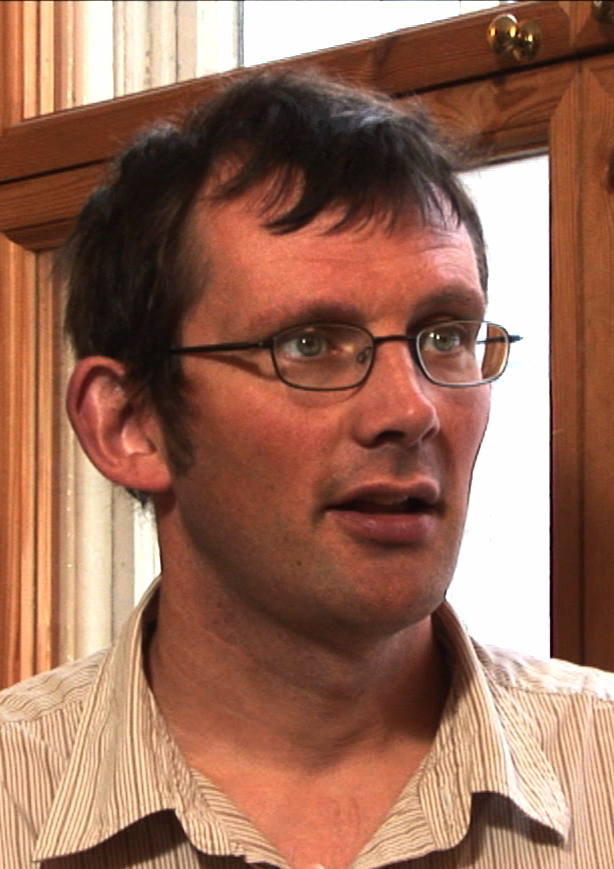
Rob Hopkins
Activist and writerWikipedia
27
MENTIONS
9
EPISODES
8
PODCASTS
Search complete. 27 mentions across 9 episodes found for "Rob Hopkins".
Nov 1, 2026

Rob HopkinsHOST
We love to explore the practicalities of this, the fine art of evidence-based dreaming.
Rob HopkinsHOST
I'm your host Rob Hopkins and it's a joy to join you here today.
Rob HopkinsHOST
And today we're going to be exploring the fine art of creating pop-up tomorrows with a master of the art.
Rob HopkinsHOST
What's a pop-up tomorrow? Well, for me, it's when you make a tear in the fabric of time and pull the future, the near future through into the present so people can see it and touch it and taste it.
24 MINS LATER
Bruno DoedensGUEST
That's one millimeter in almost two meters.
Bruno DoedensGUEST
Can you imagine? So we can learn from trees so many.
Bruno DoedensGUEST
I mean, if you are able to be the biggest organism on the planet, can stay there for more than a thousand years in one place without moving, and being a host for so many other creatures, I mean, then you give more than you take.
Bruno DoedensGUEST
And that's what we have to learn.

Manda ScottHOST
So part of building the new world is beginning to lay the foundations where people are free to be creative.
Manda ScottHOST
Rob Hopkins calls neoliberalism a disimagination machine, which is another way of saying the same thing.
Manda ScottHOST
We need to break that open.
Manda ScottHOST
So now we're at the point of the narratives and we have two linked creative fires, things we need to kindle and keep alive.

Gabriel LuberGUEST
It's called How to Fall in Love with the Future, A Time Traveler's Guide to Changing the World.
Gabriel LuberGUEST
And it's by Rob Hopkins.
Gabriel LuberGUEST
And there's a lot of incredible takeaways from this book.
Gabriel LuberGUEST
But the main takeaway is that if we can't visualize in Technicolor the world that we do want in 10 years, in 20 years... then how could we ever create it, right? And we're being inundated with terrifying, a lot of fear, a lot of terrifying dystopian futures scenarios.
8 MINS LATER
Gabriel LuberGUEST
We talked about how to fall in love with the future.
Gabriel LuberGUEST
Yep.
Gabriel LuberGUEST
A Time Traveler's Guide to Changing the World by Rob Hopkins.
Gabriel LuberGUEST
But the book that has influenced Lancaster Gift Box the way we operate the most is a book called Unreasonable Hospitality.

Cara KearneyHOST
Last question that
Cara KearneyHOST
I like to ask is taking a leaf out of a guy called Rob Hopkins' book, who I'm always harping on about in literally every episode because he wrote a book called From What Is to What If? The Power of Imagination to Build a Better World.
Cara KearneyHOST
And while he acknowledges we're in a climate crisis, he also states that we're in a crisis of imagination because... people struggle to even imagine the world it is that we're fighting for, that we're hoping for, that we want to create and bring into the present moment.
Cara KearneyHOST
So in that vein, I would love to ask you to imagine while we were chatting, there was some kind of glitch in the time quantum sphere.

Caroline LucasGUEST
And that is not a very attractive prospect.
Caroline LucasGUEST
And Rob Hopkins, bless him, from Rapid Transition, he was saying, you know, why not get local authorities to make available amounts of land for local people to be able to grow their own food? Why not give subsidies for people to reverse their front gardens that they might have put concrete on back into grass and soil that can absorb the water again? You know, some of this stuff is really pretty basic if you just had a bit of vision there.
James MeadwayHOST
well this is uh something that fairly frequently is kind of kind of lacking but something about that government response to the problem of food security uh in particular is very very striking is just how individualized it was you know the bbc thing saying i can't quite remember the headline but the first line and their their you know report on what the government is now telling you to do is that extreme weather is going to change how we shop and this is the recommendations that like you should go and stock up on extraordinary amount of tin beans or whatever Including the detail, I seem to recall, that if the water supply runs out, don't worry if you've got tin food, because you can kind of slurp away at this.
James MeadwayHOST
And this is kind of the government's official message.

Asher MillerHOST
He started when they kind of, when they left the emissaries, he actually started, you know, he took on the role of being a writer.
Asher MillerHOST
He was like a self-taught guy, became a writer, started speaking about things, started his own newsletter around the first book that he published.
Asher MillerHOST
People were signed up for it.
Asher MillerHOST
They, you know, would send him, I can't remember what it was, 10 books a year.
Asher MillerHOST
stuff.
Asher MillerHOST
Richard was also an illustrator.
Asher MillerHOST
He was a very creative guy.
Asher MillerHOST
I don't know that people know that much about that side of him, but You know, he was an illustrator.
Caroline LucasGUEST
And so I think what we want to centre in the report is much more that community resilience and frankly, making the case that your relations with your neighbours are a far better area of security for you than having your baked beans in your loo roll, although they're probably important.
Caroline LucasGUEST
But essentially it is about communities coming together in a collective way and Rob Hopkins I think spoke really beautifully about this when he was suggesting that instead of the loo roll and the baked beans or maybe as well as you know why don't we really put pressure on councils to release land so that people can come together and grow their own food together in local areas you know that would be a far more effective way of really protecting ourselves from what's to come and something that Rupert often says, so I hope you won't mind that I've just snuffled it so he can't say it.
Caroline LucasGUEST
But basically, it's really significant, I think, that even in the NATO treaties, that Article 3 of NATO talks about national collective resilience and basically says that, you know, around 1.5% of the amount of GDP that's meant to be being spent on security in the years to come you know can very legitimately and importantly be focused on community resilience because you can have as many weapons as you like but if your society is in total collapse that's not going to help you very much so i just think it's quite interesting that there's more and more of this kind of collapse thinking that's beginning to enter the the discourse and yet in some ways as as with angela eagle it is simply not commensurate with with the kind of scale of what we face
Jon AlexanderMODERATOR
In many ways, I think this is why I think this report is so powerful, because our political discourse is starting to, in the background, sort of have this reality inevitably starting to enter.

Shay MacKayGUEST
This home of ours, both this church and this country, and even this world, is no longer feeling like home.
Shay MacKayGUEST
We have come to an edge, a place that is calling us, as author Rob Hopkins says, "To choose to work towards something we want to live in." Instead of living in a world reactively, always just trying to keep the things we don't want at bay.
Shay MacKayGUEST
He says, "By living an experience of a future, resulting in our doing everything we possibly can do to make it true, we can map out a route to inspire change." Familiarity, continuity, belonging.
Shay MacKayGUEST
As we practice creating those here in this place, we strengthen our capacity to create them as we journey.

Shay MacKayHOST
This home of ours, both this church and this country, and even this world, is no longer feeling like home.
Shay MacKayHOST
We have come to an edge, a place that is calling us, as author Rob Hopkins says, "To choose to work towards something we want to live in." Instead of living in a world reactively, always just trying to keep the things we don't want at bay.
Shay MacKayHOST
He says, "By living an experience of a future resulting in our doing everything we possibly can do to make it true, we can map out a route to inspire change." Familiarity, continuity, belonging.
Shay MacKayHOST
As we practice creating those here in this place, we strengthen our capacity to create them as we journey.