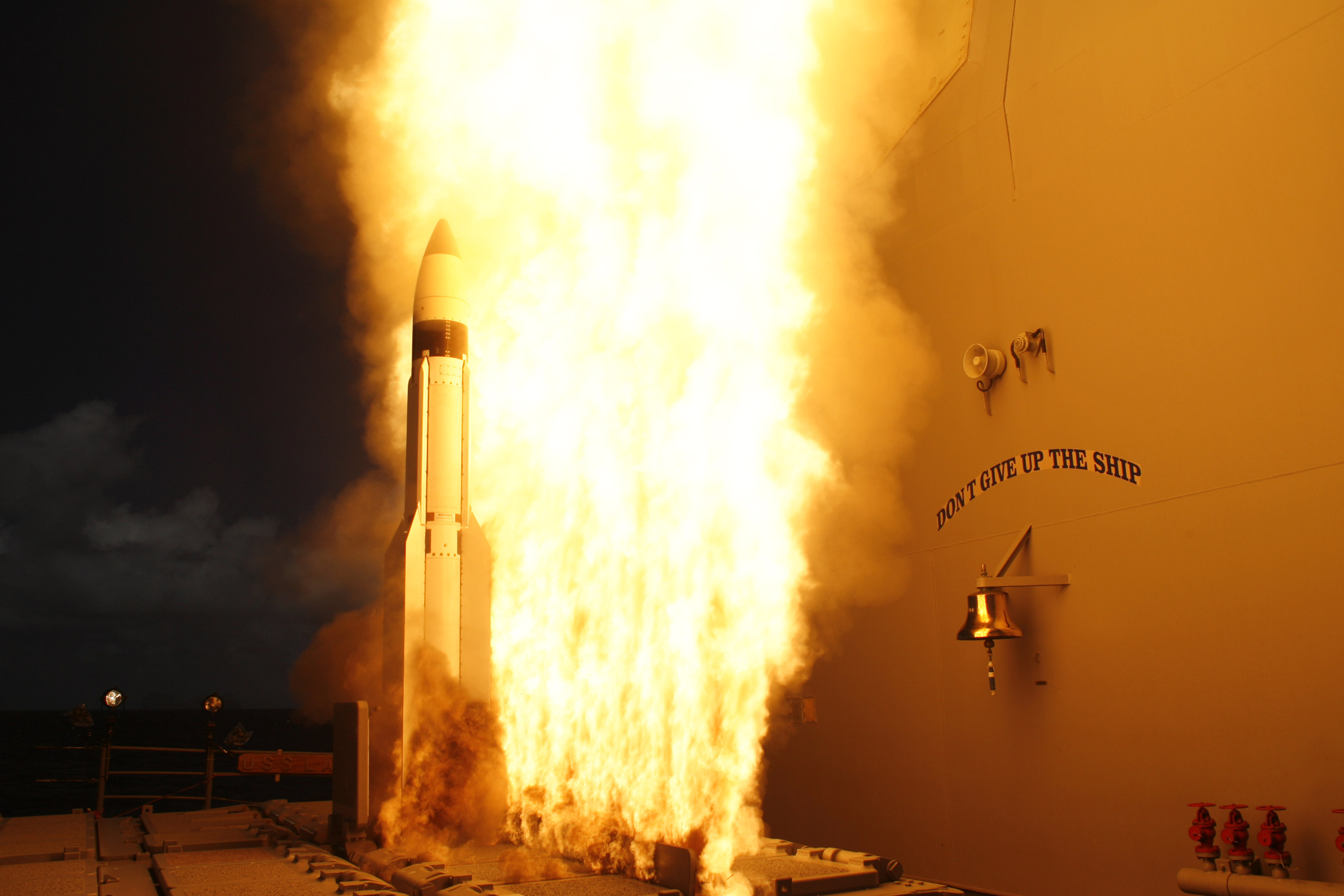
RIM-161 Standard Missile 3
19
MENTIONS
16
EPISODES
16
PODCASTS
Search complete. 19 mentions across 16 episodes found for "RIM-161 Standard Missile 3".
Nov 23, 2026

Simon WhistlerHOST
The Ministry of Defense is quite open about this.
Simon WhistlerHOST
In March 2023, for example, its new Security and Defense Strategies briefing showed that ballistic missile defense stocks, illustrated with the SM-3 Block IIA and Pak-3 MSE, were only funded to around 60% of the amount judged as being needed the year prior.
Simon WhistlerHOST
And why was this allowed to happen, you ask? Well, partly it's because budgets haven't grown in line with the ever more sophisticated weapons systems that they are expected to buy, with the Ministry of Defense's own 2024 testimonial describing how ammunition budgets have stayed basically flat for the last 30 years.
Simon WhistlerHOST
during that time the older sm-3 block 1b surface-to-air interceptor missile that used to cost 10 million us dollars per missile has become the sm-3 block 2a that we just mentioned inflation and its improved capabilities having pushed the price tag up to 22 million dollars per missile.

Ryan McBethHOST
Europe still mostly relies on the United States and its Tomahawk cruise missiles for air defense.
Ryan McBethHOST
American-made Patriot and THAAD, or Terminal High Altitude Air Defense, batteries and the standard missile or SM-3 batteries provide the largest measure of coverage.
Ryan McBethHOST
The Europeans are scrambling to plug a gunshot wound here left by a nuclear curial tech bro and possibly a president whose own policies are coming under fire across America.
Ryan McBethHOST
Ukrainians will likely benefit from the euros sloshing around and the telecommunications solutions that are yet to come, but they will be slow to materialize and Ukraine needs this stuff now.

David PyneGUEST
Well, I think Trump would likely use what, you know, what few missile interceptors we have left to help Israel shoot down the Iranian counterstrikes.
David PyneGUEST
You know, we're already depleted with Patriots and Thads down to 50 to, you know, by 50 to 80 percent, you know, to the point where it's affecting our ability to defend the United States homeland, certainly with SM-3 and SM-6 missile interceptors.
David PyneGUEST
which is, as we've discussed, we're likely expended defending our Gulf allies in the initial phases of the war with Iranian retaliatory strikes.
David PyneGUEST
But, you know, the key to ending this conflict and deescalating is to withdraw U.S. military forces from the Persian Gulf region.

Stephen SemlerGUEST
The U.S. operates basically four types of missiles.
Stephen SemlerGUEST
SM-3, which intercepts missiles from outer space.
Stephen SemlerGUEST
Those are about $30 million each.
Stephen SemlerGUEST
Then there's the THAAD, which intercepts missiles at the terminal phase, which is when the ballistic missile reenters the atmosphere very high up.

Kerry DunstHOST
Being able to churn out missiles in Japan would make it easier to resupply troops in a potential conflict over Taiwan.
Kerry DunstHOST
The U.S. and Japan also agreed to share technical information to ramp up production of SM-3 missiles, which warships use to intercept incoming ballistic missiles.
Kerry DunstHOST
Driving Japan's sense of urgency is growing Chinese as well as North Korean aggression.
speaker_6SOUNDBITE_SPEAKER
Three Chinese naval vessels, including a guided missile destroyer, along with one China Coast Guard vessel, passed through the Ozume Strait off the coast of Kagoshima Prefecture.

Kerry DunstHOST
Being able to churn out missiles in Japan would make it easier to resupply troops in a potential conflict over Taiwan.
Kerry DunstHOST
The U.S. and Japan also agreed to share technical information to ramp up production of SM-3 missiles, which warships use to intercept incoming ballistic missiles.
Kerry DunstHOST
Driving Japan's sense of urgency is growing Chinese as well as North Korean aggression.
speaker_6SOUNDBITE_SPEAKER
Three Chinese naval vessels, including a guided missile destroyer, along with one China Coast Guard vessel, passed through the Ozume Strait off the coast of Kagoshima Prefecture.

Cary DunstHOST
Being able to churn out missiles in Japan would make it easier to resupply troops in a potential conflict over Taiwan.
Cary DunstHOST
The U.S. and Japan also agreed to share technical information to ramp up production of SM-3 missiles, which warships use to intercept incoming ballistic missiles.
Cary DunstHOST
Driving Japan's sense of urgency is growing Chinese as well as North Korean aggression.
speaker_6SOUNDBITE_SPEAKER
Three Chinese naval vessels, including a guided missile destroyer, along with one China Coast Guard vessel, passed through the Ozume Strait off the coast of Kagoshima Prefecture.

Dick DonahueHOST
Stockpiles in the Tomahawk, the JASSM, and the TRSM strike missiles are far outnumbered.
Dick DonahueHOST
Those of the SM-3, the FAD, and the Patriot defense missiles are outnumbered.
Dick DonahueHOST
Part of the disparity is due to cost.
Dick DonahueHOST
The advanced technology needed to detect, track, and intercept incoming threats from defensive missiles far more expensive than their offensive counterparts, further encouraging lean defensive inventories.
Dick DonahueHOST
And while the war in Iran has left U.S. defensive missile inventory strained, the military is already taking steps to rebuild its stockpiles.
Dick DonahueHOST
Looking at the Pentagon's fiscal 27 budget request gives an insight into where the military sees the greatest need.
Dick DonahueHOST
Missile orders for this year are heavily concentrated in the long-range defensive interceptors, the CSM-3, the THAAD, and the Patriot.
Dick DonahueHOST
Orders for the THAADs alone are up 2,200% from last year, and due to complex manufacturing processes, these orders will take about two years to translate into deliveries, although efforts to ramp up production are already underway.

Matt McGregorGUEST
Yeah.
Eric LofgrenHOST
U.S.-Japan reach agreement on AMRAAM assembly SM-3 production boost.
Eric LofgrenHOST
So Japan will assemble AMRAAMs, but I do not believe that they will have newly qualified Seekers or Rocket Motors or some of these other things.
Eric LofgrenHOST
So I'm not quite sure how that's going to move the needle overall on production units unless they qualify additional second sources.
6 more episodes mention RIM-161 Standard Missile 3.
Create an account to see the whole feed, search across every transcript, and follow the entities you care about.