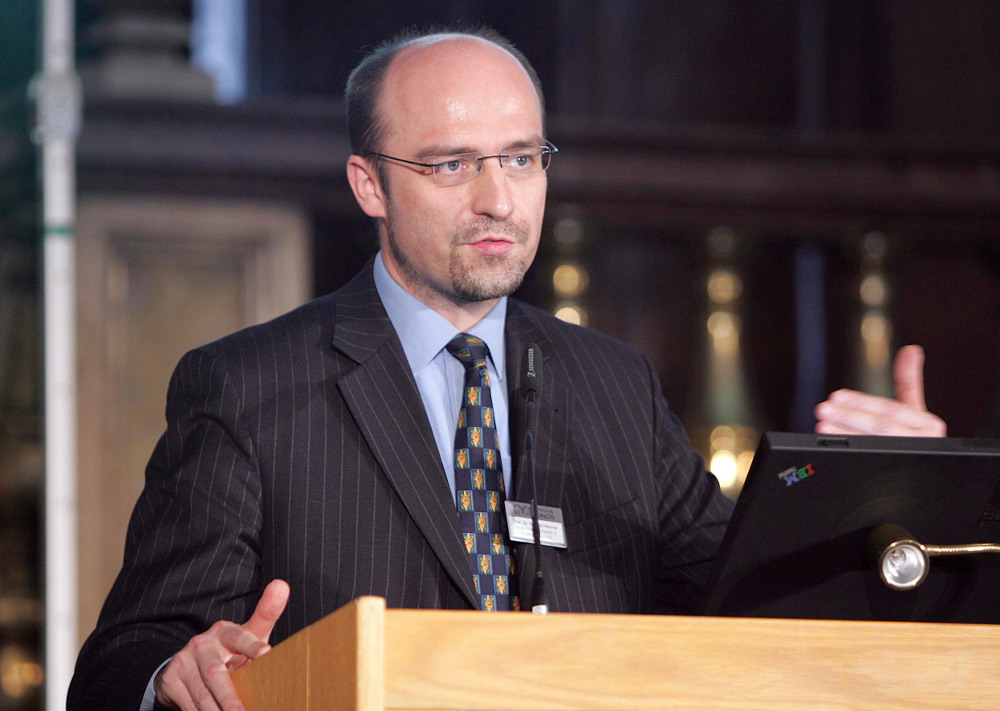
Richard Werner
German economistWikipedia
16
MENTIONS
14
EPISODES
14
PODCASTS
Search complete. 16 mentions across 14 episodes found for "Richard Werner".
Oct 16, 2026

Melody KateHOST
Yeah.
Melody KateHOST
And you very much believe as well, um, like Richard Werner, uh, that your signature creates the money, right? In a-
Cal WashingtonGUEST
Your signature can create the money, yes.
Cal WashingtonGUEST
It creates the instrument for sure.

Feargus O'Connor GreenwoodGUEST
We do make it out nothing.
Feargus O'Connor GreenwoodGUEST
And I think in addition to that, there was also Richard Werner, who I quoted, and he did sort of, I don't know if it was the first one, but it was an empirical test of the process where he took a 200,000 euro mortgage out against with the bank whilst monitoring their books.
Feargus O'Connor GreenwoodGUEST
And yeah, it's exactly as Gia Griffin described.
Feargus O'Connor GreenwoodGUEST
So the right to issue is really the right to steal money off everyone else, right?

speaker_4HOST
And we are pulling from an incredibly provocative source today.
speaker_4HOST
We're analyzing an explosive interview from the YouTube video titled The Greatest Fraud in Human History, Professor Richard Werner.
speaker_5HOST
Oh, yeah.
speaker_5HOST
That was uploaded on the channel The Peter McCormick Show.
55 MINS LATER
speaker_5HOST
And I want to bring it all back to the hook we started with.
speaker_5HOST
We asked what it would mean if the economic struggles, the constant crises, and the low growth we suffer through aren't accidents, but are the intended outcome of a perfectly functioning system designed by those planners.
speaker_4HOST
If Professor Richard Werner is right, the system isn't broken.
speaker_4HOST
It is working exactly as intended.

George GammonHOST
So they don't need reserves to begin with.
George GammonHOST
Werner disproved that, my buddy Richard Werner.
George GammonHOST
So then if you want to get sophisticated, you say, okay, well, they can create money out of thin air.
George GammonHOST
That is very true.

Catherine Austin FittsGUEST
He...
Catherine Austin FittsGUEST
We have a lot from Richard Werner, and then John is our co-host on, um, on Money and Markets.
Catherine Austin FittsGUEST
But anyway, so, so what you don't wanna do is you don't want a lot of money sitting around in dollars because it's depreciating, right? So, so, but you want enough dollars hanging around so if there's a flood or a disaster, you can buy food, and you want dollars to transact with because it's relatively private, right? So, so, you know, if you think fiat currency is expensive to hold onto, wait till you see what happens when you buy with a credit card, and the transaction fees that come out, it's enormous.
Catherine Austin FittsGUEST
Okay, so, so, so cash is for transactions.

Niall BradleyHOST
So one of the things that I was thinking of that
ScottyHOST
thatFinally came to mind was something that Richard Werner has talked about with regards to what happened during COVID, where back in the '90s, he developed the quantitative easing, which had two parts, and they actively did the opposite of what he suggested.
ScottyHOST
Now, they're aware of what he was saying because it later came out that, um, that they were aware of it.
ScottyHOST
In tw- 2020, um, they, the, the Fed implemented some of his quantitative easing policies, but they did it in a, a similar, similarly reversed way.

Taylor JohnatakisHOST
But when it comes to paper currency, who's going to trust the inscription? You see what I'm saying? That's going to be the sovereign because they enforce the inscription with the sword.
Taylor JohnatakisHOST
Richard Werner.
Taylor JohnatakisHOST
Do you remember him? World famous economist, written a couple of books.
Taylor JohnatakisHOST
So he did an interview on the Peter McCormick show and he talked to, and he confirmed as, and the reason I love this is because this isn't like a conspiracy for those of us who study this.

Alex von KanelHOST
Sorry, same economic schools of thought, but two different interpretations of it.
Alex von KanelHOST
So listen to another Richard Werner, Professor Richard Werner.
Alex von KanelHOST
He wrote the book, The Princess of the Yen.
Alex von KanelHOST
He's the one that basically taught me about money creation and And if people knew how money was created, you wouldn't work for it.

Sean WielandGUEST
But that's not what's rewarded when just trying to IPO or gin up the outstanding share price is focused basically on short term gains through marketing as opposed to that R&D, which is risky.
Sean WielandGUEST
And to your point, it's opportunity cost, right? Richard Werner is very good on this as well.
Sean WielandGUEST
Anytime you create an additional line of credit or create more money in the economy, it's going to go to one of three places.
Sean WielandGUEST
It's going to go into an asset bubble.

Sean WielandGUEST
But that's not what's rewarded when I'm just trying to IPO or gin up the outstanding share price is focused basically on short term gains through marketing as opposed to that R&D, which is risky.
Sean WielandGUEST
And to your point, it's opportunity cost, right? This Richard Werner is very good on this as well.
Sean WielandGUEST
Anytime you create an additional line of credit or create more money in the economy, it's going to go to one of three places.
Sean WielandGUEST
It's going to go into an asset bubble.
4 more episodes mention Richard Werner.
Create an account to see the whole feed, search across every transcript, and follow the entities you care about.