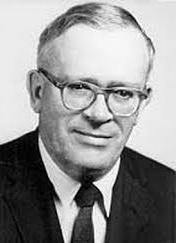
Richard M. Weaver
American philosopherWikipedia
9
MENTIONS
7
EPISODES
7
PODCASTS
Search complete. 9 mentions across 7 episodes found for "Richard M. Weaver".
Oct 6, 2026

Alan HarrelsonGUEST
Uh, when he came on the scene, uh, he was a student of Donald Davidson, who was probably the most important member of the Nashville 12, the Vanderbilt Agrarians.
Alan HarrelsonGUEST
Um, he was a, a strong fan of Richard Weaver from Weaverville, North Carolina.
Alan HarrelsonGUEST
Many more people know who Weaver is.
Alan HarrelsonGUEST
Um, but, uh, I think Bradford was the most important scholar of Southern history and Southern literature, uh, during the second half of the 20th century.

Rusty RenoGUEST
And of course, you're, you're, you find all of the anxieties of your great-grandparents to be increasingly irrelevant to the actual problems that you face.
Rusty RenoGUEST
I mean, one way I think about it, you know, Richard Weaver, I think he, he says in Ideas Have Consequences that we, our minds operate at three levels.
Rusty RenoGUEST
We have our specific beliefs and about things.
Rusty RenoGUEST
We have our principles and convictions.
19 MINS LATER
Louise PerryHOST
I don't know.
Louise PerryHOST
What do you think?
Rusty RenoGUEST
Well, that's why I find Richard Weaver's notion of metaphysical dreams so helpful, because it helps us understand that, again, that the-- people st- begin to think in a certain way about borders between nations.
Rusty RenoGUEST
And they won't-- they can't help but they...

Kevin BauderGUEST
You're going to find lots of other books that these guys write, and every one of them is worth reading.
Kevin BauderGUEST
But The Road to Serfdom, The Conservative Mind, and then The Philosophical Side of Conservatism, Richard Weaver's book, Ideas Have Consequences.
Kevin BauderGUEST
Everybody uses that phrase now.
Kevin BauderGUEST
That's the book that the phrase comes from, Ideas Have Consequences.

Seth GruberGUEST
ideas have consequences.
Seth GruberGUEST
That's a line from Richard Weaver, I believe originally, with a book called Ideas Have Consequences.
Seth GruberGUEST
And I used to always add to that, and bad ideas have victims.
Seth GruberGUEST
And you can't think of a more appropriate subject that would illustrate that than the slaughter of 1.5 billion preborn children worldwide since 1980.

George BagbyPANELIST
It depends on a concept we might even term fraternity.
George BagbyPANELIST
The sense of sharing basics, a sense of brotherhood, a sense of being born together in some way, as Richard M. Weaver had it.
George BagbyPANELIST
Not not in the sense that everyone's a family.
George BagbyPANELIST
those citizens do share things in common.

Todd WilkenHOST
What is that question in particular?
Bradley GreenGUEST
Well, I think at least one of the questions, the kind of question the critical theorists are saying is, what's wrong with the world, right? So I don't know if you've ever stumbled upon the work by Richard Weaver, Ideas Have Consequences.
Bradley GreenGUEST
And Richard Weaver is writing in the late 40s, Right when the critical theorists, you know, it's one of the eras they're writing in.
Bradley GreenGUEST
So Horkheimer and Adorno, two of these gentlemen, write a book called Dialectic of Enlightenment.
Bradley GreenGUEST
We can define those terms and all, but they're writing right at the end of World War II, and that's when Weaver's writing.

David JenkinsGUEST
By that, I mean, think back to Teddy Roosevelt.
David JenkinsGUEST
Think back to conservative thought leaders of the past, Russell Kirk and Richard Weaver, and then folks like Ronald Reagan.
David JenkinsGUEST
And Margaret Thatcher.
David JenkinsGUEST
That's a brand of conservatism that I understood.