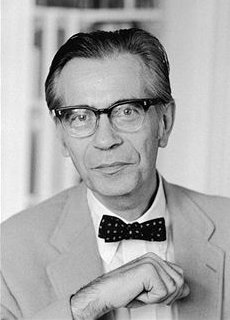
Richard Hofstadter
American historian and public intellectualWikipedia
129
MENTIONS
23
EPISODES
22
PODCASTS
Search complete. 129 mentions across 23 episodes found for "Richard Hofstadter".
Nov 24, 2026

Ilana GomelGUEST
See Heinrich Himmler above.
Ilana GomelGUEST
Historian Richard Hofstadter's 1964 essay, The Paranoid Style in American Politics, does not deal specifically with Jew hatred.
Ilana GomelGUEST
And yet, it is required reading for anyone seeking to understand the epistemology of anti-Semitism.
Ilana GomelGUEST
After providing numerous examples of the paranoid style in various supposed conspiracies involving Masons, Catholics, slaveholders, communists, and so on, Hofstadter describes the mindset underlying them all, quote, As a member of the avant-garde who is capable of perceiving the conspiracy before it is fully obvious to an as yet unaroused public, the paranoid is a militant leader.

Sidney BlumenthalHOST
It's conventional politics, whereas it's the opposite.
Jacob HeilbrunnGUEST
Well, that takes us back to Richard Hofstadter.
Jacob HeilbrunnGUEST
whose analysis was not, you know, a lot of people debunk the book, The Radical Right, but it actually, if you look at it now in retrospect, with its focus on status anxiety and the psychological nature of this, is really not that far off.
Jacob HeilbrunnGUEST
Dan Bell

Daniel DreznerGUEST
I think we have had waves of immaturity in the past.
Daniel DreznerGUEST
Richard Hofstadter, when he wrote Anti-Intellectualism in American Life, pointed this out.
Daniel DreznerGUEST
I've written a previous book called The Ideas Industry that talked about this as well.
Daniel DreznerGUEST
The United States is a complex country.

Tyler Austin HarperHOST
I think one of the biggest changes, and this is something we've talked about in the show, I'd seen over the last couple of years is I think normies have become much more paranoid and in ways that I think are defensible.
Tyler Austin HarperHOST
Um, but it does feel like there is, uh, the return of, uh, what Hofstadter called the paranoid style in American, American politics.
Tyler Austin HarperHOST
Like I think that kind of, uh, generalized vague tinge of tint of conspiracy is, um, yeah, it's just like way more normalized among the general public in a way that I don't think the media has quite caught up to, but, uh, yeah, I don't know.
Tyler Austin HarperHOST
What do you think?

Thomas FrankGUEST
And we have to start respecting this.
Thomas FrankGUEST
By the way, one of the guys, I mean, I've become obsessed in the last 10 years with the consensus generation of intellectuals like Richard Hofstadter.
Thomas FrankGUEST
And he went from writing this this ferociously anti populist book to then writing this book about about anti intellectualism and how we had to overcome it.
Thomas FrankGUEST
It's funny how and he got the Pulitzer Prize for both of them.
16 MINS LATER
Thomas FrankGUEST
We're going to roll back all these New Deal regulations and get those Wall Street guys, those great geniuses on Wall Street, get them coming up with creative financial instruments.
Thomas FrankGUEST
And we all know how that ended, right? But anyhow, the question is about populism.
Thomas FrankGUEST
And this is a fascinating thing because the way the word populism is used by people like Richard Hofstadter and then all of these thinkers today who follow in his wake is populism represents the danger of... ordinary people of reform from below, of ordinary people participating in politics, ordinary people demanding things of government, that's supposed to be dangerous.
Thomas FrankGUEST
And their exemplar of that is Donald Trump.

Sam Adler-BellHOST
It might be necessary to have a big, strong guy run certain people out of the community on a rail in order to preserve liberalism.
Sam Adler-BellHOST
And they have a tendency, I think both groups, to explain political movements and developments in terms of status anxiety, which is a term for Richard Hofstadter especially, as opposed to class or economic interests, which results in a tendency to pathologize their opponents as opposed to seeing them as groups with their own political interests, economic interests, class interests.
Sam Adler-BellHOST
And I think, as Andrew really pointed out, there's an anti-political tendency in these groups.
Sam Adler-BellHOST
Daniel Bell, of course, wrote The End of Ideology.

Dan OppenheimerHOST
What was it?
Michael KazinGUEST
Well, I mean, Richard Hofstadter said in one of his books, Age of Reform, that it had a strong tinge of social democracy.
Michael KazinGUEST
And I think that's certainly true.
Michael KazinGUEST
I think it had a progressive Americanism about it.

IreneHOST
His company, SEK Genetics, has 10 staffers, while he and his brother have more than 400 head of cattle on their ranch.
IreneHOST
Although the populists of the 1890s may have established a sense of solidarity, between farmers and the urban working class that persisted through the New Deal, by the 50s, Richard Hofstadter observed a, quote, rapid decline of the traditional identification with all laboring men and the growing tendency of substantial farmers to think of themselves as businessmen and employers, close quote.
IreneHOST
This in turn contributed to the hard pivot of the heartland toward conservative politics.
IreneHOST
The one aberration from that trend occurred in the 80s, when drought, crashing commodity prices, and the enormous debt that small operators had taken on by expanding in response to Nixon's agricultural secretary, Earl Butz's change to get big or get out, Earl Butz's charge to get big or get out, conspired to push more than 300,000 farms into bankruptcy.

speaker_0HOST
Two, focus on policy theft as a metric of victory.
speaker_0HOST
Political scientist Richard Hofstadter famously observed that U.S. alternative parties are like bees.
speaker_0HOST
Once they have stung, they die.
speaker_0HOST
The lesson, the populist party, People's Party of the 1890s, only won a handful of states, but their platform, the direct election of senators, a progressive income tax, and railroad regulations was eventually co-opted and passed by the Democrats and Republicans during the progressive era.

Dorian LynskeyHOST
Right.
Dorian LynskeyHOST
So first definition is the doctrinal belief that human beings possess free will from 1830.
Dorian LynskeyHOST
Not what we mean.
Dorian LynskeyHOST
Second is advocacy of support for or exercise of liberty.
5 MINS LATER
Ian DuntHOST
Oh, wow.
Ian DuntHOST
As the best version of these guys?
Dorian LynskeyHOST
As like the reasonable, moderate, humane character.
Dorian LynskeyHOST
And that's why I think this is such an interesting story to tell because yes, we have covered some of the people in this before from different angles.
13 more episodes mention Richard Hofstadter.
Create an account to see the whole feed, search across every transcript, and follow the entities you care about.