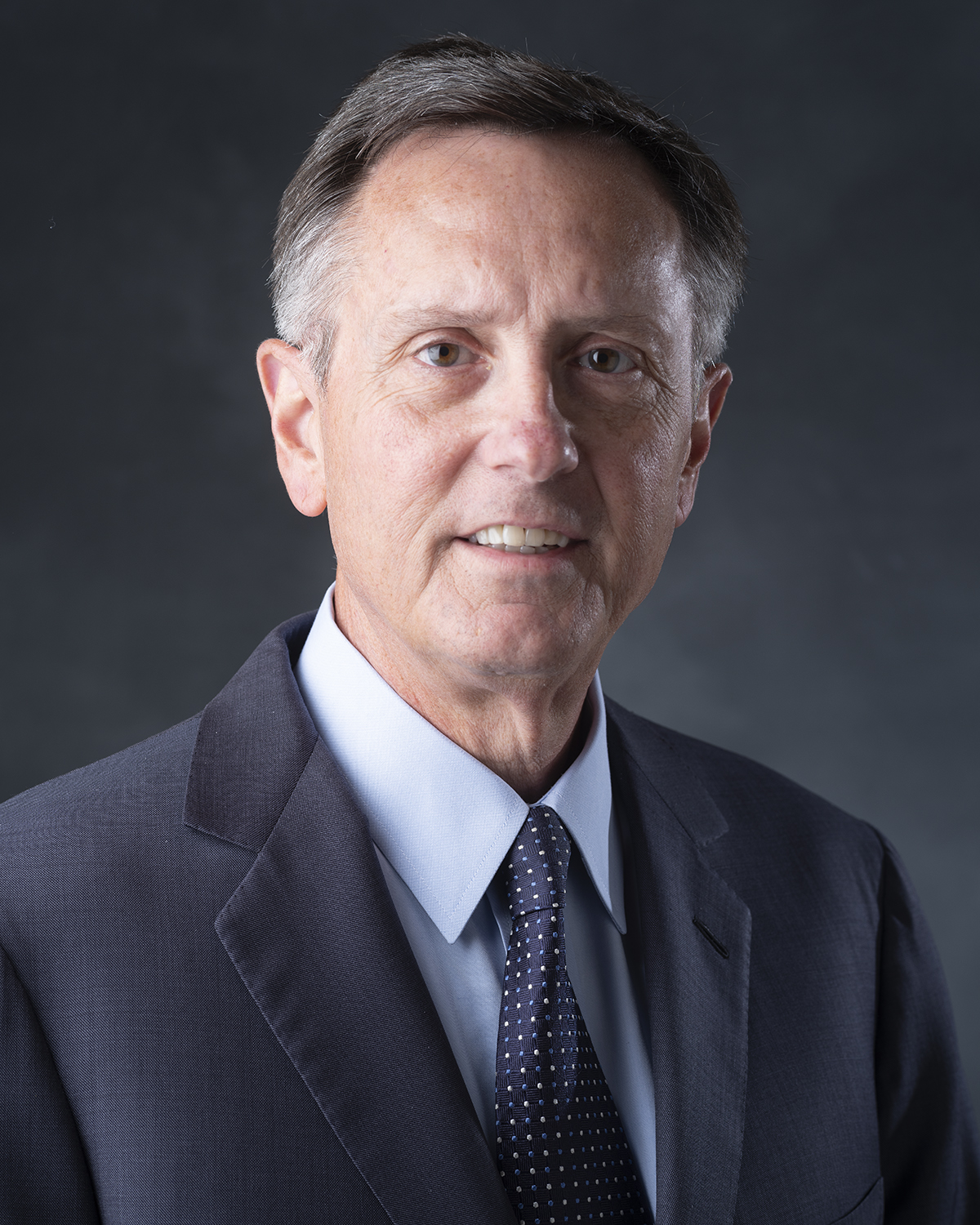
Richard Clarida
Economist and former Member of the US Federal Reserve Board of GovernorsWikipedia
12
MENTIONS
9
EPISODES
7
PODCASTS
Search complete. 12 mentions across 9 episodes found for "Richard Clarida".
Oct 30, 2026

Blanca Michael WardNARRATOR
Instead, Mr. Warsh honed in on expectations about future inflation, which still suggests continued confidence that the Fed will eventually make good on its promise to bring inflation back to its 2% target after more than six years of overshooting it.
Blanca Michael WardNARRATOR
metrics tracking inflation expectations in the year ahead have moved sharply higher but those are much more volatile and tend to fluctuate with energy prices which are up significantly because of the war with iran mr walsh also said the economy while growing strongly was not yet overheating and in turn exacerbating the fed's inflation problem and mr warsh emphasized that credit conditions for households and businesses had become more onerous in recent weeks that shift has materialized amid a spurt of volatility across equity markets as well as costlier financing for artificial intelligence companies whose continued growth is a crucial propellant for the economy that isn't something that we're uncomfortable with it tells me the policy is working mr warsh said in one signal mr warsh sent to convey the fed was not done raising rates he said of financial conditions i'm unwilling and unable to call them tight mr warsh gave other hints that further increases are coming taming inflation requires new monetary medicine and the fed is in the process of figuring out the appropriate protocol he said The right dosage will depend on the incoming economic data, said Richard Clarida, a former vice chair at the Fed who is now at PIMCO.
Blanca Michael WardNARRATOR
One or two more rate increases after a move in December are plausible, he said, but that is contingent on inflation decelerating at it has yet to do.
Blanca Michael WardNARRATOR
If we're sitting here a year from now and core inflation is running at 3%, then they've got more to do, Mr. Clarida added.

Jon HartleyHOST
You know, we're talking a lot about fiscal, uh, fiscal seamless, but I'm curious, like at some level, um, how does monetary policy work in these models? And I think, I mean, it's also worth, I think, maybe talking a little bit too about how monetary policy started entering these models, because we didn't talk too much about the rational expectations or revolution, but sort of the precursor to the New Keynesian models were these real business cycle models where, you know, we had forward-looking agents, but things like monetary policy were absent.
Jon HartleyHOST
And, you know, at some level, you know, it took folks like Mike Woodford, you know, folks like, you know, John Taylor, folks like, you know, there's many others, you know, Jordi Gowley, Mark Gertler, folks like Rich Clarida, who inserted sort of monetary policy and nominal frictions into these models.
Jon HartleyHOST
So things like sticky prices and sticky wages and And you needed those frictions in order to get monetary policy to work.
Jon HartleyHOST
Because if you didn't have those frictions, monetary policy wouldn't be able to produce real effects and so forth.
23 MINS LATER
Jon HartleyHOST
Where do you fall in these debates? They were, I feel like, pretty big in the late 2010s.
Jon HartleyHOST
In 2020, you had this flexible average inflation target.
Jon HartleyHOST
uh, policy that was spearheaded by Rich Clarida that was adopted.
Jon HartleyHOST
It's kind of, I think, been abandoned now.

Jon HartleyHOST
You know, we're talking a lot about fiscal, uh, fiscal seamless, but I'm curious, like at some level, um, how does monetary policy work in these models? And I think, I mean, it's also worth, I think maybe talking a little bit too about how monetary policy started entering these models, because we didn't talk too much about the rational expectations or revolution, but sort of the precursor to the New Keynesian models were these real business cycle models where, you know, we had forward-looking agents, but things like monetary policy were absent.
Jon HartleyHOST
And, you know, at some level, you know, it took folks like Mike Woodford, you know, folks like, you know, John Taylor, folks like, you know, there's many others, you know, Jordi Gowley, Mark Gertler, folks like Rich Clarida, who inserted sort of monetary policy and nominal frictions into these models.
Jon HartleyHOST
So things like sticky prices and sticky wages and And you needed those frictions in order to get monetary policy to work.
Jon HartleyHOST
Because if you didn't have those frictions, monetary policy wouldn't be able to produce real effects and so forth.
23 MINS LATER
Jon HartleyHOST
Where do you fall in these debates? They were, I feel like, pretty big in the late 2010s.
Jon HartleyHOST
In 2020, you had this flexible average inflation target.
Jon HartleyHOST
uh, policy that was spearheaded by Rich Clarida that was adopted.
Jon HartleyHOST
It's kind of, I think, been abandoned now.

Sara EisenHOST
Plus, the Federal Reserve's latest rate policy decision is on deck this week.
Sara EisenHOST
We'll discuss expectations with former Fed Vice Chair Richard Clarida.
Carl QuintanillaHOST
And a warning for the ever-booming AI trade from S&P, making the case that hidden AI debt may be greater than we think, posing more risk for the top hyperscalers.
Carl QuintanillaHOST
We're joined by the analysts behind that call.
26 MINS LATER
Richard ClaridaGUEST
Appreciate you talking
Sara EisenHOST
Fed and everything else.
Sara EisenHOST
Richard Clarida, who's now PIMCO, former Federal Reserve Vice Chair.
Carl QuintanillaHOST
When we come back, we'll get a closer look at why shares of Brazilian stocks are definitely plunging today.

Richard ChuHOST
The decision will test Fed Chair Kevin Warsh's approach to persistent price pressures following September's rate hike.
Richard ChuHOST
In a recent post, former Fed Chair Richard Clarida argues that there's a case for looking through inflation driven by oil shocks.
Richard ChuHOST
But AI investment and resilience consumption or resilient consumer market could warrant further monetary tightening.
Richard ChuHOST
So we'll see some inflation pressures respond to higher interest rates and some do not.
Jon HartleyHOST
But then there's also the issues of, well, over what time period should we be talking about in terms of inflation? Should there be a catch-up policy if inflation has been running low for some period of time or high for some period of time? Should there be more of a price level target that averages out 2% over time? This was sort of the flexible average inflation target.
Jon HartleyHOST
regime that was adopted in the early 2020s, in part masterminded by then Fed Vice Chair Rich Clarida.
Jon HartleyHOST
But it seems like that was like the worst possible time to possibly enact such a policy because what ended up happening was we got inflation that came about.
Jon HartleyHOST
And anyways, clearly, I mean, inflation since then has been running well above 2%.
Jon HartleyHOST
But then there's also the issues of, well, over what time period should we be talking about in terms of inflation? Should there be a catch-up policy if inflation has been running low for some period of time or high for some period of time? Should there be more of a price level target that averages out 2% over time? This was sort of the flexible average inflation target.
Jon HartleyHOST
regime that was adopted in the early 2020s, in part masterminded by then Fed Vice Chair Rich Clarida.
Jon HartleyHOST
But it seems like that was like the worst possible time to possibly enact such a policy because what ended up happening was we got inflation that came about.
Jon HartleyHOST
And anyways, clearly, I mean, inflation since then has been running well above 2%.

Alfonso PeccatielloHOST
I don't see it.
Alfonso PeccatielloHOST
And yesterday there was this chart from, um, what's his name? I think Richard Clarida.
Alfonso PeccatielloHOST
Uh, he used to be at the Fed and is now at PIMCO as an advisor, and he was looking at something I look at also closely, which is the core component of GDP growth.
Alfonso PeccatielloHOST
Uh, you can use a few series.

Brandon BajemaHOST
In the...
Brandon BajemaHOST
And during the Biden administration, Richard Clarida, um, Robert Kaplan, and, uh-
John CassidyHOST
The guy from Boston
Brandon BajemaHOST
...