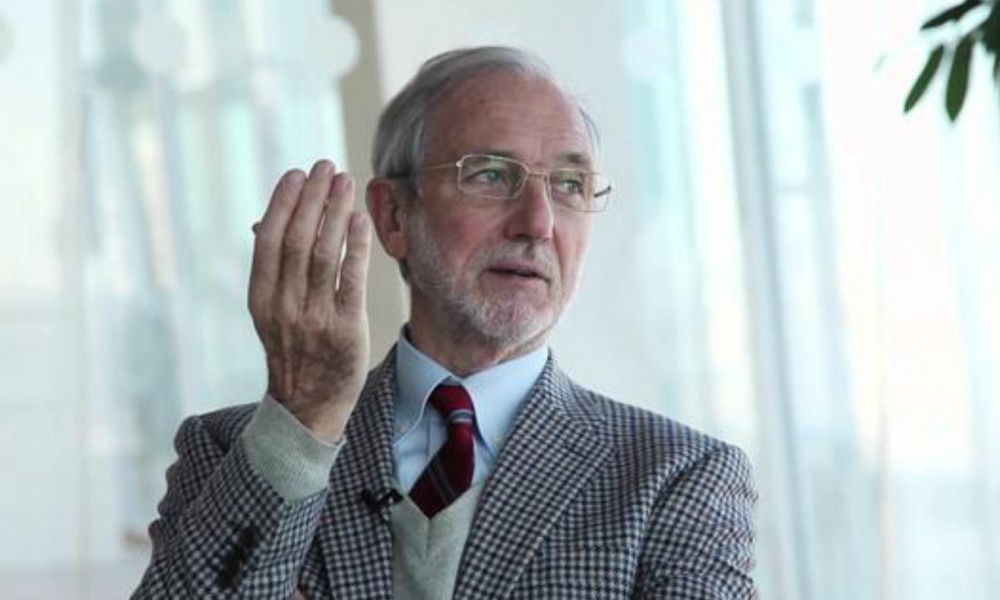
Renzo Piano
Senator of the Italian RepublicWikipedia
34
MENTIONS
15
EPISODES
13
PODCASTS
Search complete. 34 mentions across 15 episodes found for "Renzo Piano".
Nov 1, 2026

William McLeanHOST
I mean, take the shard back to that example.
William McLeanHOST
That was Renzo Piano.
William McLeanHOST
Was there some step in the process where he had to demonstrate that what he was suggesting was in fact just as economical or not much more expensive than a conventional curtain wall cubic kind of building? Mies van der Rohe kind of building? No, I think at
Luis de MiguelHOST
some point the, you know, the client just wants something to show off.

Daniella OhadHOST
appearance, for materials and technologies, and for the allure attached to celebrated buildings and their architects.
Daniella OhadHOST
But what about the way buildings affect our lived experience? How do we really experience building? And does architecture have the power to affect the way that we think about the world and ourselves? In his new documentary, Five Living Buildings by Renzo Piano, Emmy-nominated filmmaker Jonathan Goodman Levitt approaches the work of the Italian architect from a very different perspective.
Daniella OhadHOST
Rather than focusing primarily on architectural language, materials, and forms, or composition, he rather explores how buildings by one of the most admired and influential architects in our time shape human experience emotionally, physically, and even spiritually.
Daniella OhadHOST
Traveling across continents, Goodman Levitt visits five of Piano's public buildings, the Emergency Children's Surgical Hospital in Uganda, the Stavros Niarchos Foundation Cultural Center in Athens, the Whitney Museum of American Art in New York, and the Uili Art and Cultural Complex in China, and the Centre Pompidou in Paris.
Daniella OhadHOST
Through beautiful cinematography, he documents the interns, the gardeners, doctors and patients, security guards, maintenance workers and visitors who inhabit these spaces, allowing them to speak about the way the buildings have entered their lives.
Daniella OhadHOST
Above all, Goodman-Levitt reveals something essential about Renzo Piano's architecture, However ambitious the buildings may be, people remain at the center.
Daniella OhadHOST
Hi, Jonathan.
Daniella OhadHOST
How are you?

ToraHOST
Chris, we're going to patch in Chris Young from New York, I think, for a question now.
Christopher YoungHOST
So my question for you, Chris, is with the Sterling Prize this year, you were obviously chair of the judges and you decided to award it to a social housing scheme when there were many other sort of very eye-catching schemes like schemes by Renzo Piano.
Christopher YoungHOST
And I just wanted to know why you thought that particular scheme should win.
Chris WilliamsonGUEST
So I was asked a similar question on the night, and it was out of the blue for BBC TV just before the result was announced.

Sam KellerSOUNDBITE_SPEAKER
if he saw it? Good question.
Sam KellerSOUNDBITE_SPEAKER
Piano told me that Ernst and him peeked into the park and were always looking, but they couldn't go in.
Sam KellerSOUNDBITE_SPEAKER
So when I told him about the expansion, he said, well, I know that it's like...
Sam KellerSOUNDBITE_SPEAKER
Ernst was always an Augewerfen.

Christopher SchreckHOST
One prime example is the Whitney Museum, which sits at a Manhattan flood zone off the Hudson River.
Christopher SchreckHOST
The museum's current space was still under construction when Hurricane Sandy hit in 2012, and the architect, Renzo Piano, actually adjusted his design based on lessons learned from that storm.
Christopher SchreckHOST
so the building's steel frame was built to bend, not break, under severe weather.
Christopher SchreckHOST
Critical infrastructure like HVAC systems and backup generators were relocated to upper floors rather than the basement.
Luis de MiguelHOST
Just to make it clear, I think that the one on the left, the brick facade is horrendous.
Luis de MiguelHOST
And I think the Renzo Piano one is quite nice, just to set the tone.
Luis de MiguelHOST
Do you have any comment on that?
William McLeanHOST
Well, it's interesting.

Leigh ArnoldGUEST
It's great to be here.
Tyler GreenHOST
How did this show come to be informed by Bruce Nauman visiting your iconic Renzo Piano-designed building, looking around and thinking, "Oh"?
Leigh ArnoldGUEST
Well, the design of our building is very inspiring to most artists, if not every artist who crosses the threshold with the invitation to make a show.
Leigh ArnoldGUEST
A lot of the work, uh, in fact, 99% of the work in, in Identical was already made.

Mariel MayzGUEST
Yes.
Mariel MayzGUEST
A building by Renzo Piano.
Mariel MayzGUEST
Um, how? Well, this is where in our planning, Nuno and I go back and forth so much.
Mariel MayzGUEST
Like, who's gonna be the crazy one, and who's gonna rein it in? I think we switch maybe every, every day.

Meg ForsythGUEST
I, I worked at a bunch of cultural orgs for quite some time.
Meg ForsythGUEST
Um, so I was at the Whitney for four years during the, you know, big overhaul redesign and also the new building, the moving from the uptown, uh, famous foyer building to the current Renzo Piano building downtown in the Meatpacking District.
Meg ForsythGUEST
And, um, after about four years there and my introduction and immersion into Dutch graphic design, I decided to pursue, um, my master's degree, studying at the Verband Dutch Typografie in Arnhem, the Netherlands.
Meg ForsythGUEST
Studying under, um, Danny from Experimental Jet Set, as well as Armand and a ton of other incredible instructors there.

Russel HowcroftHOST
Just a quick one.
Ross StevensonHOST
Can you look up who, who designed that, um, cultural center in New Caledonia? Oh, no, Renzo Piano.
Russel HowcroftHOST
Oh, yeah.
Ross StevensonHOST
There you go.
5 more episodes mention Renzo Piano.
Create an account to see the whole feed, search across every transcript, and follow the entities you care about.