Religious Land Use and Institutionalized Persons Act
12
MENTIONS
7
EPISODES
6
PODCASTS
Search complete. 12 mentions across 7 episodes found for "Religious Land Use and Institutionalized Persons Act".
Oct 18, 2026

Jimmy HintonHOST
So they're focusing on long-term affordable housing.
Jimmy HintonHOST
Since faith-based organizations own thousands of acres on developable—I can't say that word—developable property, churches are leveraging federal religious land use and Institutionalized Persons Act— to bypass local zoning restrictions, and to build tiny home villages.
Jimmy HintonHOST
You know that I love tiny home villages.
Jimmy HintonHOST
All right, we're going to stop here.
7 MINS LATER
Jimmy HintonHOST
Now, you can find rent for $2,000 a month, but people living on a very fixed income can't afford $2,000 a month.
Jimmy HintonHOST
So how do you fix that? How do churches partner with other organizations and how do they fix that? Well, this is brilliant.
Jimmy HintonHOST
They're leveraging the Federal Religious Land Use and Institutionalized Persons Act to bypass local zoning restrictions and to build tiny home villages or multifamily complexes.
Jimmy HintonHOST
This is brilliant.

Penna DexterCORRESPONDENT
But we do, and we have one.
Penna DexterCORRESPONDENT
RELUPA, the Religious Land Use and Institutionalized Persons Act.
Penna DexterCORRESPONDENT
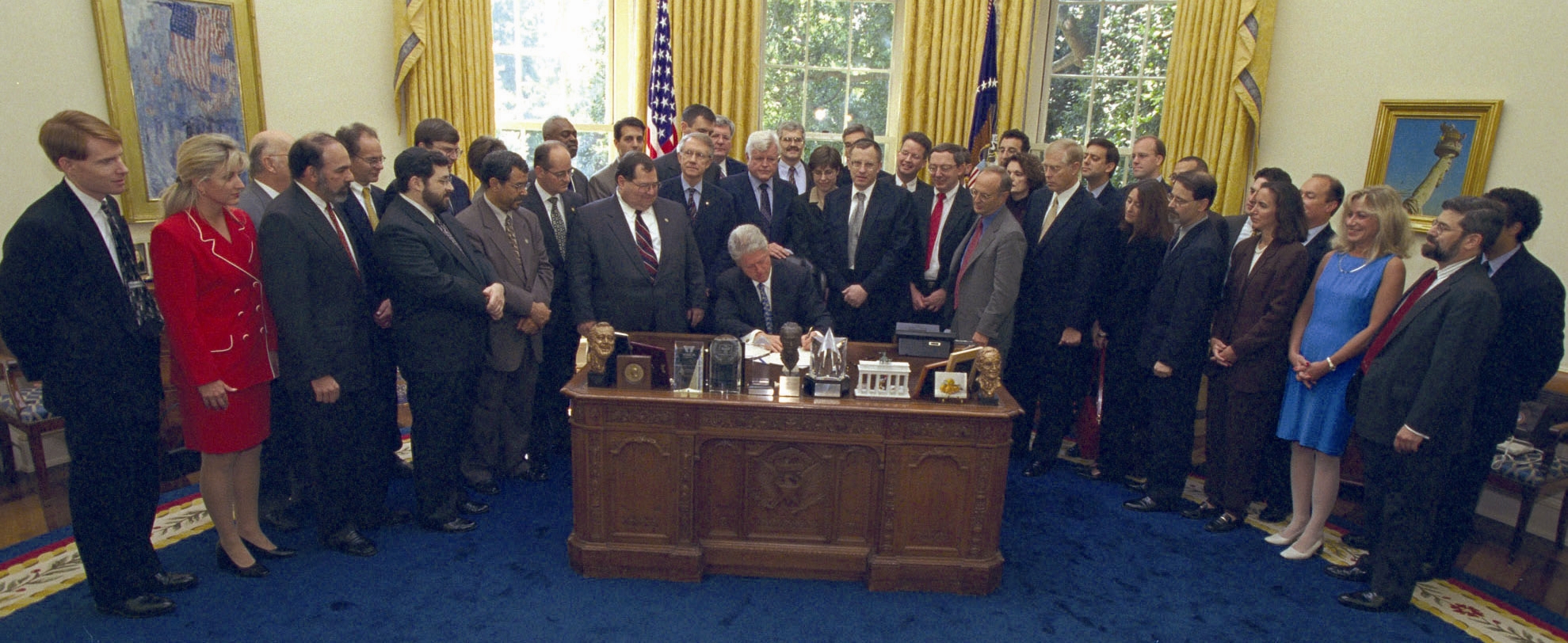
RELUPA was passed and signed into law by President Clinton more than 25 years ago.
Penna DexterCORRESPONDENT
However, over the years, courts have weakened and confused the law's promised protections.
Kerby AndersonHOST
And Hiram, I thought I'd come to you because First Liberty and some other law firms are representing this particular case out of Kentucky today.
Kerby AndersonHOST
And again, you would think that you wouldn't need a law to actually protect the right of a church or other houses of worship to use their facilities for religious purposes.
Kerby AndersonHOST
The good news is there's one called RELUPA, which is actually Religious Land Use and Institutionalized Persons Act.
Kerby AndersonHOST
And this is a case which actually the Supreme Court has never had a chance to interpret, but this is just a good example of why you exist and why we're so thrilled that there's an alliance defending freedom and a First Liberty Institute because you're able to defend these individuals that simply want to have a quiet place for prayer and reflection, but apparently people want to use the zoning laws against them.

MadisonCORRESPONDENT
They argue that serving the homeless is core to their faith and protected by the First Amendment.
MadisonCORRESPONDENT
The church plans to challenge the county's action under federal religious land use law, RLUIPA, with legal experts noting this case could set a precedent nationwide, especially as the Supreme Court prepares to hear a similar case from Kentucky.
MadisonCORRESPONDENT
Neighbors remain concerned about impacts on safety and quality of life, while church leaders say their mission and rights are under threat.
MadisonCORRESPONDENT
With both sides deeply invested, this legal fight could shape how churches across the U.S. serve vulnerable people within their communities.

Don BrownGUEST
So see, here's what happens.
Don BrownGUEST
When you give Islam, which is, um, a philosophy in my book, not a religion, when you give it First Amendment protection as religion, then they can use federal law such as RLUIPA, the Religious Land Use Institutional Protection Act, I probably botched that, to come in and force mosques in, force Islamic centers in, all in the name of religion.
Don BrownGUEST
And we have to understand that it is not that because it, it, it forces subjugation by death to the infidels.
Don BrownGUEST
Christianity doesn't do that.
Erin SmithHOST
Right.
Erin SmithHOST
How does that not substantially burden their religion? And so that's the question that the court is going to answer is, is does this constitute a substantial burden under the Religious Land Use and Institutionalized Persons Act, which is otherwise known as ARLUPA?
Liberty McArtorHOST
So and if I'm correct, when I was reading this, this church has actually had this property for over 100 years.
Liberty McArtorHOST
So how does that measure up against kind of the ordinance there that is preventing them from building that?

Sarah IsgurHOST
But David, this is the one I thought you'd be really into, Missionaries of Saint John the Baptist versus Frederick.
Sarah IsgurHOST
This is a RLUIPA case.
David FrenchHOST
Mm-hmm.
Sarah IsgurHOST
I mean, pretty exciting stuff, right? So this is the idea that Congress enacted RLUIPA in 2000 to expand religious freedom protections for prisoners and religious organizations, um, or individuals challenging zoning laws.
Sarah IsgurHOST
Here, the church acquired some property next door to it, wanted to build a shrine to the Virgin Mary, um, and long story short, the zoning board and the Kentucky Supreme Court was like, "No, thank you.
Sarah IsgurHOST
You can build a smaller version of your shrine on a different part of your property.
Sarah IsgurHOST
On the other hand, as the petition pointed out, there were exceptions for, like, golf courses, um, but there weren't exceptions for churches.
Sarah IsgurHOST
But there were-- the churches weren't treated-- Like, there were other places treated like the churches.

Steve WestGUEST
Well, last week, the court agreed to take up another case that deals with a 26-year-old federal law that protects religious land uses from restrictive zoning and land use laws.
Steve WestGUEST
It's called the Religious Land Use and Institutionalized Persons Act, RLUIPA.
Steve WestGUEST
Not one of the smoother-sounding acronyms.
Mary ReichardHOST
[laughs]