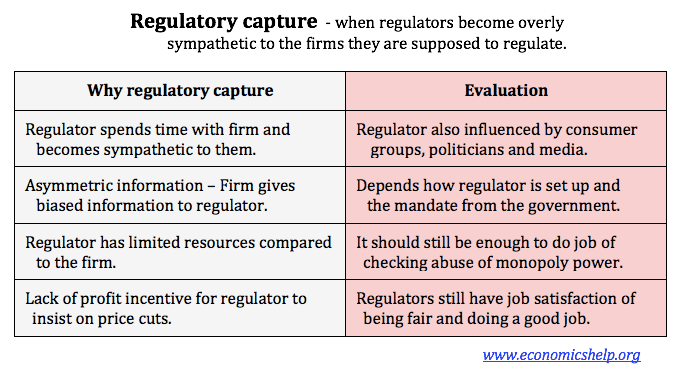
Regulatory capture
23
MENTIONS
7
EPISODES
7
PODCASTS
Search complete. 23 mentions across 7 episodes found for "Regulatory capture".
Sep 11, 2026

Steve LeeHOST
If you're a supporter of open weight models and distributed versus centralized, then the concern here is that this is going to create rapid momentum where Congress acts and introduces legislation and possibly regulatory frameworks that are very draconian, where companies like Anthropic and OPI have the...
Steve LeeHOST
It just creates... it's regulatory capture and create the moat for them, and everyone else in open models might not even be able to comply.
Steve LeeHOST
And specifically, I
David KingHOST
mean, I think it's worth stating it kind of, I don't know the exact words to use, but if regulatory capture, if it basically can create a panic, then...
David KingHOST
the regulators say, okay, we have to deal with the panic.
David KingHOST
The way to deal with the panic is to talk to somebody, the leaders of OpenAI, leaders of Claude, you know, Anthropic.
David KingHOST
There's nobody to talk to.
David KingHOST
They're not involved in the conversation.

Walter PiecykHOST
Um, during this 3 year pilot, um, obviously this could be restrictive to autonomous companies.
Walter PiecykHOST
Um, and it's what we call, you know, regulatory capture.
Walter PiecykHOST
In Uber's own policy paper that they used to support this, this was published back in May of 26, they actually conceded that driver utilization and hourly earnings are already declining in San Fran and LA, which is interesting, right? Because did we see on Twitter a lot of reports pushing how, oh, there's no impact on us in San Fran and LA? And yet part of the argument here is that, oh, that the hourly wages are down.
Walter PiecykHOST
I think there's a grid-wise analytic study of some AV active cities where hourly wages were dropping 3% to 6% year over year in San Fran, LA, Austin, and Phoenix, while rideshare markets without robo-taxis had a slight pay increase.
Walter PiecykHOST
But even Uber's own policy paper said driver utilization and hourly earnings were already declining.
Walter PiecykHOST
So which is it? Are they having no impacts on you in the market? Or are they having impacts on your market? And is this reaction of regulatory capture um you know a bit over the top i mean even in this article um uber coo andrew mcdonald mac we love the guy you know i think he does a good job a great job at uber acknowledge that the stance did look strange he called it ironic he literally called it ironic right why because of how uber entered the market they entered the market they grabbed their share their 80 share whatever 78 share whatever it is now they want to you know, capture that through this regulatory, these regulatory walls.
Grayson BrulteHOST
I mean, if I was Rip Van Winkle and I went to sleep and I came back, I'd be questioning everything that's happening with Uber.
Grayson BrulteHOST
First, they wanted to fight the man being the taxes in the unions.

Walter PiecykHOST
But just talking about how they're pushing on lawmakers in Jersey and D.C., and, you know, and this, again, something we've talked about here before on this podcast, that human drivers have to be 85% of rides during this three-year pilot.
Walter PiecykHOST
Obviously, this could be restrictive to autonomous companies, and it's what we call, you know, regulatory capture.
Walter PiecykHOST
In Uber's own policy paper that they used to support this, this was published back in May of 26, they actually conceded that driver utilization and hourly earnings are already declining in San Fran and LA, which is interesting, right? Because did we see on Twitter a lot of reports pushing how, oh, there's no impact on us in San Fran and LA? And yet part of the argument here is that, oh, that the hourly wages are down.
Walter PiecykHOST
I think there's a gridwise analytic study of some AV active cities where hourly wages were dropping three to six percent year over year in San Fran, L.A., Austin and Phoenix, while rideshare markets without robo taxis had a slight pay increase.
Walter PiecykHOST
But even Uber's own policy paper said driver utilization and hourly earnings were already declining.
Walter PiecykHOST
So which is it? Are they having no impacts on you in the market? Or are they having impacts on your market? And is this reaction of regulatory capture a bit over the top? I mean, even in this article, Uber CEO Andrew McDonald, Mac, we love the guy.
Walter PiecykHOST
You know, I think he does a good job, a great job at Uber.
Walter PiecykHOST
Acknowledge that the stance did look strange.

speaker_1HOST
You can patch Claude behind an API, but you can't recall every fork of an open model after it spreads.
SarahHOST
But he's accusing Anthropic of regulatory capture, not proving it.
SarahHOST
Conveniently, his cure, less pre-release oversight, also lines up rather nicely with a Pentagon that dislikes outside constraints.
speaker_1HOST
Exactly.

Robert BoswellGUEST
It's a hard, it's a hard thing, right? Like lots of electricity grids, or lots of electricity systems have this problem where for, for kind of understandable reasons, They try to bring industry into the decision-making process.
Robert BoswellGUEST
And then there's regulatory capture, right? It's like very classic regulatory capture where you bring industry in, industry is just much more motivated to actually understand and control the system than anyone else is.
Robert BoswellGUEST
The generators and the transmission and the distribution, this is their entire job.
Robert BoswellGUEST
This is their entire existence.

RobHOST
Which leads us to the massive controversy over regulation.
RobHOST
Gavin Baker's core fear here is a concept called regulatory capture.
RobHOST
He argues that if you create incredibly expensive, complex safety regulations for AI, only the absolute giants like OpenAI, Anthropic, Google, Meta, XAI are going to have the billions of dollars and armies of lawyers required to comply with them.
speaker_1HOST
Right.