Reduction potential
25
MENTIONS
10
EPISODES
10
PODCASTS
Search complete. 25 mentions across 10 episodes found for "Reduction potential".
Sep 23, 2026

Samuel ShepherdGUEST
Correct.
Gary MartinHOST
So what we're big in, in teaching people with, with the urine and saliva work that we do, one of the things that we test for in the urine is the urine ORP And one thing that we have found that almost all cancer people have, have a, a very high, uh, plus ORP, you know, and, and oxidation, uh-
Samuel ShepherdGUEST
Sure
Gary MartinHOST
... a high, a high oxidation scene.
Gary MartinHOST
So that, that, that kind of ties in.
Gary MartinHOST
You know, I'm not really a big chemistry guy, so it's like, you know, uh, I, I've observed this, but I didn't exactly know why, but now you're shedding some light onto why, why we see this.
Gary MartinHOST
And then of course our, our job is to teach people how to, you know, what they've gotta change, what they gotta change in their lifestyle to make that ORP drop because, you know, it needs to be below -20 is what w- what we have, uh, you know, uh, you know.
Samuel ShepherdGUEST
Yeah, yeah.

Tracy PurdumHOST
How can operators tell when an RO system is starting to drift out of spec before it becomes a real problem? And what should they be keeping an eye on day to day?
Brad BueckerGUEST
Well, the standard recommendation now, an RO unit is normally equipped with with pressure gauges, flow meters, conductivity meters, maybe a chlorine analyzer or ORP analyzer, various instruments to track performance.
Brad BueckerGUEST
Typically what a reputable RO manufacturer will supply or water treatment chemical firms also.
Brad BueckerGUEST
And I actually have an Excel program in this regard.

Jeff KeaffaberHOST
He was, he was just about one month, I think, from leaving to, to take on a venture at Texas State Aquarium in Corpus Christi.
Jeff KeaffaberHOST
A- and so I came in to a role that had been created specifically to, to, um, denitrify The Living Seas, but I quickly transitioned into the ozone world to try to understand ozone and ORP and the reactions that occur, uh, when ozone gets dissolved in our seawater.
Jeff KeaffaberHOST
Uh, and th- these were the days where they were dealing with air diffusers, air stones, things like that to deliver ozone to the water with large low surface area bubbles and hoping you got some ozone dissolved into the water, and this was really before the, the injectors, uh, were coming onto the scene.
Joe ArlottoHOST
And this is really interesting.
7 MINS LATER
Jeff KeaffaberHOST
It's gonna kill fish." This is why it was the batch process first-
Joe ArlottoHOST
Right
Jeff KeaffaberHOST
... where we could control the chemistry, dose in the methanol at the right, uh, amount to match the balanced chemical reaction, don't overdose, make sure your ORP goes to about negative 200 millivolts, you're actively denitrifying a- and you don't overdose.
Jeff KeaffaberHOST
And so you've got a controlled environment batch, if you will, where you can keep an eye on all that.

Juan HernandezGUEST
Before, we used to
Paul SlutesGUEST
use ORP sensors to figure out what the chlorine, not necessarily levels, is because ORP is oxidation reduction potential, and that is a qualitative measurement of your chlorine.
Paul SlutesGUEST
Well, now they make a sensor, a PPM sensor, a parts per million sensor, which is a quantitative measurement of chlorine, and that's what the lifeguards use.
Paul SlutesGUEST
So that's what Juan's talking about, when we can go in there and see what they're actually seeing, not just a qualitative measurement, but we can also see the quantitative measurement now.

Pierre KoryGUEST
And it does so in this really elegant way.
Pierre KoryGUEST
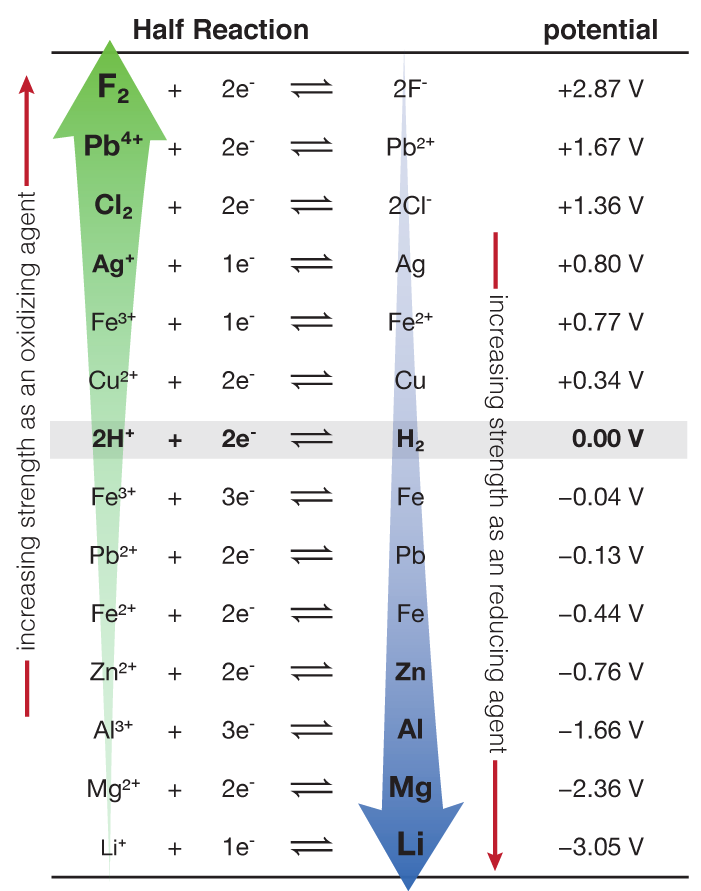
So when you think about oxidizing agent, there's something called an ORP scale, oxidation reduction potential.
Pierre KoryGUEST
There are some substances that are really deeply, strongly oxidizing, and there are some that are weak.
Pierre KoryGUEST
Chlorine dioxide is actually weak and it's good.

Terry ValmassoiGUEST
So it was just getting ready to be tested.
Terry ValmassoiGUEST
It had an ORP system built into it, which is really ORP.
Terry ValmassoiGUEST
Yeah.
Terry ValmassoiGUEST
So at that point, now we're going to try to sell it.
Terry ValmassoiGUEST
something you pour dichlor into.
Terry ValmassoiGUEST
And the reason for it was dichlor is pH neutral.
Terry ValmassoiGUEST
It could dose based on ORP, a swimming pool, residential, commercial, or commercial hot tub.
Terry ValmassoiGUEST
Good concept, but the problem with dichlor, which you probably know, it's got cyanuric acid in it.

ShariSOUNDBITE_SPEAKER
It's something that I don't believe anybody else has ever done.
ShariSOUNDBITE_SPEAKER
So there's always been a bit of an inconsistency when testing for ORP in the industry.
ShariSOUNDBITE_SPEAKER
And there's many things that go against getting an accurate result there.
ShariSOUNDBITE_SPEAKER
But with the OptiCell, the way that it works is the water runs through and there's a testing reagent right here.
ShariSOUNDBITE_SPEAKER
goes up into here, shines a light through the sample of water that's been mixed with the reagent, which will give you a free chlorine reading, an accurate free chlorine reading.
ShariSOUNDBITE_SPEAKER
Almost, you know, 100% every time, not affected by pH levels in the water, not affected by the flow of water that's going through it.
ShariSOUNDBITE_SPEAKER
The most accurate way to get a free chlorine reading, so it's not ORP, it's free chlorine, and then the chlorinator can adjust the chlorine output accordingly.
ShaneHOST
And the reagent as well in this small bottle here, Sharon, that would last roughly...

Dani CarrollGUEST
So what I mean by that, before I get into JD, is most of the water that is in our industry, whether it's tap or bottled, actually takes energy away from us.
Dani CarrollGUEST
Because it's reading as an acidic water, because it has something called an ORP, oxidation reduction potential, ORP, that's positive.
Dani CarrollGUEST
It means it's taking energy for your body to process this and to filter it through.
Dani CarrollGUEST
That's

David Van BruntHOST
This was a floating smart monitor device.
David Van BruntHOST
It's a great concept, but it just did ORP and pH, and you would scan in a test strip, and it would give you the other information.
David Van BruntHOST
So it wasn't like this device did, you know, free chlorine, total chlorine, pH, alkalinity, cyanuric acid, and then gave you dosing recommendations.
David Van BruntHOST
It basically was...
David Van BruntHOST
Just a smart water monitor for ORP and for the pH and for the temperature.
David Van BruntHOST
And then every week or so you would scan in a test strip.
David Van BruntHOST
The problem with the Finn is, there was a couple problems with the Finn.
David Van BruntHOST
I thought it was a pretty good device for what you paid for.

Joshua MertzSOUNDBITE_SPEAKER
So let's go back to our hidden chemistry.
Joshua MertzSOUNDBITE_SPEAKER
Our hidden chemistry of iron basically says that when we take a sample from a well, we need to understand the ORP and the pH and that over time that ORP is going to change and the water is going to become oxidized because it's being in contact with air.
Joshua MertzSOUNDBITE_SPEAKER
So we have iron two plus in A, then slowly it transforms into iron three plus and then it slowly transforms into iron hydroxide.
Joshua MertzSOUNDBITE_SPEAKER
Now, when I talk to other people, I often mislabel the iron as rust.