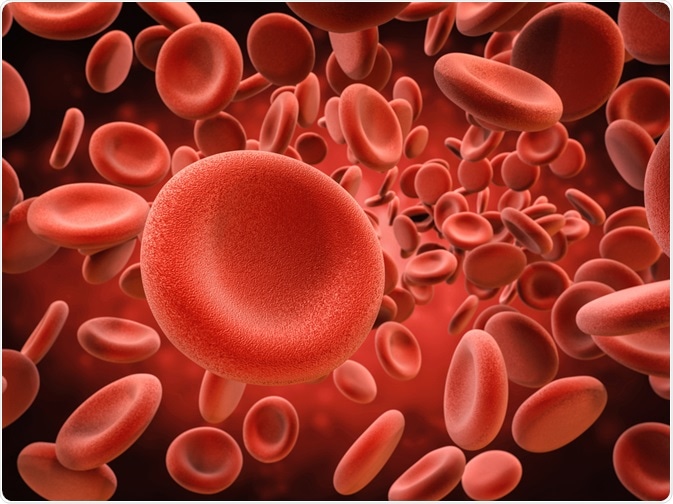
Red blood cell
67
MENTIONS
19
EPISODES
16
PODCASTS
Search complete. 67 mentions across 19 episodes found for "Red blood cell".
Oct 30, 2026

Mirela CernaianuHOST
So always be conservative.
Mirela CernaianuHOST
Number two, always test levels before you insert.
Mirela CernaianuHOST
And number three, understanding the physiology of the pellet and how it will release the hormones once it is started.
Mirela CernaianuHOST
So let's talk about the elephant in the room and the number one reason why pellet therapy has gotten a bad reputation in some circles, pretty much all the conventional medicine circles, and why there are some bad reviews from women who have received this type of therapy.
Mirela CernaianuHOST
So let's talk about overdosing.
Mirela CernaianuHOST
And this is the main subject of today's episode.
Mirela CernaianuHOST
And it's pearl number four, learn the signs of too much.
Mirela CernaianuHOST
Very simple, very critical pearl of palliotherapy, understand and know how much feels like and how can you manage it because it can be managed.

DHOST
So pancytopenia is when the patient doesn't have enough of all of those blood cells.
DHOST
Those RBCs are decreased.
DHOST
Those platelets are decreased.
DHOST
Those WBCs are decreased, okay? So it can cause pancytopenia.
DHOST
Let's think about this.
DHOST
All right.
DHOST
Professor G said RBCs decrease.
DHOST
OK, so what? Hello.
DHOST
Patient's going to be at risk for infection.
DHOST
Whoa, I'm not making enough RBCs.
DHOST
RBCs carry hemoglobin.
DHOST
Hemoglobin carries oxygen.
DHOST
This patient is going to be at risk for being anemic.
10 MINS LATER
DHOST
So make sure you're looking at the CBC.
DHOST
You want to see what the WBCs are looking like.
DHOST
You want to see what those RBCs are looking like.
Professor DHOST
The most common adverse effects, you see the list, headache, dizziness, insomnia, depression, Immunological effects include bone marrow depression.
Professor DHOST
Whenever you see bone marrow depression, you need to be thinking decreased RBCs, anemia.
Professor DHOST
You need to be thinking decreased platelets, bleeding.
Professor DHOST
And you need to be thinking decreased WBC infection, okay? Bone marrow depression, photosensitivity, rash, a potentially serious adverse effect that could cause severe skin reactions.

Daniel J. GuerraHOST
Mesoderm, remember, is the middle layer.
Daniel J. GuerraHOST
What do we get out of the mesoderm in cell differentiation? Cardiac muscle cells, skeletal muscle cells, tubule cells of the kidney, RBCs, and smooth muscle cells in the gut.
Daniel J. GuerraHOST
And pluripotent stem cells can also give us differentiated endoderm.
Daniel J. GuerraHOST
That's the internal layer, right? What are the endoderm products? Aviolar cells, those are lung cells, thyroid cells, pancreatic cells, and also the ectoderm, the external layer.

Skip HillHOST
I don't know.
Skip HillHOST
Maybe just take more gear to increase the RBCs and then you'll have more oxygen in your blood.
Skip HillHOST
You can hold your breath longer.
Skip HillHOST
There you go.

RonHOST
Laboratory animals.
RonHOST
Make sure you understand that.
RonHOST
They also observed protein aggregation and damage to mouse red blood cells under experimental conditions.
RonHOST
Now, this... was performed on mice in a lab.
RonHOST
Just know that.
9 MINS LATER
RonHOST
And this study does not support that.
RonHOST
Nevertheless, The experiment gives researchers a possible mechanism worth investigating because they may actually prove that, but not as of now and not by this study.
RonHOST
Now the investigators examine the red blood cells of a mouse, and some of these cells were exposed to polystyrene.

speaker_0HOST
So you subtract one PMN for every 250 red blood cells.
speaker_0HOST
So let's say you have 2,500 RBCs.
speaker_0HOST
we're going to try to do math live, you'll do one PMN for every 250 RBCs.
speaker_0HOST
So this would be, you know, you subtract 10 PMNs from that cell count.
speaker_0HOST
So let's say you had 251 PMNs, you would be subtracting 10, which means you really are only considering 241 PMNs, which again, we're kind of parsing hairs, but technically that would not be considered SBP because it's less than 250.

MarkHOST
But I'll give you some of those initial investigations for the fever and leukocytosis.
MarkHOST
So the patient had a urinalysis as part of their infectious workup that showed 3 plus glucose, 1 plus ketones, 3 to 5 RBCs, 0 WBCs, and occasional bacteria.
MarkHOST
Deborah wanted the chest x-ray.
MarkHOST
But like I said, no respiratory symptoms.

Omar M. AminGUEST
If we see a rouleau in blood cell appearance, that indicates poor circulation, high proteins or fats, toxicity, and chronic inflammation and multiple myeloma.
Omar M. AminGUEST
RBC aggregates, protein linkage.
Omar M. AminGUEST
RBC membrane distortion, RBC echinocytes, platelet aggregation, acanthocyte and spare cells, vasophilic stripling.
Omar M. AminGUEST
I can go down the line.
Omar M. AminGUEST
There's at least 25 to 30 different shapes of red blood cells that connote metabolic dysfunctions that we diagnose outside of the normal stool tests or bacteria tests.
9 more episodes mention Red blood cell.
Create an account to see the whole feed, search across every transcript, and follow the entities you care about.