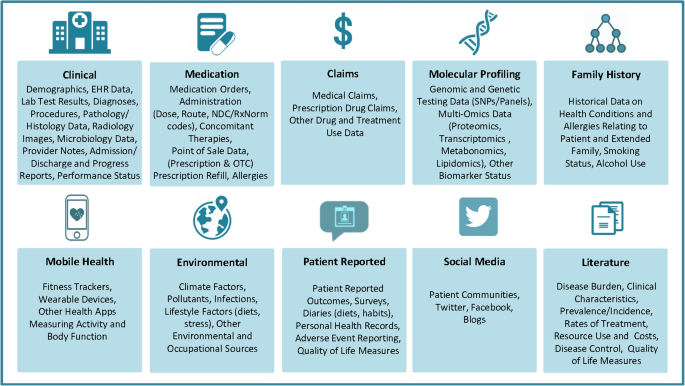
Real world data
19
MENTIONS
4
EPISODES
4
PODCASTS
Search complete. 19 mentions across 4 episodes found for "Real world data".
Oct 15, 2026

Cori MaegleyGUEST
Yeah, so I know that the first episode, Wayne, in this real-world evidence series spent some time on this question, so I'll try and avoid too much repetition.
Cori MaegleyGUEST
But I do want to reiterate that FDA does define real-world data as data on patient health status or care
Mary Beth RitcheyGUEST
delivery
Cori MaegleyGUEST
when it's routinely collected.
Cori MaegleyGUEST
and capture of unique device identifier information or UDI at the point of care can still be very limited.
Cori MaegleyGUEST
And so identifying device data is often the first hurdle that we encounter.
Cori MaegleyGUEST
When CDRH released their 2025 guidance for use of real-world evidence to support regulatory decision-making for medical devices, they specifically list real-world data sources, including EHRs, claims, registries, charge master and billing data, and device data repositories.
Cori MaegleyGUEST
But two additional categories that are mentioned that I think are worth highlighting are patient and device-generated data.

Ben EverettHOST
Well, look, I know Psych Congress was just happened recently, and you had a couple of new posters there, so I wanna transition and talk about a couple of these new posters that you presented there 'cause I think it gives us a, a more practical approach to how the evidence has evolved and what people are looking at.
Ben EverettHOST
So the first one was actually doing a prescriber survey, and I love these types of surveys because you get real-world evidence or real-world data from practicing clinicians.
Ben EverettHOST
In this case, it was mostly psychiatrists that completed the survey.
Ben EverettHOST
It was about 100 clinicians.

Will SalernoHOST
more patients? So my exposure has been collecting these data for the purpose of research.
Will SalernoHOST
thinking about that real-world data as the exhaust or the residue of health, genomics is much more limited there.
Will SalernoHOST
Genomics has not had, you know, it has had good, I think, penetration into that diagnostic space, but it has not replaced a lot of the things that have been around for a very long time.
Will SalernoHOST
So what I have seen is that the genomic data that's available from that incidental type collection is sporadic, it's different platforms, and it's very limited compared to what we have on the research side.

Miyabe ShieldsGUEST
It's something that we absolutely need to know more about so we can see what is working for people and what's not working for people.
Riley KirkHOST
And that's the power of real world data is we're just asking people, what are you doing for your health, wellness, medicine, whatever it is.
Riley KirkHOST
And then we're looking at that data and saying, wow, interesting.
Riley KirkHOST
So specifically, the ADHD population seems to be medicating with cannabis regularly, as well as medicating with pharmaceutical medicines for the most part.
Miyabe ShieldsGUEST
And so there's a whole huge, several gateways and barriers of access that people have.
Miyabe ShieldsGUEST
To even get to the point where you're thinking about cannabis as medicine also is a thousand percent one of the main problems of cannabis as medicine not being covered by insurance, cannabis as medicine not being legitimized when it is absolutely legitimate.
Miyabe ShieldsGUEST
And one of the reasons why we're so passionate about the Real Data Project and real world data in itself is because when we look at policy, When we look at the way cannabis is treated in the scientific and medical field and in the political field, it's being driven by data, by market data and by epidemiological data, which is how researchers have been looking at us as a pathology for a really long time.
Miyabe ShieldsGUEST
And When I was in the academic substance use world, I still am kind of in it, but when I was actually getting my grant funding from it and going to presentations about harm reduction and looking for synthetic cannabinoids that would help, I would go to these conferences and be in these spaces where there's people being able to talk about like oh like friends and family members or like the communities of people who like struggle with substance use but there is not good representation within those spaces of people who have struggled with substance use there's not great open conversation around people who have lived those life experiences and who have that nuance and the problem with looking at a community from purely the outside is that they look at us and they see addicts and they are very much so putting us into a different class status when they study us.