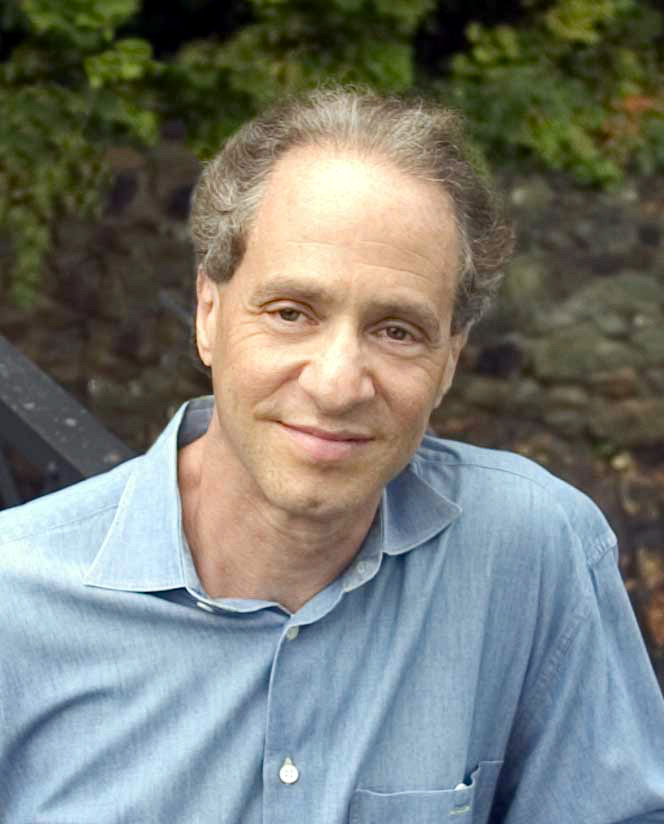
Ray Kurzweil
American computer scientist and authorWikipedia
316
MENTIONS
178
EPISODES
168
PODCASTS
Search complete. 316 mentions across 178 episodes found for "Ray Kurzweil".
Oct 27, 2026

Kevin RooseGUEST
Yes, I think that is a belief that is, I would say, still somewhat fringe in Silicon Valley, but is like the people who believe it tend to be powerful.
Kevin RooseGUEST
And so, yes, I think there is this sort of strain of thought that goes back to, you know, science fiction, but also to people like Ray Kurzweil, the futurist who a lot of today's AI leaders grew up reading his books like The Singularity is Coming.
Kevin RooseGUEST
And so I think one of the ideas in that strain of thought is that sort of human intelligence is a point on a continuum that started with like, you know, prokaryotes in ancient times and like went through the whole evolutionary chain and then there's humans and then it just continues past humans.
Kevin RooseGUEST
And so to them, they want to discover what is on the other side of that point, on that continuum.

Peter DiamandisGUEST
I'll close on a thought.
Peter DiamandisGUEST
We opened this book with a dear friend of both of ours, Ray Kurzweil.
Peter DiamandisGUEST
He's written our foreword.
Peter DiamandisGUEST
And I first heard Ray and Operative Grade talk about something called longevity escape velocity.

Connor MacIvorHOST
You stop aging towards death, not immortality, just a tie game.
Connor MacIvorHOST
Ray Kurzweil on Science Friday, June 14th, 2024, quote, somewhere between 2029 and 2035, you'll get back not four months, but a full year, end quote.
Connor MacIvorHOST
Aubrey de Grey, the biologist who has been at this the longest, put it at 50% chance by 2036, and more recently, says the late 2030s.
Connor MacIvorHOST
And de Grey said something about cost that I want everybody watching who's scared of their insurance bill has to hear.

Chris IppolitoHOST
Anyway, her widow, Alan Hamill, is actively working on creating an AI version or AI twin of his late wife who died in October of 23.
Chris IppolitoHOST
Hamill claims the idea originated with Summers herself back in the 80s after she met AI scientist Ray Kurzweil.
Chris IppolitoHOST
What? So weird.
Chris IppolitoHOST
I wouldn't hear Ray
Larry BentleyHOST
That's how I roll.
Chris IppolitoHOST
So funny.
Chris IppolitoHOST
I do think the Life Extension company referred to there is Ray Kurzweil's.
Larry BentleyHOST
Oh, is it? Okay.

C.R. WileyGUEST
Wow.
C.R. WileyGUEST
You know, that, that, you know, um, the reason I, uh, I thought, uh, Anthony came to mind is, um, I was thinking about Ray Kurzweil and his transhumanist fantasies.
C.R. WileyGUEST
And I thought, is there any, you know, it just kind of occurred to me that Anthony was sort of the antithesis.
C.R. WileyGUEST
And if there was anybody that was sort of like the anti-Kirchweil, it was St. Anthony.
C.R. WileyGUEST
So if you think about...
C.R. WileyGUEST
Like Kurzweil's dream that we will basically be able to hack our biology and supplement it with technology to the point that we can enjoy an essentially unending life.
C.R. WileyGUEST
And so if you if you think this is just I'm making stuff up, just read these guys, you know, read Brian Johnson, read Ray Kurzweil.
C.R. WileyGUEST
This is the stuff these guys are

Anai KothariGUEST
Yeah.
Anai KothariGUEST
So I work with someone who is, to me, bar none, the expert at precision medicine, you know, Dr. Ray Kurzweil.
Anai KothariGUEST
And could you imagine if we could, you know, you asked at the beginning about fine tuning a model.
Anai KothariGUEST
So could you imagine if we could take the insights that Dr. Kurzweil has through molecular tumor board over time, and actually fine tune that information into a pre trained language model.

Jim NortonGUEST
Like, I really feel like we're eventually going to have immortality.
Jim NortonGUEST
You know, you've interviewed Ray Kurzweil.
Jim NortonGUEST
Yeah.
Jim NortonGUEST
I've talked about him before.

Peter DiamandisSOUNDBITE_SPEAKER
That over the next five to six, maybe seven years at the outmost, we're going to have breakthroughs that are enabling us to add 10, 20, 30 health years in our life.
Peter DiamandisSOUNDBITE_SPEAKER
And that's what Ray Kurzweil, my co-founder of Singularity, calls longevity escape velocity.
Peter DiamandisSOUNDBITE_SPEAKER
The moment in time for every year that you're alive, we're adding more than a year to your life.
Peter DiamandisSOUNDBITE_SPEAKER
And if you have that longevity mindset, if you believe we're heading towards longevity escape velocity, your job is not to die from something stupid in the interim, to make sure you're in the best health to get to LEV, right? And Ray's prediction for LEV is 2033.

James BarratGUEST
Well, Our Final Invention was the book I wrote when I became really aware of the dual nature of AI, that it can be used for great good or great harm.
James BarratGUEST
And I had been an AI fan, and I still am in some respects, but I was very enamored of Ray Kurzweil, who was all about the positive sides of AI.
James BarratGUEST
But then I started talking to other people.
James BarratGUEST
I had an interview with Arthur C. Clarke, the science fiction writer.
James BarratGUEST
That put a thorn in my shoe, and I started interviewing people about that and talking to them about that.
James BarratGUEST
And under every optimist about AI was someone who was wary.
James BarratGUEST
Even the very optimistic Ray Kurzweil showed some balance in that kind of analysis.
James BarratGUEST
Yeah, things could go very wrong.

C.R. WileyGUEST
When I've been asked about it, I've said, well, you know, there are a lot of people who are speculating about the power of artificial intelligence to help us to achieve some of the goals that the transhumanists have.
C.R. WileyGUEST
And when I read people like Ray Kurzweil or you all know Harari and Brian Johnson, I thought, you know, these guys are about as far away from St. Anthony as I could imagine.
C.R. WileyGUEST
And I thought, wow, that's...
C.R. WileyGUEST
Maybe I should look to him to provide kind of a template for resisting some of the negative maybe consequences or unintended or intended consequences of this development when we think about artificial intelligence, particularly as it relates to transhumanism.
168 more episodes mention Ray Kurzweil.
Create an account to see the whole feed, search across every transcript, and follow the entities you care about.