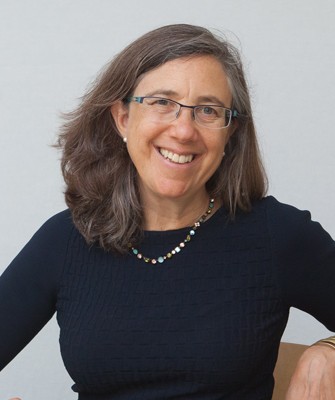
Ray D. Madoff
Legal scholar
10
MENTIONS
8
EPISODES
7
PODCASTS
Search complete. 10 mentions across 8 episodes found for "Ray D. Madoff".
Sep 24, 2026

Sharon FeltzerGUEST
We also have Evan Osnos' book, The Have and Have Yachts, which I think says a lot just in the title.
Sharon FeltzerGUEST
And then we have Boston College law professor Ray Madoff's book on how the tax policies of this country over 100 years have been used to help the wealthy remain wealthy.
Sharon FeltzerGUEST
Not just help them remain wealthy, but help generation after generation remain wealthy.
Sharon FeltzerGUEST
And what is the implication of this for the rest of society? So we look at how tax policies have allowed wealth to grow amongst a certain class of people, and has this helped people in terms of philanthropy, or has it taken resources away from government? They all bring different perspectives.
Sharon FeltzerGUEST
Evan Osnos looks at the individual experience of billionaires, and Professor Ray Madoff really explores deeply the taxation policy.
Sharon FeltzerGUEST
It's a very readable book.
Sharon FeltzerGUEST
It doesn't sound readable, but she will bring stories to the fore as well.
Fran QuigleyHOST
It was universal childcare, et cetera.
Fran QuigleyHOST
And we had recently Ray Madoff on to talk about the tax code and how wealthy people just simply aren't paying taxes.
Fran QuigleyHOST
And we allow that to happen.
Fran QuigleyHOST
So yeah, we can do it.

Dakota AdelphiaHOST
Again, I'm like a broken record.
Dakota AdelphiaHOST
But if you guys are interested in the concepts of what's happening in the country right now, why are we in this position? I think Ray Madoff or Madoff, however you say the last name, Ray Madoff has a fantastic set of books about She's a tax and estate attorney, and she works with, like, the richest of the rich, and she's been able to kind of figure out, like, what are people doing to evade what everybody else has to pay just naturally because they're wealthy enough to avoid it.
Dakota AdelphiaHOST
And they're really interesting reads.
Dakota AdelphiaHOST
She's done some, like, podcast appearances and stuff too, but – I think getting back to a place where we can kind of decide who do we want to put into office and are we putting them into office because they actually care about the people or are we putting them in office because they want more power? And I think what we're seeing right now with this like latest batch of democratic socialists is there's just a huge power grab happening that makes me afraid for capitalism honestly.

Heather Cox RichardsonHOST
So one of the things that you're seeing emerge right now is a number of, uh, ideas from political candidates, uh, from the Democratic Party primarily, although there's some overlap with Republicans as well, uh, more traditional Republicans, um, that are calling for things like new tax systems.
Heather Cox RichardsonHOST
And I did a fascinating interview today with Ray Madoff, who is, uh, a specialist actually in philanthropy, but she has written a new book on tax systems and pointing out that while we tax income very heavily in the, or, or relatively heavily, not compared to other countries, but relatively heavily in the United States, we really don't tax income through capital gains at all.
Heather Cox RichardsonHOST
And she made the extraordinary point that I'm still chewing on, and that's when you hear statistics about how the top 10% or the top 1% pays 40% of taxes.
Heather Cox RichardsonHOST
Um, that's only pe- that's only people's income.

Kara MillerHOST
It sounds like you're saying the doctor who works for themselves in their own business is just going to pay a lot fewer taxes, even though same amount of education, same job, basically.
Owen ZidarGUEST
Yeah, so Ray Madoff, who I think you had earlier, has this line, salary is for suckers.
Owen ZidarGUEST
And I think it's partly related to this, you know, so for example, one thing that annoys a lot of high income salaried taxpayers is the state and local tax deduction.
Owen ZidarGUEST
So there's some cap on how much you can deduct from your federal taxes from property taxes that you pay or state taxes that you pay.

Sarah SchauerHOST
Oh my God.
Sarah SchauerHOST
So the two books I got are The Second Estate, How the Tax Code Made an American Aristocracy by Ray D. Madoff.
Sarah SchauerHOST
And then the second one is Gerontocracy in America, How the Older Hoarding Power and Wealth and What to Do About It by Samuel Moyne.
Sarah SchauerHOST
And it's really great so far.

Monica PadmanHOST
Send them over, Ezra.
Dax ShepardHOST
Our guest today is Ray Madoff, and, uh, she is a professor at Boston College Law School, where she teaches and writes in tax law and policy, wills and trust law, and estate planning.
Dax ShepardHOST
She is co-founder and director of the Boston College Law School Forum on Philanthropy and the Public Good.
Dax ShepardHOST
Now, hold on, though.
2 HRS 23 MINS LATER
Monica PadmanHOST
Let's do some facts.
Dax ShepardHOST
Yeah.
Dax ShepardHOST
I love Ray Madoff.
Monica PadmanHOST
Me too.

Fran QuigleyHOST
So our guest this week tells us that m- an important reason why the United States once did better was because that we had a fair taxation system, and we need to get back to that system.
Fran QuigleyHOST
Ray Madoff is a professor at Boston College Law School, where she teaches tax law and estate planning.
Fran QuigleyHOST
Ray has literally written the book on the latter as a lead author of one of the top treatises on estate planning.
Fran QuigleyHOST
But the book we're here to talk about today has reached a far broader audience.