Ras GTPase
405
MENTIONS
30
EPISODES
26
PODCASTS
Search complete. 405 mentions across 30 episodes found for "Ras GTPase".
Sep 13, 2026

Allison OceanGUEST
Sure.
Allison OceanGUEST
So the new drug is called Deroxanracib, and it is a pan-RAS inhibitor.
Allison OceanGUEST
And what does that mean? RAS, or specifically KRAS, is a protein that is present in all pancreatic cancer, almost all pancreatic cancers.
Allison OceanGUEST
And it's a gene that causes the cancer to grow.

Ayla EllisonHOST
I'm your host, Ayla Ellison.
Ayla EllisonHOST
Revolution Medicines recently made history with the approval of Deraxan Razib, its RAS inhibitor for advanced pancreatic cancer.
Ayla EllisonHOST
But RevMed is far from the only biotech trying to crack RAS.
Ayla EllisonHOST
In this week's episode of The Top Line, Fierce Biotech's Darren and Corvaya sits down with Veristem Oncology CEO Dan Patterson and Chief Scientific Officer Jonathan Pachter to talk about what the approval means for the field and how Veristem is working to push RAS inhibition even further.
Ayla EllisonHOST
Let's get into it.
Darren IncorvaiaCORRESPONDENT
Dan, John, thank you so much for joining me on The Top Line.
Dan PatersonGUEST
It's a big leap forward, probably the biggest advance in pancreatic cancer in 20 plus years.
Dan PatersonGUEST
I think what it means for the field more broadly, it's proven that this approach works.

Joshua SabariGUEST
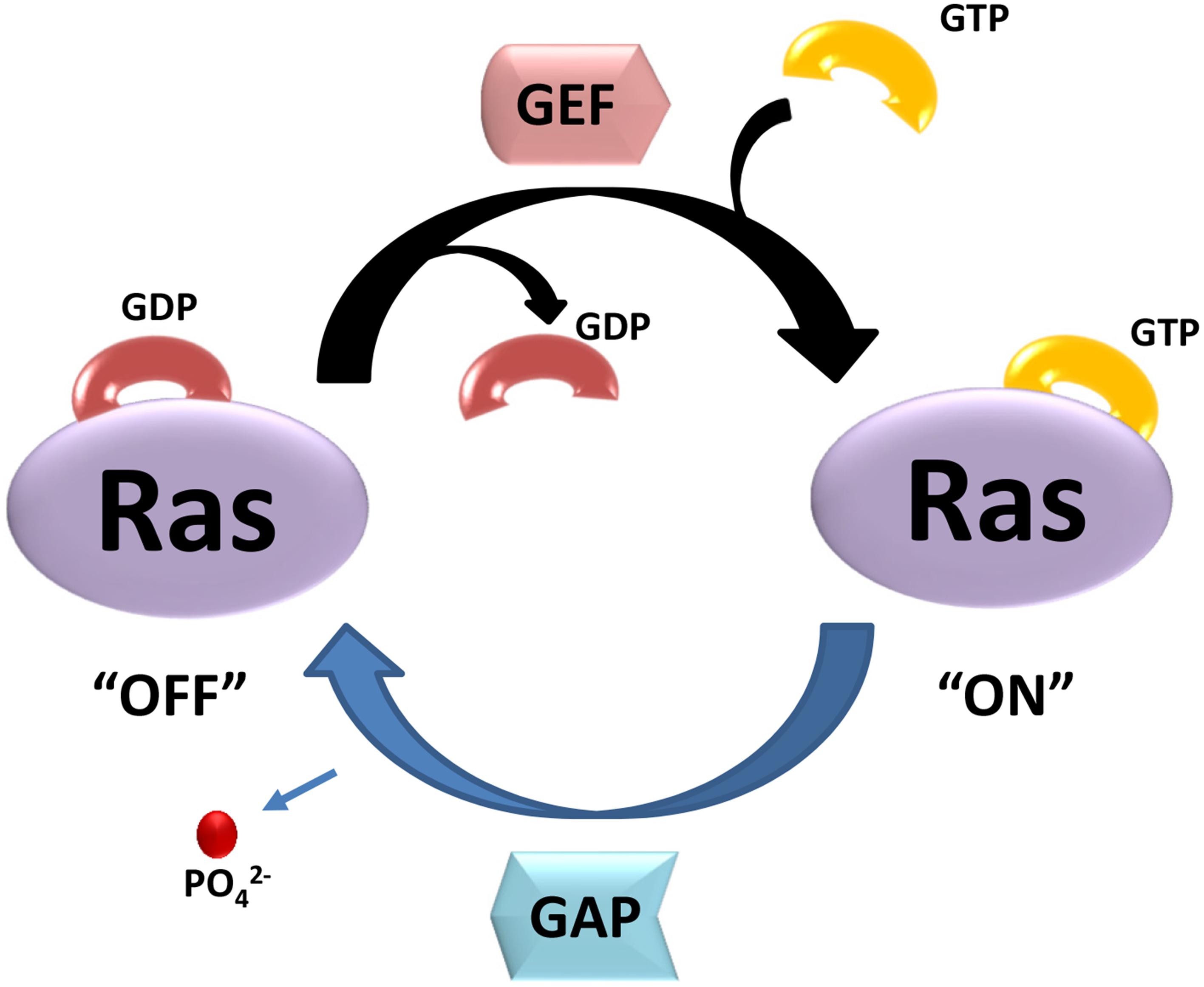
So they're GTPase off-state inhibitors, where they lock the mechanism in the off-state to prevent signaling and oncogenesis.
Joshua SabariGUEST
You also then have RAS-on inhibitors, You also have pan-RAS-on inhibitors.
Joshua SabariGUEST
So an on inhibitor simply locks RAS in the on state, leading to similar sort of cell death and prevention of signaling in this patient population.
Joshua SabariGUEST
Remember, it's this constant sort of back and forth between the on and off state.
18 MINS LATER
Joshua SabariGUEST
No, I agree with Solange on that.
Joshua SabariGUEST
I agree that by using a mutant selective inhibitor, you see less toxicity in general.
Joshua SabariGUEST
But you can imagine that if you have a sort of multiple or poly, you know, sort of heterogeneous resistance mechanism, you may want to consider a RAS-on inhibitor.
Joshua SabariGUEST
We also were involved in the Deroxon RACIB RMC6236 Phase 1, and we did see some activity post the earlier generation KRAS G12C inhibitors, specifically in escalation.

Oncology Today with Dr Neil Love
Non-Small Cell Lung Cancer — Targeting KRAS G12C
Sep 10 · 62 Mentions
Neil LoveHOST
Good afternoon, everyone.
Neil LoveHOST
I'm Neil Love from Research to Practice, and welcome to Where We Are and Where We're Heading, Targeting KRAS G12C and Non-Small Cell Lung Cancer.
Neil LoveHOST
We have a great faculty tonight, Professor Solange Peters from the Lausanne University Hospital in Lausanne, Switzerland, and Dr. Josh Sabari from the Perlmutter Cancer Center and the NYU Grossman School of Medicine in New York City.
Neil LoveHOST
Tonight, we're going to talk about KRAS G12C inhibitors, and as I started to explore this, I got very, very excited, and I'm super excited to talk about this tonight.
Neil LoveHOST
We will be discussing the use of non-approved agents and regimens, so check out the package inserts for more.
Neil LoveHOST
Here's where we're heading.
Neil LoveHOST
I'm going to start out and provide a little bit of a background to what we're going to talk about tonight.
Neil LoveHOST
Then we'll get into the biology of this KRESG12C and the inhibitors there, the available and approved agents, and particularly use in the second line.

Joshua SabariGUEST
So they're GTPase off-state inhibitors, where they lock the mechanism in the off-state to prevent signaling and oncogenesis.
Joshua SabariGUEST
You also then have RAS-on inhibitors.
Joshua SabariGUEST
You also have pan-RAS on inhibitors.
Joshua SabariGUEST
So an on inhibitor simply locks RAS in the on state, leading to similar sort of cell death and prevention of signaling in this patient population.
18 MINS LATER
Joshua SabariGUEST
No, I agree with Solange on that.
Joshua SabariGUEST
I agree that by using a mutant selective inhibitor, you see less toxicity in general.
Joshua SabariGUEST
But you can imagine that if you have a sort of multiple or poly, you know, sort of heterogeneous resistance mechanism, you may want to consider a RAS-on inhibitor.
Joshua SabariGUEST
We also were involved in the Deroxon RACIB RMC6236 Phase 1, and we did see some activity post the earlier generation KRAS G12C inhibitors, specifically in escalation.

Jacquelyn CobbHOST
I mean, everybody knew, but sort of one of the pioneers of the research.
Jacquelyn CobbHOST
of the pancreatic research world specifically, but also obviously I think your interest is more focused on the idea of RAS and KRAS.
Jacquelyn CobbHOST
So I would love to just have you sort of introduce yourself broadly.
Jacquelyn CobbHOST
I kind of gave you a little heads up, but if you wanted to sort of let any listeners know sort of other facets about who you are on your work before we get started, I'd love to hear it.
Frank McCormickGUEST
Thank you.
Frank McCormickGUEST
I'm Frank McCormick.
Frank McCormickGUEST
I'm a professor at UCSF where I have a lab working on different aspects of RAS signaling, but I also oversee the RAS National Initiative at Frederick, Maryland, where I've been overseeing this big project to target KRAS since 2013 when we launched the project.
Frank McCormickGUEST
I've been trying to target RAS proteins or KRAS proteins in particular for a very long time.

Alisyn CamerotaHOST
His research focuses on designing approaches for early detection and studying novel therapeutics for pancreatic cancer.
Alisyn CamerotaHOST
He and his research team have been at the forefront of studying RAS inhibitors in the laboratory and in the clinic, so he is a great authority to help us understand where we are today with this development.
Alisyn CamerotaHOST
Welcome, Dr. Wolpin.
Brian WolpinGUEST
Well, thank you.
Brian WolpinGUEST
And the data from the clinical trial, which we'll talk some more about, really showed that it benefits patients both in terms of quality of life, but also how long they're able to live with their cancer.
Brian WolpinGUEST
So I think the first and foremost thing that this approval does is it provides now broad access to a medicine we have seen that is effective in patients with pancreatic cancer.
Brian WolpinGUEST
I think the second thing is it really shows the field, the importance of targeting RAS.
Brian WolpinGUEST
As you said at the beginning, that is a very important gene that drives pancreatic cancer.

Andrea LinaresHOST
Un nuevo avance médico podría cambiar el tratamiento de uno de los cánceres más mortales en Estados Unidos.
Andrea LinaresHOST
La FDA aprobó el daraximum rogacimer, el primer medicamento diseñado para atacar directamente las mutaciones del gen RAS.
Andrea LinaresHOST
Se trata de alteraciones genéticas que están detrás de la gran mayoría de los casos de cáncer de páncreas.
Andrea LinaresHOST
Y los resultados, escuchen bien, son prometedores.
Tori LarrickGUEST
various variants and mutations within a specific type of gene.
Tori LarrickGUEST
I'll dig into it further, but those are the two main things that really make this different from some of the other targeted therapies that have been investigated over the years is that it is almost doubling survival for patients and it is a multi-selective inhibitor, meaning that it's targeting various kinds of RAS mutations.
Tori LarrickGUEST
which I can describe a little further too.
Roberta LunaHOST
Yeah, you'll have to because I think a lot of people ask a lot about that and it's going to get over the confusion.
Roberta LunaHOST
But so it's not considered a chemotherapy then?
Tori LarrickGUEST
No, it is not a chemotherapy.
Tori LarrickGUEST
Serexon Rassive is an investigational targeted therapy that's actually a pill and it's designed to shut down RAS, which is a protein that acts like an accelerator for cancer cell growth.
Tori LarrickGUEST
So the way that we describe it is like a gas pedal being stuck to a

Eric Van CutsemHOST
And indeed, her two positive tumors is a rare but a highly talkable marker subtype requiring specialized biomarker-driven treatment pathways.
Eric Van CutsemHOST
We have learned that HER2 amplification or overexpression is present in 3% to 5% of metastatic or rectal cancer patients and that it's most frequently in left-sided and RAS and BRAF white act tumors in this setting.
Eric Van CutsemHOST
There is a general recommendation to test all patients with chemorefractory metastatic colorectal cancer for R2-positive.
Eric Van CutsemHOST
But if for a reason testing should be limited to a certain subclinic, group of patients, left-sided tumors, left-sided and RASB-RAF-VADER tumors can be then the target population and testing can be restricted to this population.
Florian LordickGUEST
The prognostic
Eric Van CutsemHOST
significance of HER2 positivity remains controversial.
Eric Van CutsemHOST
What should be done in HER2 positive patients with the EGFR antibodies? If you look further into some of the data that have been published, important data leading to the approval of tucathinib in some parts of the world, in the US by the FDA, was based on the Mountaineer study.
Eric Van CutsemHOST
The Mountaineer study was a study in which tucathinib was studied, but also the combination of tucathinib and trastuzumab.
20 more episodes mention Ras GTPase.
Create an account to see the whole feed, search across every transcript, and follow the entities you care about.