Rapid eye movement sleep
2.2k
MENTIONS
382
EPISODES
324
PODCASTS
Search complete. 2162 mentions across 382 episodes found for "Rapid eye movement sleep".
Oct 27, 2026

Louisa NicolaGUEST
So that's one reason why sleep is phenomenal.
Louisa NicolaGUEST
We also get during REM sleep, it's like emotional first aid.
Louisa NicolaGUEST
We can go through, we can fix our emotions.
Louisa NicolaGUEST
We get a lot of the memory consolidation that occurred during the day.

Addison AndersonNARRATOR
But surprisingly, in the middle of this slow-wave sleep, the brain's synchronized spontaneous activity repeatedly transitions into the sort of varied bursts that occur when we're wide awake.
Addison AndersonNARRATOR
This is the sleep stage known as REM sleep, where our eyes move rapidly back and forth as we dream.
Addison AndersonNARRATOR
neuroscientists are still trying to answer many fundamental questions about sleep, such as its role in rejuvenating cognitive capacity, cellular homeostasis, and strengthening memory.
Addison AndersonNARRATOR
And more broadly, they are exploring how it is that the brain can accomplish such important and complex tasks, such as driving or even breathing, without our awareness.

Louisa NicolaHOST
Can you just tell me briefly what sleep actually is? And we don't really need to go into every stage of sleep because I know that stage three and three sleep is the most important.
Louisa NicolaHOST
Well, alongside REM sleep.
Louisa NicolaHOST
Let's just talk about what they're actually doing to us.
Michael BreusGUEST
Sure.
Michael BreusGUEST
And then inside of sleep, we have sleep cycles.
Michael BreusGUEST
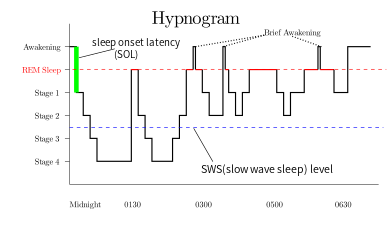
So roughly every 90 minutes, a repetition occurs of what we would consider to be a cycle.
Michael BreusGUEST
Generally speaking, we go from wake to stage one, stage two, stage three and four, which is your favorite, into stage two and then into REM, and then we're done.
Michael BreusGUEST
for one cycle generally speaking we have five cycles let's talk about what each one of those stages do for us why are they important at all i'm going to be honest with you we're going to bypass stage one because it lasts for about two minutes and it's literally opening the door to sleep yeah okay stage two which makes up the majority of the night like 50 or so there's a lot of things that go on in there that aren't important for our audience but it is important for them to know that stage two does a great job of acting as a buffer between rem and non-REM sleep or what we call stage three, four sleep.

AshleyHOST
And during the sleep study, they are testing for brain activity, eye movements and muscle tone.
AshleyHOST
And they do conclude that he has what's called REM intrusion, which is 3M features bleeding into other stages of sleep, but it doesn't really explain sleepwalking.
AshleyHOST
And there's no indication that he has narcolepsy or that he's waking up at all in the middle of the night.
AshleyHOST
It doesn't really solve anything for him, although he just thinks this must have something to do with it.

Peter GrinspoonGUEST
And it doesn't cause as many side effects as many of the other medications I just mentioned do.
Peter GrinspoonGUEST
Now, it does suppress REM sleep.
Peter GrinspoonGUEST
So you might not dream as much and you might not remember your dreams as well, which is why people stop cannabis suddenly.
Peter GrinspoonGUEST
One of the withdrawal symptoms is these very, very vivid, intense dreams.
Don SaladinoHOST
I'm wondering if we're going to find out one day that cannabis is going to act more like a supplement, right? Like, so we, when we supplement specific vitamins or creatine, that's actually help enhance performance or maybe make up for some type of a loss that someone's blood panel might be showing.
Don SaladinoHOST
I use vitamin D for instance, creatine, that wouldn't be the case, but I'm wondering if like, are we going to get to a point with cannabis? I'd like your opinion on this, where it's, It is something by taking a very low dosage, like you said, two and a half milligrams.
Don SaladinoHOST
Is this going to make you more relaxed after a workout? Is it going to allow you to focus more? Is it going to allow you to sleep better in the evening where it isn't cutting into REM? I mean, does it do you have any opinion on that or is there any research pointing in that direction or is this something?
Peter GrinspoonGUEST
It's a great it's a great question.

CarmenGUEST
So when a doctor asks what happens during the night, the person having the symptom may not even be the best witness.
CarmenGUEST
The reveal? It may be REM sleep behavior disorder.
CarmenGUEST
Who knew? During normal REM sleep, the brain temporarily switches off most major muscle movement.
CarmenGUEST
You can dream that you're running, fighting, or being chased, but the body mostly stays still.
CarmenGUEST
With REM sleep behavior disorder, that normal muscle paralysis is reduced or it's missing.
CarmenGUEST
Parts of the dream can spill into physical movement.
CarmenGUEST
This sleep disorder has a strong association with Parkinson's and other neurological conditions involving Okay, I can't say the word.
CarmenGUEST
That means the care partner may witness an early neurological clue while the person experiencing it is completely unconscious.

Michael GradisarGUEST
So stage three is sort of like 20% to 50%.
Michael GradisarGUEST
of a 30 second interval being deep sleep and then stage four sleep being basically at least 50 of that 30 seconds of sleep being deep sleep so it's really rich sort of deep sleep then we basically have REM sleep REM sleep is also known as paradoxical sleep because we're so active in terms of our mind and body but we're actually asleep so our brain waves are similar to what we have right now it's associated with dreams you've got irregular breathing irregular heart rate this is why some people can wake up out of REM sleep because it's a bit of a fragile stage of sleep it's a bit of a light one that people don't realize and if you wake up out of that you can start to feel quite alert and think oh crap you know i don't think i'm going to get back to sleep anytime soon and but i feel a little bit too fatigued to get up and do the washing or start to do emails Um, so those are really the stages of sleep.
Michael GradisarGUEST
You sort of go through all of those roughly an hour and a half ish.
Michael GradisarGUEST
So sometimes you might sort of notice that you're waking up four and a half hours after you fell asleep, which is sort of three cycles of sleep.
11 MINS LATER
Michael GradisarGUEST
The evidence doesn't support it.
Michael GradisarGUEST
But alcohol is one of the worst sleep toxins at all.
Michael GradisarGUEST
We're looking at that literature, like the fact that it can change your sleep architecture, your REM sleep, for example, within hours.
Michael GradisarGUEST
And your body is trying to basically circumvent that by finding the balance within the same night.

Owen van de RidderHOST
And through the rapid eye movement sleep and the wandering of the gong, it's possible to release the emotions.
Owen van de RidderHOST
The gong governs memory, insights and also the future.
Owen van de RidderHOST
So it's very important to have that REM sleep, the rapid eye movement moment.
Owen van de RidderHOST
So when I make a summary, think of the first phase of sleep, the way she moved inwards, body temperature drops, the blood flows to the liver to anchor the shen and refresh the blood.
Owen van de RidderHOST
And anchoring like a ship, needing deep, soft seesaw, the goon and the shen require a good blood and yin to anchor.
Owen van de RidderHOST
Or think of bladder 62, sedating.
Owen van de RidderHOST
But you can also tonifying kidney 6 to bring the yin chi to the eyes.
Owen van de RidderHOST
And we talked about REM sleep, rapid eye movement sleep.

Sean SchemmelVOICE_ACTOR
The text arrives.
Sean SchemmelVOICE_ACTOR
Target in REM state.
Sean SchemmelVOICE_ACTOR
I step up to the seat, tremors echoing inside.
Sean SchemmelVOICE_ACTOR
A slight buckling teases at my steady, acid burning through the lining in my guts.

Gail SaltzHOST
Connections have been found between anxiety disorders and changes in a person's sleep cycle.
Gail SaltzHOST
Research shows that anxiety and pre-sleep rumination, thinking the same thought over and over, may affect rapid eye movement or REM sleep, which is the deepest form of sleep and which involves the most vivid dreaming.
Gail SaltzHOST
Anxiety can provoke more disturbing dreams and create a higher likelihood of sleep disruptions.
Gail SaltzHOST
Nightmares can reinforce negative associations and fear about then going to sleep.
372 more episodes mention Rapid eye movement sleep.
Create an account to see the whole feed, search across every transcript, and follow the entities you care about.