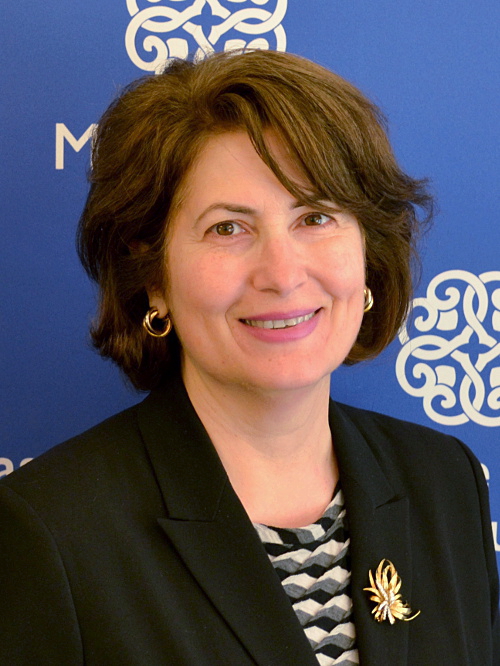
Randa Slim
Diplomat
6
APPEARANCES
6
PODCASTS
Sep 4, 2026


Randa SlimGUEST
I think the Captecon trade is still alive, though, to much, much, much reduced level.
Randa SlimGUEST
And I think the more that the Syrian authorities crack down on these production capacities inside Syria, but also a lot of them are inside Lebanon, but also on the smuggling networks.
Randa SlimGUEST
And the smuggling networks, especially on the Lebanon-Syria border, are not only for smuggling captagon, smuggling weapons, but also smuggling people.
10 MINS LATER

Nada AlTaherHOST
If Hezbollah does survive all of this, do you think there is a Hezbollah 2.0 version that exists in the future? Or do you think that it won't last?


Catherine CullenHOST
Randa, in terms of the issues that are not sorted, and they do seem to be quite a long list, what would you say are the ones that are most likely to jeopardize, uh, this agreement such as it is?
Randa SlimGUEST
Uh, I think the nuclear file, all the issues that are related to the nuclear file.
Randa SlimGUEST
Uh, I think, uh, what Mr. Trump just said in the interview that you a- a- I mean, in the clip that you aired, uh, during his meeting with Mr. Macron, that, uh, Iran has committed to not developing a nuclear weapon.
Randa SlimGUEST
Uh, I think when it comes to enrichment levels, when it comes to what's going to happen to the highly enriched uranium that's already in possession of the Iranian, what's gonna happen to the infrastructure, you know, for, uh, enriching, uh, the centrifuge, uh, what's going to happen to the ballistic missile program.
Randa SlimGUEST
The MoU does not mention, the memorandum of understanding does not mention the ballistic missile program.
7 MINS LATER
Catherine CullenHOST
But I wonder if, if we say that this might be, um, at least another, uh, moment in this conflict where we're, where perhaps we see at least less fighting, what do we think we would say this war has changed? Fundamentally, geopolitically, what, what has come of this?

Sam HawleyHOST
[instrumental music] So Randa, why don't we consider now more deeply what is happening in Lebanon? Israel is edging further and further into Lebanese territory, isn't it? Just tell me what we are seeing.
Randa SlimGUEST
The level of destruction, the kind of destruction that's happening, the basically total destruction of villages.
Randa SlimGUEST
There was an order of eva- evacuation of a major city, the city of Tyre in southern Lebanon, including Christian quarters, uh, which in the past Israel has been reluctant to attack Christian communities or Christian quarters in a city.
Randa SlimGUEST
Um, we have seen recently southern suburbs of Beirut being attacked near the capital.
Randa SlimGUEST
You have million, more than a million Lebanese out of five million displaced now, internally displaced.
Sam HawleyHOST
Just explain why they're not.


Randa SlimGUEST
You have right now in Lebanon, a fifth of the population is internally displaced, and you have to add that to, uh, more than six, seven hundred thousand Syrian refugees who were displaced by the Sy- Syrian civil war, still are in Lebanon, have not returned home.
Randa SlimGUEST
And this is happening at a time when, um, the country is, has been reeling for some time from a severe economic crisis.
Randa SlimGUEST
International community is not coming, uh, with as much assistance at is need, as is needed.
Randa SlimGUEST
The Lebanese government is trying as much as possible to accommodate, uh, these new demands on its social service infrastructure.
Randa SlimGUEST
Uh, and so you have, like, a couple of tent cities now that have been put in place, uh, around, uh, Beirut in the capital.

Scott MacLeanHOST
R- Randa, do you agree with what David just said that... said there? And what should we make of the timing here, given that the Israeli and Lebanese military representatives are supposed to meet in Washington in just a few days from now?
Randa SlimGUEST
I mean, the timing definitely is a message here, uh, just ahead of this meeting on May 29.
Randa SlimGUEST
The names of these officers have been on a list of potential sanctions for some time now.
Randa SlimGUEST
Uh, the LAF commander during his bri- uh, February visit to DC was given a list of names, and that predates the war, uh, between Lebanon... uh, uh, Israel war on Lebanon.
Randa SlimGUEST
And among these name, I mean, names of officers who are known to be actively cooperating with, uh, w- with Hezbollah, and one of the names on that list was Colonel Hamadi.
Randa SlimGUEST
And at the time, uh, the LAF commander, the presidents have decided not to act on the list.
17 MINS LATER
Scott MacLeanHOST
Do you think that there can be a peace deal between the United States and Iran that doesn't also include Lebanon, or do you think that the Iranians may go along with a deal that allows the fighting to continue there?

Randa SlimGUEST
Uh, I mean, as Richard said, this is a president that looks at trade and business deals as a cornerstone of US foreign policy, and it's an approach that goes well or works well with, uh, Arab Gulf leaders.
Randa SlimGUEST
Trump got what he wanted, coming back, burnishing his reputation of being the ultimate deal-maker and bringing investments to the United States, and the Gulf leaders got what they wanted in terms of positioning themselves in this global revolution, uh, going forward in AI and, uh, future technologies, uh, as part of their efforts, uh, ongoing efforts to diversify their economy away from oil and to localize these technologies and this know-how in their, uh, countries.

Fareed ZakariaHOST
But A, do you think it's a, it's a, a, a good idea, and B, can it actually happen? As with many of the things Donald Trump, uh, does, can the president simply deliver sanctions relief that way when these were, I think, congressionally enacted sanctions?