Ramcharitmanas
Poem by TulsidasWikipedia
18
MENTIONS
7
EPISODES
6
PODCASTS
Search complete. 18 mentions across 7 episodes found for "Ramcharitmanas".
Oct 28, 2026

speaker_0NARRATOR
Sushena crushed the herb and held it to Lakshmana's nostrils, and he stood up, healed.
speaker_0NARRATOR
In later tellings, especially in the Ramcharitmanas of Tulsidas, this second journey is the more famous one, and the herb is called the Sanjivani, the herb of life.
speaker_0NARRATOR
and the mountain Dranagiri, and more adventures are added along the way.
speaker_0NARRATOR
A demon called Kalanemi, sent by Ravana, who disguised himself as a sage and tried to delay Hanuman with false hospitality, until Hanuman saw through him and killed him, and, on the way back, Rama's own brother Bharata in Ayodhya, who saw a huge shape flying over the city at night and taking it for a demon, shot it down with an arrow, before learning who it was.
14 MINS LATER
speaker_0NARRATOR
Of all the poets who have told the story of Rama since Valmiki, the one who has done most to shape the way Hanuman is loved in northern India today is Tulsidas.
speaker_0NARRATOR
He was born, according to most accounts, in the 16th century in what is now Uttar Pradesh and he spent much of his life in the holy city of Varanasi on the Ganga, He wrote in Awadi, a form of Hindi, the everyday language of the people of the region, rather than in Sanskrit, the language of the learned.
speaker_0NARRATOR
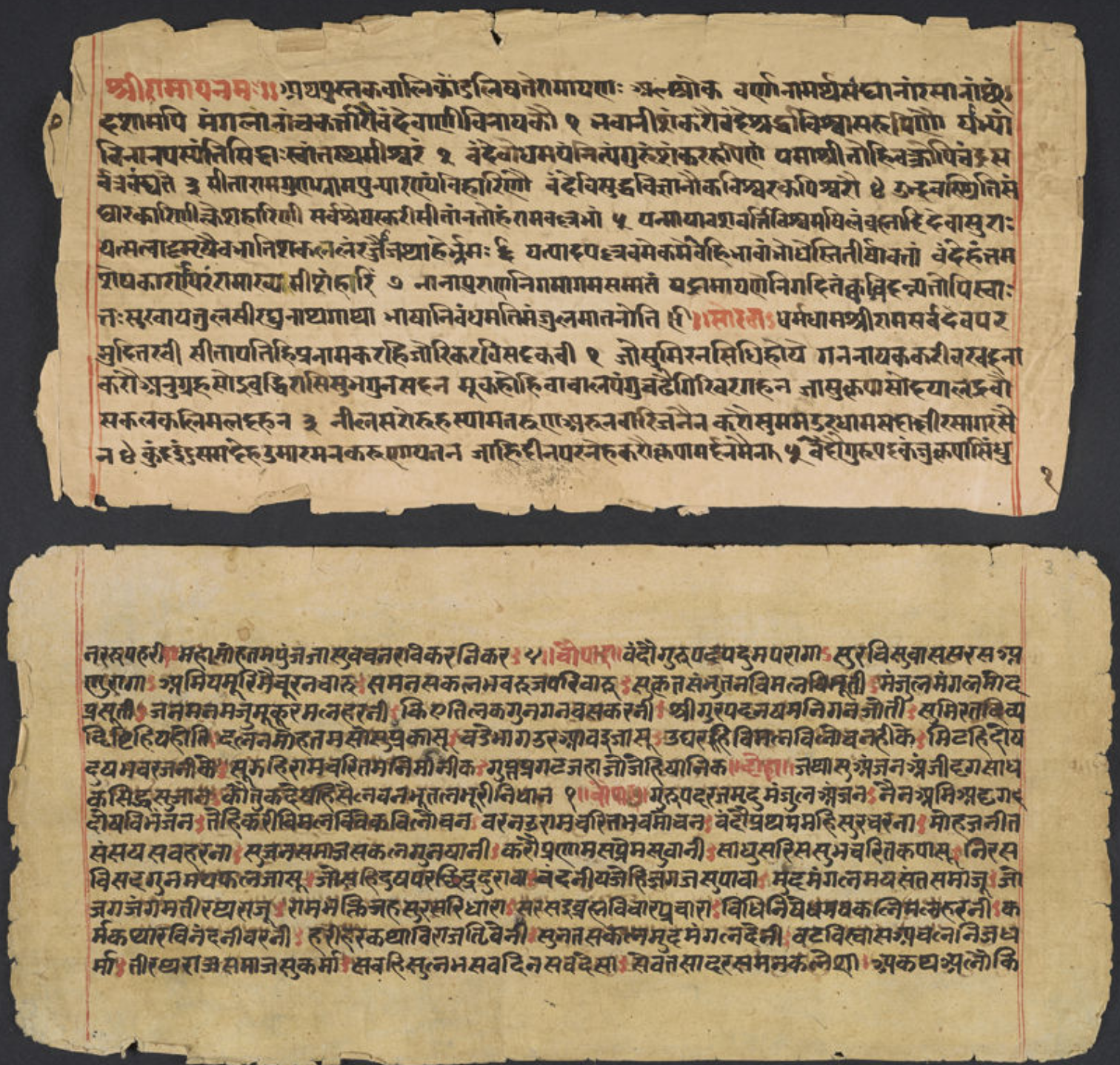
And his great work, the Ramcharitmanas, the Lake of the Deeds of Rama, begun, by tradition, in 1574, retold the whole Ramayana as a work of passionate devotion.
speaker_0NARRATOR
It became one of the most widely read and recited books in India.

Satish ManchikantiHOST
If you were to think of wishes that you would want to see for the nonprofit space, for the philanthropy space, what would be one that you would say, hey, I'd love to see this happen in the future for these two spaces?
Rishabh LalaniGUEST
I think both these spaces exist for, let me just talk in the context of India, because in the Ramcharitmanas, Tulsi Das talks about the world being our home, right? But if I were to just talk about our nation, I don't see philanthropy or nonprofits as different, right? And I think we are very, I would not want this Western driven connotation of a nonprofit and philanthropy.
Rishabh LalaniGUEST
I think our society is far more integrated.
Rishabh LalaniGUEST
And for whatever reason, the way this space has been structured over the last few decades, it's created separations that are not needed.

Anish ChaitanyaHOST
This kind of a man, how are you going to sustain? The ideal you have kept for attaining is not worthy of attaining.
Anish ChaitanyaHOST
So Mother Parvati looks and says, okay, he may be, she says in this Ramcharitmanas, Vishnu sakal gun dham, Mahadev avagun bhavan.
Anish ChaitanyaHOST
Vishnu sakal gun dham.
Anish ChaitanyaHOST
You think that Mahadev, Bhagwan Shiva is a repository of all the avagunas, the wrong characteristics and Bhagwan Vishnu is an abode of all good characteristics.
1 HR 3 MINS LATER
Anish ChaitanyaHOST
Don't have this mistaken understanding that Bhagwan Ram was born to kill Ravana.
Anish ChaitanyaHOST
Bhagawan has better things to do.
Anish ChaitanyaHOST
It comes in Ramcharitmanas very clearly.
Anish ChaitanyaHOST
His main purpose of coming here was, there were many who were worshipping him, many rishis who were doing tapas for him, to bless them.

speaker_0NARRATOR
But first, I'm going to need to wash your feet.
speaker_0NARRATOR
This one comes from the Ramcharitmanas, Tulsidas' retelling of the Ramayana.
speaker_0NARRATOR
Ram has just left Ayodhya, sent into exile for 14 years with Sita and his brother Lakshman by his side.
speaker_0NARRATOR
And very early in that long journey, they come to the banks of the Ganga.
Anish ChaitanyaHOST
That's the second Ramayan we have.
Anish ChaitanyaHOST
The third Ramayan we have, which is more popular in north of India, is called Ramcharitmanas.
Anish ChaitanyaHOST
Ramcharitmanas is what I'm taking up today.
Anish ChaitanyaHOST
I have to connect you to the text first before I come to the actual conversation.
Anish ChaitanyaHOST
Ramcharitmanas is written by Goswami Tulsidas Ji.
Anish ChaitanyaHOST
Okay? He was a great saint in the northern of India, Uttar Pradesh, which now has become split into Uttar Pradesh and Uttarakhand.
Anish ChaitanyaHOST
So he was part of Uttar Pradesh.
Anish ChaitanyaHOST
He used to stay there near Saryu Nadi.

speaker_1UNKNOWN
How to find Satsang? Satsang is found only when God's grace is upon it.
speaker_1UNKNOWN
Ram Kripa Binnu Sulabhan Soi Two reasons are mentioned in Ramcharitmanas for Satsang.
speaker_1UNKNOWN
Satsang is found only when When a person is a pious soul, if he does a lot of pious deeds, he will get satsang.
speaker_1UNKNOWN
So this was the path of purusharth.