Radio-frequency identification
51
MENTIONS
15
EPISODES
15
PODCASTS
Search complete. 51 mentions across 15 episodes found for "Radio-frequency identification".
Sep 16, 2026

Brad ReevesGUEST
You're not going to be able to purchase gas.
Brad ReevesGUEST
There's people that are using RFIDs now for purchases, medical record keeping and stuff underneath their skin.
Brad ReevesGUEST
So you have in Sweden, people are getting RFIDs underneath their skin.
Brad ReevesGUEST
I've seen people doing it here in America.
Brad ReevesGUEST
Yeah.

Martijn GraatHOST
Yeah.
Martijn GraatHOST
So Simon, you also mentioned before the recording something about RFID.
Martijn GraatHOST
Yes.
Martijn GraatHOST
So does that tie into the cycle counting story as well?
Simon FlemingGUEST
Yeah, absolutely it does.
Simon FlemingGUEST
And a lot of retailers who have looked at implementing RFID, they see the value in the increased cycle count efficiency.
Simon FlemingGUEST
I talked about barcode scanning earlier on.
Simon FlemingGUEST
When you're doing a cycle count in a warehouse, you have to scan every item manually.

Scott GlennGUEST
It's gonna take some time.
Scott GlennGUEST
I mean, to be honest with you, RFID has a lot of promise in terms of tracking not just the theft side of product, but, like, where is this product in the store-
Joe WeisenthalHOST
Yeah
Scott GlennGUEST
... has it been sold, what's the replenishment look like, how do you get your on hands corrected? There's a ton of business opportunities on those pieces, but I think that RFID hardware costs have always been so expensive-
Joe WeisenthalHOST
Wow
Scott GlennGUEST
... it's almost impossible to put it...
Scott GlennGUEST
We are never, ever gonna put people in jeopardy.
Scott GlennGUEST
Our associates and our customers are the number one priority.

JohnHOST
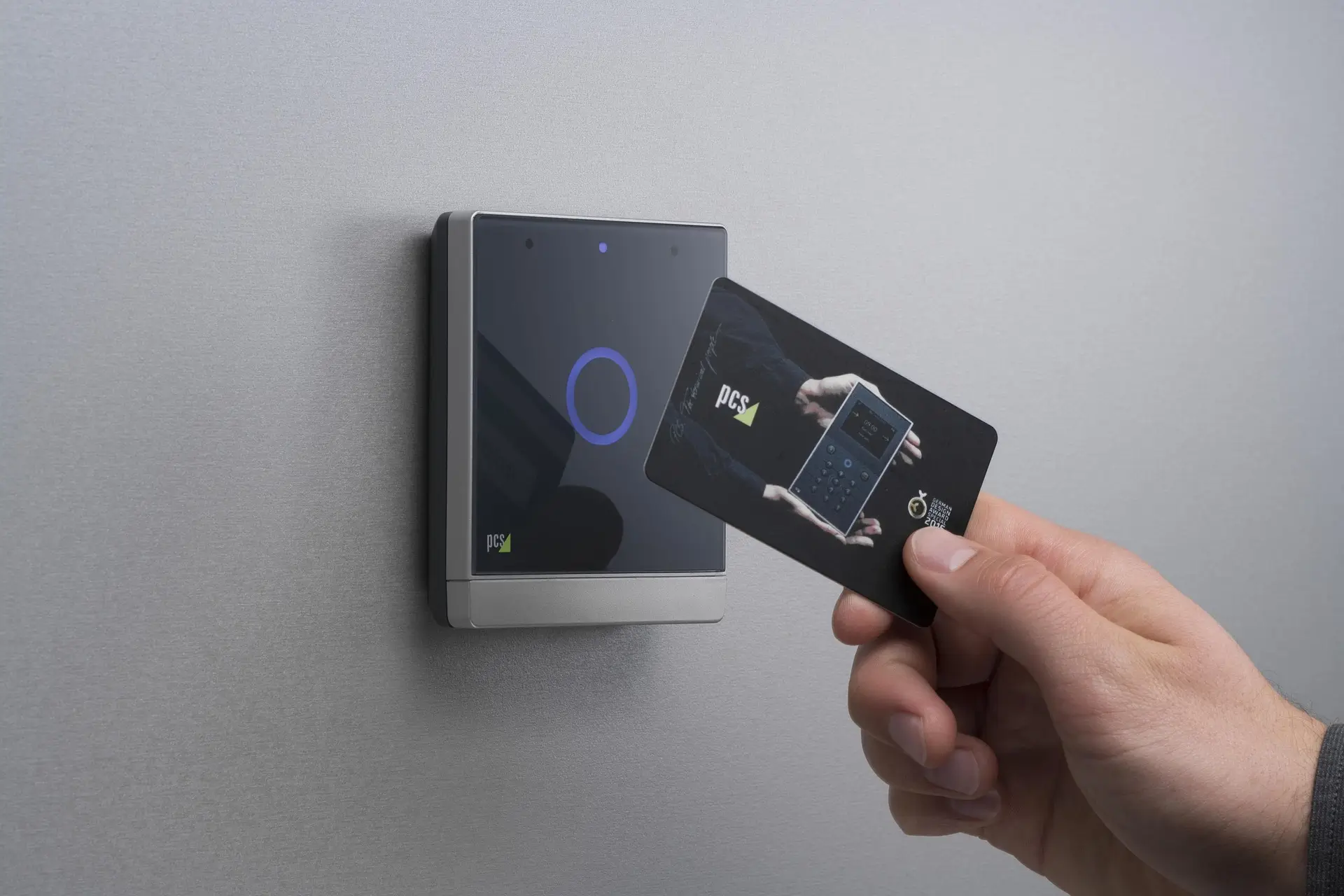
So we've got these access cards, the little key chain-looking things.
GavinHOST
An RFID chip.
JohnHOST
RFID chip.
GavinHOST
Our, uh, yeah, our elevators have that, yeah.
JohnHOST
Yeah.

Alec WatsonGUEST
But then I realized that sounds expensive.
Alec WatsonGUEST
So then I thought we could do like RFID tags, like libraries use for their books.
Alec WatsonGUEST
And if you just have an RFID tag in all your tools, if there were some sort of a toolbox that can do a mass scan and tell you you're missing these tools, I would pay a lot for that.
ScottHOST
I've worked on something similar before for a medical device where doctors would actually leave pieces of gauze or tools inside patients.
ScottHOST
And so they had to, they would RFID every single thing inside that would be used on the table.
ScottHOST
And then when they're done with the surgery, they would sweep them with an RFID reader to be like, is anything still in there? No.
ScottHOST
Great.
ScottHOST
We can

Matthew SweeneyGUEST
And there are indeed objections.
Matthew SweeneyGUEST
Right now, this spectrum is used by a couple other groups, one of which is what's called Part 15 devices that includes RFID tags.
Matthew SweeneyGUEST
um among other things it could control like smart utility meters etc they claim that there will be interference nextnap has done a number of engineering studies to show that there is no interference the opposition of course has done their own studies they say there is interference My read is that the NextNav studies read better because they respond to any criticism of their studies with detailed analysis of why they did what they did, whereas the opposition – I mean, NextNav at one point, for example, replied to an opposition study and said, like, your whole study relies on the idea of the laws of physics not being applicable.
Matthew SweeneyGUEST
Like, you have to bend the laws of physics, if not break them.
Matthew SweeneyGUEST
But other than him, everyone else in Congress, I think, is on board with the idea that this is a national defense issue.
Matthew SweeneyGUEST
And then there's things you could do that just in the realm of common sense.
Matthew SweeneyGUEST
So for example, in the United States right now for Part 15 devices, they have, I guess it's 26 megahertz of spectrum allocated to Part 15, which includes RFID.
Matthew SweeneyGUEST
And China has, I think, six, and the EU has five megahertz.

Alex AndersonGUEST
If you connect that to a competitor's product, it'll convert it to an ISD signal, and it'll allow it to run across the chain along with our devices.
Alex AndersonGUEST
So if you have a key and smeg switch and you want to throw it on with our RFIDs, you can use that, that little connector to bridge that.
Alex AndersonGUEST
So we don't, we don't, we don't lock you into our ecosystem.
Alex AndersonGUEST
If you like a competitor's product.
9 MINS LATER
Alex AndersonGUEST
But then you can get into each one of your safety circuits and so we don't need to touch in all these i'm sure people have some background on on what these are um but these are also all in our manual if you go through that but you know so we can connect these stops both dual channel and single channel we can do uh test pulse to untest pulsed as you can see we also have other devices like meg switches We also have kind of dual touch.
Alex AndersonGUEST
So if you have equipment where you want those operator hands to stay in a certain position where it's being actuated, you can connect those to this block as well.
Alex AndersonGUEST
Of course, light curtains in our safety scanner, as well as some more RFIDs.
Alex AndersonGUEST
Like what I said as well, they still have those two hand touch buttons.

Mairi NolanHOST
True.
Mairi NolanHOST
So actually, individual RFIDs is a very sound business.
Jon SaundersHOST
Hang on.
Jon SaundersHOST
We could split our forces.

KateHOST
Oh, it's so sad.
KateHOST
And then the tour guide explains RFIDs and facial recognition.
KateHOST
Much fancier tech than we see in the silos, but they're clearly in the silos.
AubreyPANELIST
It's interesting that they're kind of introducing what we see later with the algorithm that a person walks in and it knows everything, their vital signs, everything about them.

John BlackGUEST
What value can you provide with that? So one is a very specific application.
John BlackGUEST
So we're scanning in retail analytics and warehouse analytics, like where are my pallets? RFID really unlocks a lot of even higher resolution to that with product count and product location.
John BlackGUEST
And then on the second side, going back to, we were talking about kind of the future, you know, being able to actually query, you know, query that information and work with that information.
John BlackGUEST
So you're talking about like cleanup IO5, right? Those images also work to feed those general models.
5 more episodes mention Radio-frequency identification.
Create an account to see the whole feed, search across every transcript, and follow the entities you care about.