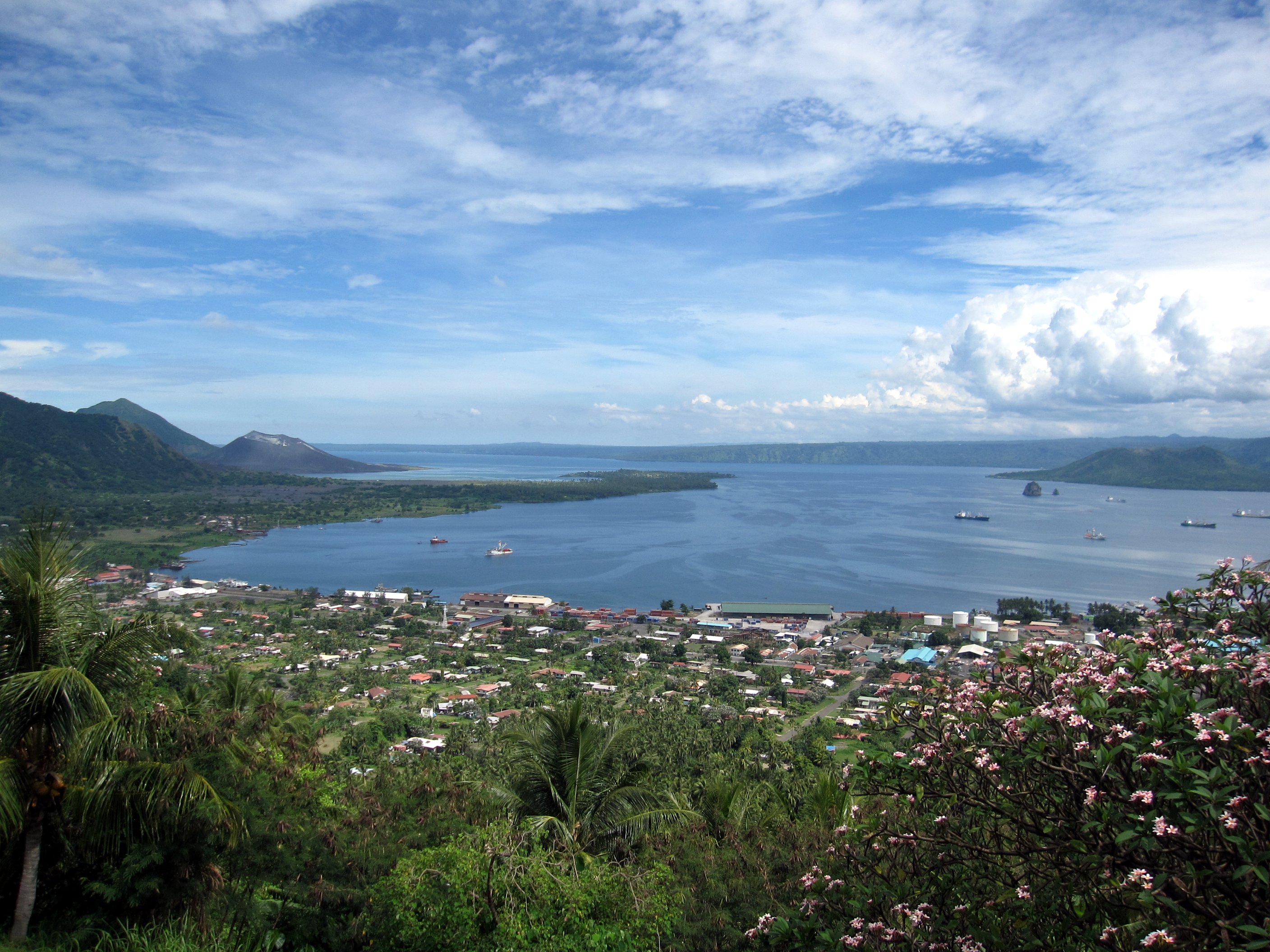
Rabaul
Township in New Britain, Papua New GuineaWikipedia
72
MENTIONS
26
EPISODES
12
PODCASTS
Search complete. 72 mentions across 26 episodes found for "Rabaul".
Sep 26, 2026

Tail DraggerHOST
The name stuck.
Tail DraggerHOST
What they did in the following four months over Bougainville and Rabaul was the stuff that gets written about.
Tail DraggerHOST
Boyington led by example engaging in the kind of aggressive high-speed tactics the Corsair was designed for and communicating on the radio in ways that were unconventional by the standards of 1943.
Tail DraggerHOST
He talked his pilots through engagements, called out threats, kept the formation functional in the chaos of a large engagement over a defended target area.
Tail DraggerHOST
By January of 1944, his official aerial victory total had climbed to 28.
Tail DraggerHOST
That surpassed Joe Foss's record of 26 victories, which had stood as the highest total by a Marine aviator.
Tail DraggerHOST
On January 3, 1944, flying a mission over Rabaul, Boyington was shot down.
Tail DraggerHOST
Japanese anti-aircraft fire and fighters found him.

Chris ParryGUEST
So this is why it's so critical.
Chris ParryGUEST
But the other thing is, look at Rabaul.
Chris ParryGUEST
This is the major fleet base for the-
Jonathan ParshallGUEST
Mm-hmm
Jonathan ParshallGUEST
And lo and behold, in the aftermath of Midway, we get not one, but two of those sausage grinders.
Jonathan ParshallGUEST
We set one up at Guadalcanal, and the Japanese land in New Guinea and begin the Kokoda campaign, and that is gonna be the second grinder there.
Jonathan ParshallGUEST
So from the standpoint of the Japanese sitting in Rabaul, they're looking at this, you know, this twin-headed monster that's just eating them alive by the time we get to the end of this year, and that's exactly what the doctor ordered.
Fergus McPheeHOST
When we talked about, um, in the middle of sort of, or early 1942, the Allies not perhaps knowing where the war was gonna go.

Tony RobinsonNARRATOR
12 days later, Japan mounts a counterattack.
Tony RobinsonNARRATOR
A wave of a thousand soldiers from their nearby island stronghold of Rabaul lands on Guadalcanal.
Tony RobinsonNARRATOR
American forces stand firm Almost all of the Japanese that attack are killed But they keep on coming Wave after wave of Japanese reinforcements pour onto the island.
Tony RobinsonNARRATOR
Fighting continues for six months.
Tony RobinsonNARRATOR
February 1943.
Tony RobinsonNARRATOR
With Guadalcanal under their control, US chiefs can now begin the process of cutting Japan off from its supply of natural resources.
Tony RobinsonNARRATOR
Rabaul, on the island of New Britain, is America's next target.
Tony RobinsonNARRATOR
From here, Japan provides air and naval support to its supply routes.

Ray Harris JrHOST
That was the extent of this attempted American deflection.
Ray Harris JrHOST
The results, or lack thereof, of the two major air attacks were radioed back to headquarters at Rabaul.
Ray Harris JrHOST
General Miyazaki, the chief of staff of the 17th Army at Rabaul, was delighted.
Ray Harris JrHOST
He wrote in his diary, The arrow has already left the bow.
Ray Harris JrHOST
Meaning the Battle of Guadalcanal was about to finally come to an end.

John WatmilikSOUNDBITE_SPEAKER
Every 30 seconds to one minute, there was this continuous tremor that was felt moving vertically and horizontally, and all we could do was keep ourselves together.
John WatmilikSOUNDBITE_SPEAKER
But at the same time, there was this continuous alert level from stage one, stage two, and stage three, being issued by the Rabaul Organological Observatory that was effective through the Eastern Britain Provincial Radio.
John WatmilikSOUNDBITE_SPEAKER
So people actually listened to those announcements and made their way out of the town so we live on the north coast of eastern britain our village was at bunabutong village so we could actually see people moving out from the town in mass or do anything that was on their hands just few personal belongings all they cared about was their life as they were moving out we living out on the north coast was opening so our parents were just keeping us together and suddenly we could hear a roaring sound and then there was one big explosion And as we look up, we could see this black cloud of smoke-like formation that went right up into the, you know, sky and then just covered the whole area.
John WatmilikSOUNDBITE_SPEAKER
And we were lost.
John WatmilikSOUNDBITE_SPEAKER
It just kicked in.
John WatmilikSOUNDBITE_SPEAKER
I think it's just the way our elders were living and they kept those communities together.
Caroline TirimanCORRESPONDENT
Rabaul town was a pretty town, and the harbor was the deepest in the Pacific region, but finally you saw what the eruptions had done.
Caroline TirimanCORRESPONDENT
What were your thoughts then? I

JackmanHOST
Um, speaking of, you know, um, PNG there like you know would you be able to tell us a little bit about you know um what province you're from in PNG and where were you sort of born and raised
Paul MineiGUEST
yeah so um mum and mum's from Milbay she's from Milbay province dad is from uh Monus Island uh they both met um in Rabaul so that's where I was born um I have a younger sibling she was born there as well um And so we lived in Rabaul for a little bit.
Paul MineiGUEST
Don't have too many memories of Rabaul.
Paul MineiGUEST
I think I was only there for a couple of years before we moved to Port Moresby.
Paul MineiGUEST
So, yeah, moving to Port Moresby, I have...

DaleHOST
The Japanese call it Operation Moe.
DaleHOST
Overall command belonged to Vice Admiral Shigeyoshi Inoue, commanding the 4th Fleet out of Rabaul, the sprawling Japanese base on New Britain that's about to become the single most fought over piece of real estate in the Southwest Pacific.
DaleHOST
Inoue's plan was layered and on paper overwhelming, a landing force to seize Tolagi and the Southern Solomons for a seaplane base.
DaleHOST
An invasion convoy of transports carrying troops to take Port Moresby directly.
8 MINS LATER
DaleHOST
Crace and his Anglo-Australian cruiser squadron.
DaleHOST
Somewhere out there, still unlocated, Takagi's carrier force with Shukaku and Zuikaku.
DaleHOST
and the invasion convoy working its way south from Rabaul, with Port Moresby as the objective.
DaleHOST
That same day, four Wildcat fighters off Yorktown intercept and shoot down a Japanese four-engine flying boat.
Tail DraggerHOST
He understood energy, understood angle off, understood when to press an engagement and when to extend, and when to disengage and come back around.
Tail DraggerHOST
The Mitsubishi A6M0 was a remarkable machine in the early years of the war, more maneuverable at low speed than anything the Allies expected to find over Pacific atolls, and Sakai was among the handful of men who used every one of its capabilities, By 1942, he was based at Rabaul on the island of New Britain as part of the Tainan Air Group.
Tail DraggerHOST
He was already a veteran with serious combat experience over China and the Philippines and the Dutch East Indies, and his score was climbing.
Tail DraggerHOST
His reputation in the squadron was something specific.
Tail DraggerHOST
He was still flying.
Tail DraggerHOST
Now here's where it gets interesting and where I need you to stop and actually sit with the math of the situation.
Tail DraggerHOST
560 miles of open ocean, no land worth mentioning between him and Rabaul, no rescue available, no emergency strip he could reach.
Tail DraggerHOST
Guadalcanal was behind him and already in American hands.
Tail DraggerHOST
It was a calculated operation to remove the most dangerous man in the Japanese command structure.
Tail DraggerHOST
In mid-April of 1943, Navy codebreakers at Pearl Harbor intercepted and decoded a message from Japanese naval headquarters at Rabaul.
Tail DraggerHOST
The message was an inspection itinerary for Admiral Isoroku Yamamoto, commander-in-chief of the Japanese Combined Fleet, the architect of Pearl Harbor.
Tail DraggerHOST
The message was precise to a fault.
Tail DraggerHOST
Yamamoto would fly from Rabaul to Balali Island on the morning of April 18, departure at six in the morning.
Tail DraggerHOST
arrival at 7.45.
Tail DraggerHOST
He would be traveling in a Mitsubishi G4M bomber with an escort of six Zero fighters.
Tail DraggerHOST
Boyington called them his Black Sheep, the name stuck.
Tail DraggerHOST
Flying Corsairs out of Munda and then Vela la Vela, the Black Sheep went after the Japanese airbase at Rabaul.
Tail DraggerHOST
Rabaul was one of the most heavily defended positions in the Pacific, hundreds of Japanese aircraft.
Tail DraggerHOST
Anti-aircraft guns ringed the harbor.
Tail DraggerHOST
Attacking it was not subtle work.
Tail DraggerHOST
They usually did in three months of combat.
Tail DraggerHOST
Boynton tallied 22 confirmed aerial victories with the Black Sheep, adding to the victories he had already claimed with the Flying Tigers.
Tail DraggerHOST
On January 3, 1944, during a mission over Rabaul, he was shot down and captured.
16 more episodes mention Rabaul.
Create an account to see the whole feed, search across every transcript, and follow the entities you care about.