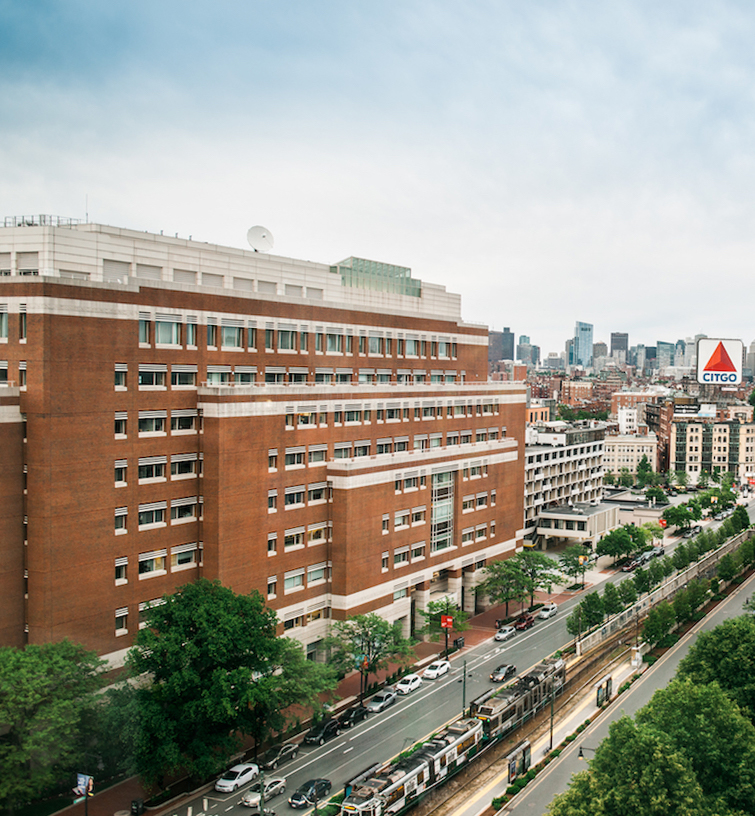
Boston University Questrom School of Business
Business school in Boston, MassachusettsWikipedia
6
MENTIONS
6
EPISODES
4
PODCASTS
Search complete. 6 mentions across 6 episodes found for "Boston University Questrom School of Business".
Nov 12, 2026

Kavitta GhaiGUEST
I would have been able to actually get what I needed from every second of my journey in college.
Kavitta GhaiGUEST
And so we started building Nectar AI in private beta with Stanford GSB, Boston University's Questrom School of Business, and Azusa Pacific Global.
Kavitta GhaiGUEST
And so we picked three really distinct different campuses who were very AI forward and basically told them, you tell us what to build.
Kavitta GhaiGUEST
we're not just going to pretend that we know exactly what you need tell us what your pain points are tell us what scares you about ai we'll build this and you test it and tell us what works and what doesn't and we didn't release nectar to the wild until we knew this actually works for those three campuses for the students the teachers the staff the admin this is something that everyone can get behind and actually works for them and then in may of 2024 we launched nectar ai to the world and it's just been off the races ever since

Curt NickischHOST
So why is it so hard to keep generic drugs on hospital shelves and in medicine cabinets? And how can we build a supply chain that is both affordable and reliable? To answer these questions, we're joined by four leading experts on this topic.
Curt NickischHOST
Rena Conti, Professor of Markets, Public Policy, and Law at BU Questrom.
Curt NickischHOST
Marta Wosińska, Senior Fellow at the Center on Health Policy at the Brookings Institution.
Curt NickischHOST
Monica Gorman, co-president of Crowell Global Advisors and a former White House official, and Jill Bradshaw, general manager of microbial solutions at Ginkgo Bioworks.

Bob BraggHOST
But the agency is also trying to find fuel cost data for other types of producers, including fishermen and produce farmers.
Bob BraggHOST
Mark Williams, master lecturer in finance at Boston University's Questrom School of Business, points out that the proposed bailout doesn't address the international energy disruptions that he believes are driving farmers' costs higher, and that the $8 billion farm subsidy is, quote, a mere drop in the bucket that fails to resolve the critical state of Hormuz choke point that may leave global fuel costs, fertilizer prices, and projected inflation higher for longer.
Bob BraggHOST
He also contends that tossing a multi-billion dollar check to U.S. farmers can't solve this year's near doubling of diesel prices or the skyrocketing cost of fertilizer.
Bob BraggHOST
While the Four Corners region has had major flooding over the past week, The lack of water flowing into the lower Mississippi River and an ongoing regional drought has left water levels of this major transportation route to the Port of New Orleans at the risk of leaving barge traffic having to deal with low water levels again in the Mississippi for the fourth straight fall.
Curt NickischHOST
But that psychological drive has been weaponized by a global machinery that pumps out billions of garments a year, many of them designed to be worn a handful of times and then thrown away.
Curt NickischHOST
Today we're asking, how did we build a world of disposable fashion? Are our deepest consumer desires fundamentally incompatible with a sustainable planet? And if the market is built on overconsumption, how do we fix it before it smothers us? Joining us today are Nalia Ortabayeva, Associate Professor in Marketing at BU Questrom, Ken Pucker, Professor of the Practice in Sustainability at Tufts University and the former Chief Operating Officer of Timberland, and the investigative journalist Dana Thomas.
Curt NickischHOST
Nalia, thanks so much for joining us.
Nailya OrdabayevaGUEST
Thank you for having me.

Kavitta GhaiGUEST
Yeah, so our team at Nectar developed Nectar AI in early or late 2023, early 2024.
Kavitta GhaiGUEST
And we did it in private beta with Stanford GSB, Boston University's Questrom School of Business and LAPU.
Kavitta GhaiGUEST
And so picked really three distinct types of campuses and said, talk to us about AI.
Kavitta GhaiGUEST
What scares you? What's not working? What are you afraid your students or teachers are going to do with it? And also what are the problems that you're facing that you really think deep down AI might be able to solve this? And everything from we already have Copilot, but it's not scalable.
Curt NickischHOST
You're listening to Is Business Broken? A podcast from the Marotra Institute for Business, Markets, and Society at Boston University Questrom School of Business.
Curt NickischHOST
I'm Curt Nikif.
Curt NickischHOST
For a long time, we've relied on a set of signals to judge knowledge and competence.