Pygmalion
43
MENTIONS
14
EPISODES
14
PODCASTS
Search complete. 43 mentions across 14 episodes found for "Pygmalion".
Oct 31, 2026

Rich BartonGUEST
And those lessons are going to be couched in a couple stories themselves.
Rich BartonGUEST
The first is gonna be Pygmalion.
Rich BartonGUEST
The second is gonna be The Wizard of Oz.
Rich BartonGUEST
And the third is gonna be Keanu Reeves.
Rich BartonGUEST
Okay, that's the only one, other references nobody gets.
Rich BartonGUEST
Okay, but I'll explain.
Rich BartonGUEST
So, Power to the People, Pygmalion, Wizard of Oz, Keanu Reeves.
Rich BartonGUEST
Here we go.

speaker_1NARRATOR
If the correct body can be constructed and some animating principle can be placed or maintained within it, then the difference between manufactured form and living being becomes considerably less secure.
speaker_1NARRATOR
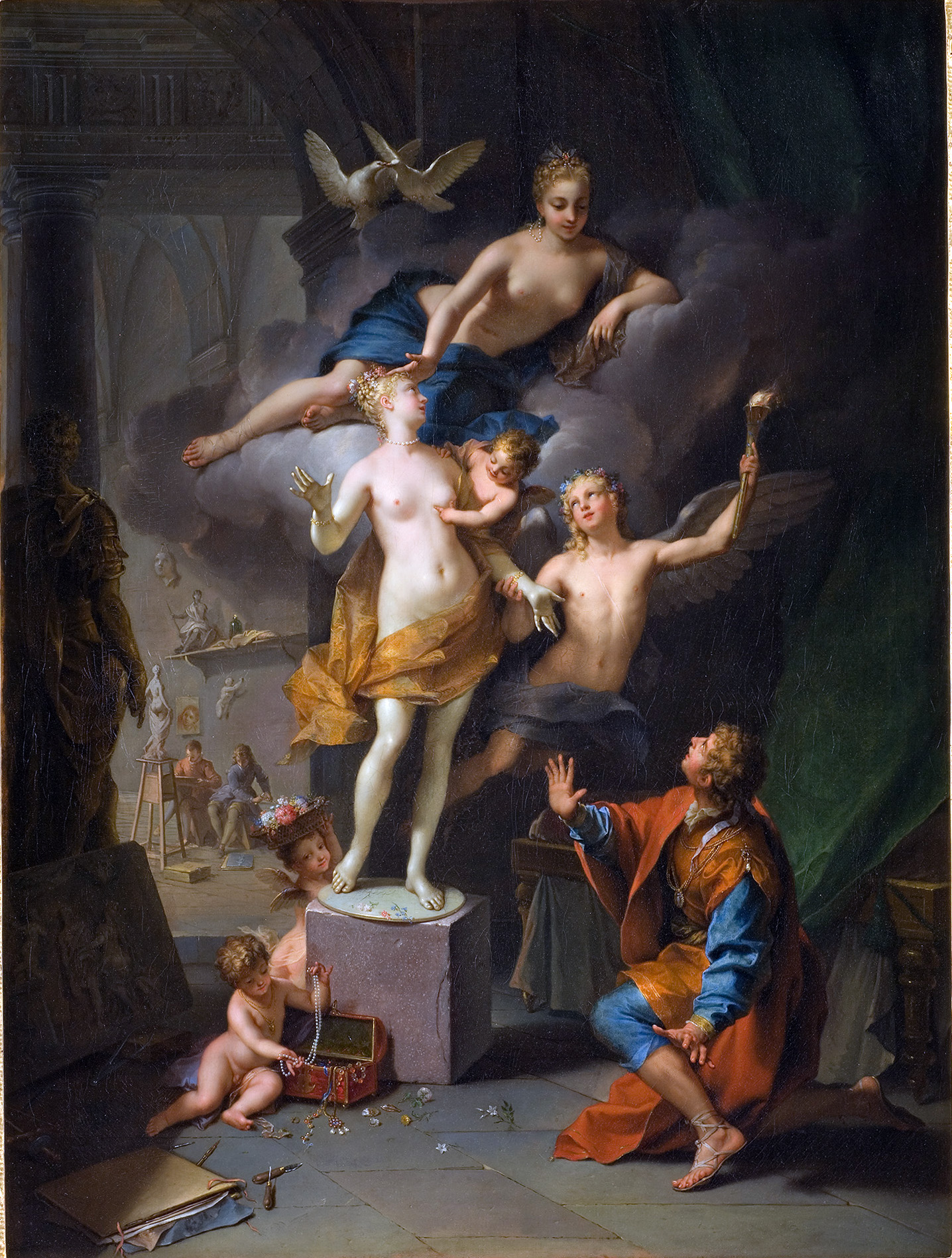
The Pygmalion story approaches the same problem from another direction, because the artist produces a human form of such perfection that he falls in love with it, yet craftsmanship alone does not provide the final transition into biological life.
speaker_1NARRATOR
The art supplies the form while divine intervention supplies animation, establishing one of the oldest versions of a question that will follow artificial generation traditions for centuries.
speaker_1NARRATOR
Human beings may be capable of shaping matter into something that resembles us, but what supplies the final principle that transforms resemblance into life? Later traditions propose almost every answer imaginable.

Neville GoddardSOUNDBITE_SPEAKER
Like an artist.
Neville GoddardSOUNDBITE_SPEAKER
Conceiving like a Pygmalion in Galatea.
Neville GoddardSOUNDBITE_SPEAKER
And Pygmalion conceives the most glorious thing in the world as he can conceive it.
Neville GoddardSOUNDBITE_SPEAKER
But it's dead.
Neville GoddardSOUNDBITE_SPEAKER
It's made of marble.
Neville GoddardSOUNDBITE_SPEAKER
And to whom does he pray? He prays to the goddess of love.
Neville GoddardSOUNDBITE_SPEAKER
And when Galatea responds, the first word that she utters is the name of her creator.
Neville GoddardSOUNDBITE_SPEAKER
I've seen the play, and here, this beautiful mob statue, and suddenly it begins to pronounce Pygmalion.

Christie VoglerHOST
All right, yep.
Christie VoglerHOST
I'm mixing up my Pygmalions with my Cupid and Psyche, which has something to do with my own selection down the line, so.
Christie VoglerHOST
I
Emma PaulyGUEST
mean, the fairy tale is very much like a direct line of ancestry from Cupid and Psyche, so.

Maddy MorphosisHOST
documentary, not
Tempest DuJourGUEST
scripted, like real, like a Pygmalion, you know, My Fair Lady thing.
Tempest DuJourGUEST
And then I moved here And then I tried to start it up again and it didn't happen and couldn't find anyone to commit.
Tempest DuJourGUEST
And one of my friends here who I'd become friendly with was a drag queen.

NehaHOST
Um, but...
NehaHOST
And then the other thing I was gonna say is that actually this reminds me a lot of the Pygmalion myth, which-
ShritiHOST
Mm
NehaHOST
... came up in our previous book, Galatea, and we wrote about on the newsletter last week.

Alejandro DolinaHOST
Y vamos a conversar.
Alejandro DolinaHOST
[risas] Lindo es el mito de Pigmalión.
Alejandro DolinaHOST
Pigmalión, rey de Chipre, había buscado una esposa, estaba buscando siempre una esposa cuya belleza correspondiera con lo que imaginaba.
Alejandro DolinaHOST
Primero se imaginaba la esposa y después la buscaba.
Alejandro DolinaHOST
Mala política para los bailongos.
Alejandro DolinaHOST
Y esculpió una estatua de mujer que le salió hermosa.
Alejandro DolinaHOST
La llamó Galatea y era tan perfecta y tan bella que se enamoró de ella perdidamente.
Alejandro DolinaHOST
Y en una de las grandes celebraciones en honor a la diosa Afrodita, Pigmalión suplicó que diera vida a su estatua.

Stuart ArmstrongGUEST
And then likewise, And then also, not just do you get resources, but you also get additional kind of, what's the word? You get additional kind of praise and this notion of expectation.
Stuart ArmstrongGUEST
And that's something referred to as the Pygmalion effect.
Stuart ArmstrongGUEST
And that's linked to this notion.
Stuart ArmstrongGUEST
It comes from the famous movie and play, My Fair Lady.
Ross TuckerHOST
I like that.
Ross TuckerHOST
The Galatea effect is a psychological phenomenon when an individual's high self-expectations lead to improved performance.
Ross TuckerHOST
Named after the mythological character Galatea, who was brought to life by her creator Pygmalion.
Ross TuckerHOST
Due to his belief in her, this effect underscores the power of self-belief.

Jon SoloHOST
Some are ancient, like your mother, while others are just really old.
Jon SoloHOST
One of the most well-known myths follows Pygmalion, the king of Cyprus, who sculpted a statue of Aphrodite that was so beautiful that he actually fell in love with it.
Jon SoloHOST
Not a day went by where the king didn't feel up his creation.
Jon SoloHOST
Fawning over her white, ivory skin that was soft to the touch, he treated her with more love and adoration than he had any woman he'd ever romanced.
Jon SoloHOST
Lo and behold, that day would eventually come during the festival honoring Aphrodite.
Jon SoloHOST
He made a sacrifice and prayed to the goddess of love that his creation would come alive, and for some reason, she granted his request.
Jon SoloHOST
The next time Pygmalion pressed his lips to the statue, he felt her lips warm at his touch and reciprocate his gesture.
Jon SoloHOST
Pygmalion is lucky that when his creation came alive, she acted exactly how he wanted and wasn't disgusted with his behavior because that isn't always the case.

Charlie FordhamHOST
So one is in Ovid's Metamorphoses.
Charlie FordhamHOST
Pygmalion is a sculptor who carved the girl he wanted, and Venus, the goddess, brings it to life and blesses him with a marriage.
Charlie FordhamHOST
It's a comedy, but in Ovid, the person who tells this story is Orpheus, and Orpheus' story is similar but tragic because his wife, Eurydice, dies.
Charlie FordhamHOST
Orpheus goes to hell to get her back.
Charlie FordhamHOST
And so what we hear there is even a supreme artist in that story can't restore the dead to life because he doesn't have complete faith.
Rupert FordhamHOST
Mm.
Charlie FordhamHOST
He tells the story of Pygmalion, does Orpheus, kind of almost compensating for his own tragedy.
Charlie FordhamHOST
And then there's a play by Euripides called Alcestis that describes how Alcestis, who's a wife and mother, decides that she agrees to die in place of her husband.
4 more episodes mention Pygmalion.
Create an account to see the whole feed, search across every transcript, and follow the entities you care about.