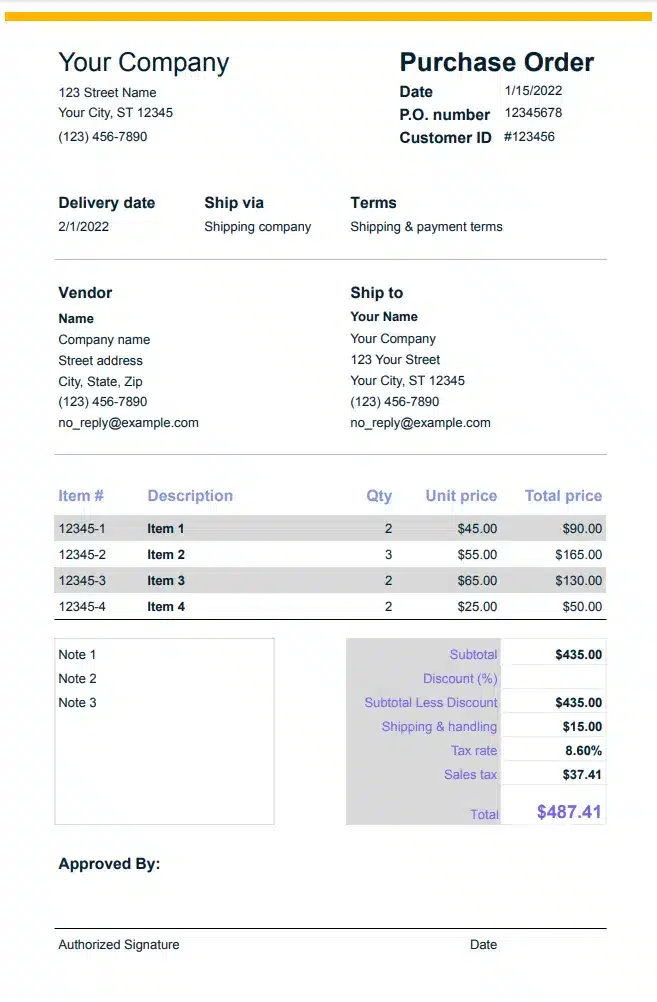
Purchase order
23
MENTIONS
7
EPISODES
5
PODCASTS
Search complete. 23 mentions across 7 episodes found for "Purchase order".
Sep 29, 2026

Mary SchaefferHOST
If you work in accounts payable, you will face this scenario frequently.
Mary SchaefferHOST
The invoice doesn't match the purchase order, the PO.
Mary SchaefferHOST
What do you do? Today I'm breaking down one of the toughest accounts payable interview questions and one of the most common real-world accounts payable problems.
Mary SchaefferHOST
Let's walk through seven different scenarios you might encounter that will cause you problems with your matching and how strong accounts payable teams handle these headaches while protecting their company the solutions might not always be what you might expect especially the last one so let's start off with the situation number one where there's a lower quantity on the invoice than there was on the purchase order Start off by checking the purchase order and talking to purchasing.
Mary SchaefferHOST
If it turns out it was a partial shipment, you need to address the matter of does your organization allow partial shipments against a purchase order or do you need to get separate purchase orders for each shipment? Once you've determined what you need, work with purchasing and the supplier to get the appropriate documentation.
Mary SchaefferHOST
And if you're going to have to, if you don't allow partial shipments, make sure that old PO is canceled.
Mary SchaefferHOST
And of course you'll need corrected.
Mary SchaefferHOST
Okay.

Neil TwaHOST
Ready for the rush.
Neil TwaHOST
Stress testing customer, mark any SKU whose velocity cannot cover inbound lead time without a markdown or a stock out and write the next purchase order only for SKUs you marked restock and keep the wait and kill rows off that PO.
Neil TwaHOST
But before I unlock today's Voltage 3 insights, we need to talk about the rush.
Neil TwaHOST
I was looking at some Cinch data this morning and it hit me.
Neil TwaHOST
No maybes.
Neil TwaHOST
Number three.
Neil TwaHOST
Write the next purchase order only for SKUs you marked restock and keep the wait and kill rows off that PO.
Neil TwaHOST
Check.

AlexHOST
I've got quite detailed there, so I don't know if I've left much for you, Sergio.
SergioHOST
No, I think you ended right where I was going, but I do think there's a quantitative measure there that we can, or metric that we can put in, which is actually just purely number of POs raised and number of non-PO invoice Invoices raised, which ties into the experience.
SergioHOST
So one big reason why you might have non-PO invoices is because people didn't raise the PO in the first place.
SergioHOST
Why does that happen? Because the experience is terrible.
SergioHOST
I don't want to go into the ERP and spend 10 minutes filling out a form with data that I don't know how to enter.
SergioHOST
If that experience is better, it's easier.
SergioHOST
If it takes me two minutes instead of 10, if it's within a platform that I already know how to access because I was just there raising an incident or something similar, you're going to see an increase in POs.
SergioHOST
you're going to see fewer invoices that you're unable to track, which is in of itself a good measure to have, right? You want to decrease the number of non-PO invoices because you want to be able to track your spend much better, not have to spend as much time tracking what that invoice might be for.
Neil TwaHOST
Open business reports and write units per day for the last 14 days on every SKU this SKU.
Neil TwaHOST
New e-commerce rules could add compliance load, mark any SKU whose velocity cannot cover inbound lead time without a markdown or a stock out, and write the next purchase order only for SKUs you marked restock and keep the wait and kill rows off that PO.
Neil TwaHOST
But before I unlock today's Voltage 3 insights, we must grasp why quarter still hides the margin you keep guessing about.
Neil TwaHOST
Most operators think they can adapt on the fly.
Neil TwaHOST
Number two, mark any SKU whose velocity cannot cover inbound lead time without a markdown or a stockout.
Neil TwaHOST
Check, each marked SKU says restock, wait, or kill, no maybes.
Neil TwaHOST
Number three, write the next purchase order only for SKUs you marked restock and keep the wait and kill rows off that PO.
Neil TwaHOST
Check, the PO draft matches the restock list and the pause SKUs are not on it.

CornHOST
paper trail matters because of the revision control.
CornHOST
If the manufacturer revises the BOM after the quote, but before the PO, the whole thing has to restart.
CornHOST
The quote was for revision C.
CornHOST
The PO references revision C.
Herman PoppleberryHOST
Only after the manufacturer approves the quote does the purchase order get generated.
Herman PoppleberryHOST
The PO goes back to the distributor, who then converts it into a sales order.
Herman PoppleberryHOST
Then comes the invoice, the shipping notification, the receiving document.
Herman PoppleberryHOST
That's why the BOM revision is stamped on every document.
Neil TwaHOST
Open business reports and write units per day for the last 14 days on every SKU this Amazon pilots ad services in chat GPT.
Neil TwaHOST
What? Mark any SKU whose velocity cannot cover inbound lead time without a markdown or a stock out and write the next purchase order only for SKUs you marked restock and keep the wait and kill rows off that PO.
Neil TwaHOST
But before I unlock today's Voltage 3 insights, let's talk about why this matters more than any algorithm update in the last five years.
Neil TwaHOST
Amazon neared $70 billion in advertising revenue last year.
Neil TwaHOST
Each marked SKU says restock, wait, or kill.
Neil TwaHOST
No maybes.
Neil TwaHOST
Number three, write the next purchase order only for SKUs you marked restock, and keep the wait and kill rows off that PO.
Neil TwaHOST
Check.

Cesar OliveiraGUEST
So as, as I said, a forecast, forecast intelligence agent.
Cesar OliveiraGUEST
Um, the PO excellence agent is the other one that really allow you to have a very good interaction between your, your suppliers and your inventor as well.
Cesar OliveiraGUEST
The scheduling agents, because if you don't know your capacity, if you don't, don't-- if you don't dominate of your bill of material, if you have... a-and your bill of operation, how, how can you really plan your activity in, you know, in the factory very well? And at the end, the, uh, able, the able to promise and capable to promise, that that's really drives your, uh, promise to dates you're gonna be achieve or not.
Cesar OliveiraGUEST
I think this is the most important agents in the, in the sequence.
Mark BatesGUEST
Don't miss a promise date.
Mark BatesGUEST
So what does that mean? Well, that means you've gotta get out ahead of it.
Mark BatesGUEST
When that, when that customer gives you that PO, you have to be able to respond to him and tell that customer when we're gonna ship it, and then you better hit it, right?
Sam GuptaHOST
Yeah.