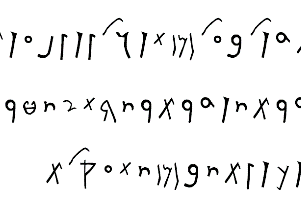
Punic language
Spoken languageWikipedia
43
MENTIONS
11
EPISODES
11
PODCASTS
Search complete. 43 mentions across 11 episodes found for "Punic language".
Oct 19, 2026

David Patrick HarryHOST
Yeah.
David Patrick HarryHOST
Oh, dude, what are you talking about? So here's like some of the literary of Phoenician and Punic sources equate Baal-Haman with Kronos-Saturn.
David Patrick HarryHOST
So there you go.
David Patrick HarryHOST
A person who mentioned Saturn worship known in the Greco-Roman tradition for devouring children.
17 MINS LATER
David Patrick HarryHOST
These fields are conventionally referred to as tofits by archaeologists after the location in the Bible.
David Patrick HarryHOST
When Carthaginian inscriptions refer to these locations, they use the terms house, temple, or sanctuary, or shrine, not tofit.
David Patrick HarryHOST
Archaeology reveals two generations of Punic Tophets, those founded by Phoenician colonists between 800 and 400 BCE, and those established under Carthaginian influence, direct or indirect, in North Africa from 14th century to BC onward.
David Patrick HarryHOST
No Carthaginian literary text survived that would explain or describe what rituals were performed at the Tophet.

L.A. MarzulliGUEST
He comes out, looks at the stone.
L.A. MarzulliGUEST
I think it's Iberian Punic.
L.A. MarzulliGUEST
I think I can translate it.
Josh HooperHOST
It's Iberian Punic?
L.A. MarzulliGUEST
Iberian Punic.
L.A. MarzulliGUEST
And, yeah, I mean, who can read that? Well, what is that? Well, Iberia is the Spain, that whole deal, right? So Punic is a form of ancient, ancient writing.
L.A. MarzulliGUEST
Oh, very cool.
AndrewPANELIST
Fun word.

speaker_0GUEST
And I first purchased the Mr. K many faces book from David Hatcher Childress, I believe in 1991, first part of 1991.
speaker_0GUEST
And I had looked at it, and I'd studied ancient alphabets and such, and it looked to me like some Punic characters, some Latin characters, but there wasn't enough really to study, par se.
speaker_0GUEST
And then when I teamed up with Paul, after I'd met him, then he was fluent in many, like eight languages, eight modern languages, and he also had studied ancient Latin alphabets, and Asia Punic, Egyptian hieroglyph and stuff like that in his earlier years.
speaker_0GUEST
So we kind of meshed together and hit it right off.
speaker_0GUEST
And he started looking at the scripted tablets out of the books and I ordered a couple of other books and then I ordered some pictures and he busted the language or the primary language on the stones in June of 1994.

speaker_2HOST
Rome feared Carthage was creeping too close to their borders and simultaneously they just desperately coveted that Sicilian wealth.
speaker_1HOST
And that paranoia and greed is what sparks the First Punic War, which, by the way, becomes this savage grinding meat grinder of a conflict that drags on for 25 grueling years.
speaker_2HOST
25 years of just brutal warfare.
speaker_1HOST
Yeah.
11 MINS LATER
speaker_1HOST
Totally.
speaker_1HOST
And it didn't stop at highbrow poetry either.
speaker_1HOST
Down in the dusty streets, Roman comedies featured actors speaking absolute, made-up gibberish, pretending it was the Punic language, designed specifically to make the Carthaginians look like ridiculous, uncultured barbarians.
speaker_2HOST
It is the ancient equivalent of state-sponsored fake news, and it was deployed with legal efficiency.

Kevin Perez-AllenHOST
[upbeat music] In the world where Carthage won, what do things look like? Well, let's start with the words coming out of people's mouths.
Kevin Perez-AllenHOST
The language of the Western Mediterranean is Punic.
Kevin Perez-AllenHOST
It was the tongue of Carthage.
Kevin Perez-AllenHOST
Punic is a Semitic language.
Kevin Perez-AllenHOST
It's a close cousin of Hebrew and a more distant relative of Arabic.
Kevin Perez-AllenHOST
Uh, it's full of sounds and roots that really have nothing to do with Latin.
7 MINS LATER
Kevin Perez-AllenHOST
But two tiny things did survive, and they tell you how total the erasure was.
Kevin Perez-AllenHOST
The actual spoken language of Carthage hung on in North Africa for centuries after the city was gone.

Rebecca MitchellHOST
Now, I haven't mentioned the Greeks and Romans for a while, so I'm going to throw them in now.
Rebecca MitchellHOST
While ancient Egyptian had its own sophisticated scribal tradition, Greek and Roman writers encountered a multilingual North Africa in which Punic, Latin and indigenous languages coexisted.
Rebecca MitchellHOST
But the Greeks and the Romans weren't really doing comparative African linguistics.
Rebecca MitchellHOST
They were principally concerned with the description of Greek and Latin, and when they encountered other languages, they tended to record individual words, names or anecdotes, rather than systematically analyse their grammatical structure.
Rebecca MitchellHOST
One of our most interesting witnesses is Augustine of Hippo, which is a brilliant name.
Rebecca MitchellHOST
Writing in the 4th and early 5th centuries AD, he repeatedly refers to Punic, which was still spoken in Roman North Africa.
Rebecca MitchellHOST
He records individual Punic words and stresses the practical importance of people who could speak the language.
Rebecca MitchellHOST
His evidence is particularly valuable because it shows that Punic survived as a vernacular alongside prestigious Latin, long after Carthage itself had disappeared.

Caroline WintererGUEST
Around 800 or so BCE, the Phoenicians established a seaside colony in the center of North Africa, shown here in the yellow circle.
Caroline WintererGUEST
It was named Kart Hadasht, or New City, in the Punic language.
Caroline WintererGUEST
We say Carthage.
Caroline WintererGUEST
So that just means new city.

Ted PerkinsNARRATOR
The one, tall, dark, and wiry, with pure Semitic features and the limbs of a giant, was Magro, the famous Carthaginian captain, whose name was still a terror on every shore from Gaul to the Euxine.
Ted PerkinsNARRATOR
The other, a white-bearded, swarthy man, with indomitable courage and energy stamped upon every eager line of his keen, aquiline face, was Gisgo the politician, a man of the highest Punic blood, a suffete of the purple robe, and the leader of that party in the state which had watched and striven amid the selfishness and slothfulness of his fellow countrymen to rouse the public spirit and waken the public conscience to the ever-increasing danger from Rome.
Ted PerkinsNARRATOR
As they talked, the two men glanced continually with earnest, anxious faces towards the northern skyline.
Ted PerkinsNARRATOR
It is certain, said the older man, with gloom in his voice and bearing, none have escaped save ourselves.
8 MINS LATER
Ted PerkinsNARRATOR
Upon the high bluff of Megara there stood a great concourse of the people of Carthage who had hurried forth from the city upon the news that the galleys were in sight.
Ted PerkinsNARRATOR
They stood now, rich and poor, effete and plebeian, white Phoenician and dark Kabyle, gazing with breathless interest at the spectacle before them.
Ted PerkinsNARRATOR
Some hundreds of feet beneath them the Punic galley had drawn so close that with their naked eyes they could see those stains of battle which told their dismal tale.
Ted PerkinsNARRATOR
The Romans too were heading in such a way that it was before their very faces that their ship was about to be cut off.

JimmyHOST
This meant the voyage from Carthage to the Strait of Gibraltar, and then to Kern, took as long as the initial journey from Carthage to the Straits.
JimmyHOST
The name itself is believed to be a Greek corruption of a Punic word, meaning last outpost.
JimmyHOST
This suggests Kern might have been near the limit of prior exploration.
JimmyHOST
Scholars have debated Kern's location, though no consensus has ever been reached.

Mondo GonzalezGUEST
So, a- along the northern, northwest coast of Africa.
Mondo GonzalezGUEST
And no doubt for people who understand the Punic culture, uh, the, the Punic culture was basically a Phoenician culture.
Mondo GonzalezGUEST
Uh, and the Phoenicians came f- from all around, again as we know, even on the coast of, of Lebanon, and basically took, took over or, or, or nor- the north coast of Africa, et cetera, the islands.
Mondo GonzalezGUEST
Well, he refers to this, this basically Phoenician pillar, this, this pil- this two pillars of white, and it's, it's also referenced, or he, this, he's writing around 500 AD or so.
25 MINS LATER
Mondo GonzalezGUEST
So that makes it extremely challenging, uh, to look at when you, to look at ancient history.
Mondo GonzalezGUEST
For them, it, they dealt primarily in, in oral traditions, um, rather than, um, inscriptions.
Mondo GonzalezGUEST
And so just a different type, which so at the end of the day, uh, you're like there, there's other, there, there is evidence if you look it up, which is completely, uh, dismissed by, I would say, modern American archeologists in that you do have examples of, of Punic, uh, being written here.
Mondo GonzalezGUEST
You have example of, uh, which is a Phoenician language.
1 more episode mentions Punic language.
Create an account to see the whole feed, search across every transcript, and follow the entities you care about.