Pulsar
14
MENTIONS
6
EPISODES
5
PODCASTS
Search complete. 14 mentions across 6 episodes found for "Pulsar".
Sep 15, 2026

speaker_4NARRATOR
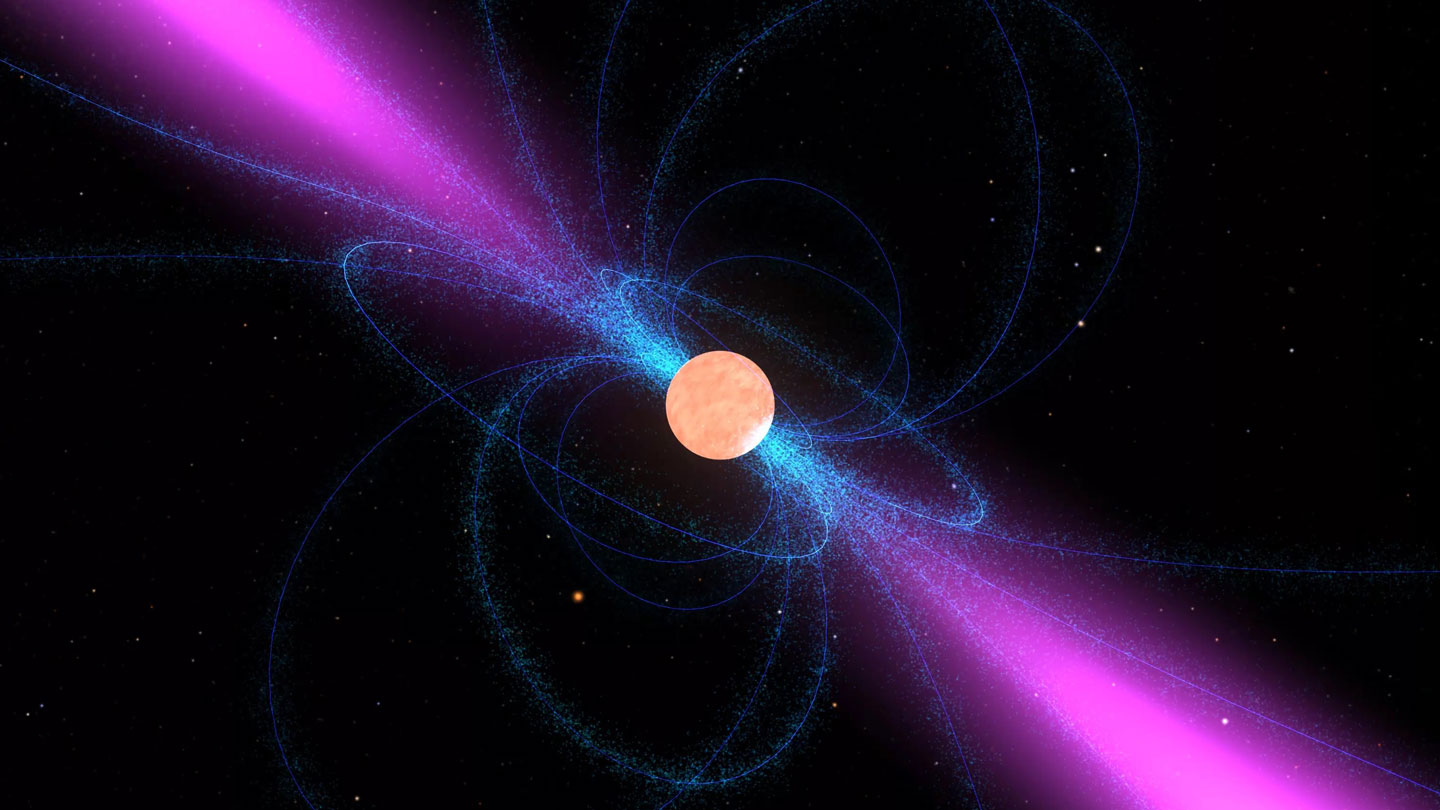
Pulsars flash because dead stars sweep beams across the universe.
speaker_4NARRATOR
A pulsar is not actually blinking on and off like a lamp.
speaker_4NARRATOR
It sends out beams of radiation from regions linked to its magnetic poles.
1 HR 23 MINS LATER
speaker_4NARRATOR
The central star is a dense fading ember, and the surviving material bears the scars of upheaval.
speaker_4NARRATOR
Planetary systems can outlive their sons, but not unchanged.
speaker_4NARRATOR
Pulsar planets orbit dead stars that beam radiation through space.
speaker_4NARRATOR
The first confirmed planets beyond our solar system were not found around a normal star.
speaker_4NARRATOR
They were discovered around a pulsar.

DerekHOST
And then we got a Devon Witherspoon silver refractor as well.
DerekHOST
And then, as I mentioned before, I ripped some packs with Scott Waldron, and I picked up from my Prism Mega... a green Pulsar, grey Zabel rookie card.
DerekHOST
I'm chuffed with that, MC.
DerekHOST
Very nice.

David KippingHOST
planets with temperatures of thousands of Kelvin.
David KippingHOST
Looking back with the benefit of hindsight, we now understand that both Hot Jupiters and Pulsar planets are in fact very unusual, rare types of planets.
David KippingHOST
For example, although most stars indeed have planets of one kind or another, less than 1% of them have Hot Jupiter type planets.
David KippingHOST
Now, you might be wondering, if they are so rare, then how come they dominated this early phase of exoplanet detection back in the 90s? Well, the reason is simple.
David KippingHOST
Why? Because they are so damn bright that we could see them from essentially the other side of the universe.
David KippingHOST
So the history of astronomy teaches us that often the easiest examples of astronomical phenomena to detect are in fact highly atypical.
David KippingHOST
Pulsar planets, hot Jupiters, giant stars and supernovae are all freaks, extreme examples of their broader class.
David KippingHOST
They are the loud, obnoxious twits at the cocktail party that suck up all the oxygen.
Matthew BailesGUEST
I just thought this was the next logical step in my brilliant career and probably didn't stop and think about, oh, what if this is wrong? What...
Matthew BailesGUEST
I found out about six months later was that although what added to these wonderful graphical interfaces to things, there were actually some auxiliary files which stored the coordinates of the Pulsar.
Matthew BailesGUEST
And instead of a unified system where the thing that transformed the coordinates to the barocenter and the thing that fit for the planetary parameters sharing the same file, they're actually different files.
Matthew BailesGUEST
And although Settner had done everything right, he didn't know that there was this kind of other file which you had to update in an iterative procedure with the coordinates.
Matthew BailesGUEST
Yeah, very...
Matthew BailesGUEST
Very devastating, actually.
Matthew BailesGUEST
But I think we published the paper and then we intensified how often we observed the planet, Pulsar.
Matthew BailesGUEST
And it had a prediction of where, how it should behave.

speaker_0NARRATOR
In 2007, astronomer Duncan Lorimer was reviewing archival data from the Parkes Radio Telescope, the same instrument that would later detect BLC-1.
speaker_0NARRATOR
The data had been recorded in 2001, six years earlier, as part of a Pulsar survey.
speaker_0NARRATOR
Pulsars are rapidly spinning neutron stars that emit beams of radio energy, and pulsar surveys record vast quantities of radio data in the hope of finding new ones.
speaker_0NARRATOR
Lorimer was not looking for anything unusual.
speaker_0NARRATOR
He was a pulsar astronomer, doing pulsar work, combing through old data.

Phil AlexanderGUEST
And I brought a couple of cars with me.
Phil AlexanderGUEST
We were fluffing around with Pulsars, the Apra series.
Phil AlexanderGUEST
We were very strong in that.
Phil AlexanderGUEST
And it just kind of, we just arrived.