Prussia
StateWikipedia
2.5k
MENTIONS
511
EPISODES
377
PODCASTS
Search complete. 2472 mentions across 511 episodes found for "Prussia".
Oct 27, 2026

Rebecca Hardcastle WrightGUEST
Education used to be, you know, sort of a series of learning.
Rebecca Hardcastle WrightGUEST
And then they said, oh, it's Prussian.
Rebecca Hardcastle WrightGUEST
It's the Prussian system.
Rebecca Hardcastle WrightGUEST
It's indoctrination.
Rebecca Hardcastle WrightGUEST
And now it's like.

Solomon SmithHOST
Austria is allied with France.
Solomon SmithHOST
England changes its allies then to Prussia and Austria to France.
Solomon SmithHOST
The reason for this is George II, the King of England is also the elector of Hanover, a German Prince.
Solomon SmithHOST
He's elderly, but he takes his position as elector seriously as a ruler of Hanover, and so he is going to side with their traditional allies.
6 MINS LATER
Solomon SmithHOST
He wouldn't focus at all on Europe.
Solomon SmithHOST
In fact, all he would do is put up defenses of England so that the French or their allies cannot invade the island proper.
Solomon SmithHOST
But they would then use the Prussians to keep the French army occupied in Europe, keep them busy.
Solomon SmithHOST
This allowed them to use the British army and military forces and navy to focus on capturing French colonies.

Matthew ParrisHOST
Well, we're getting ahead of ourselves.
Matthew ParrisHOST
John, perhaps you could paint a picture for us of the early 1700s in Germany, or Prussia as it was then, and the sort of world that he was born into.
John CallananGUEST
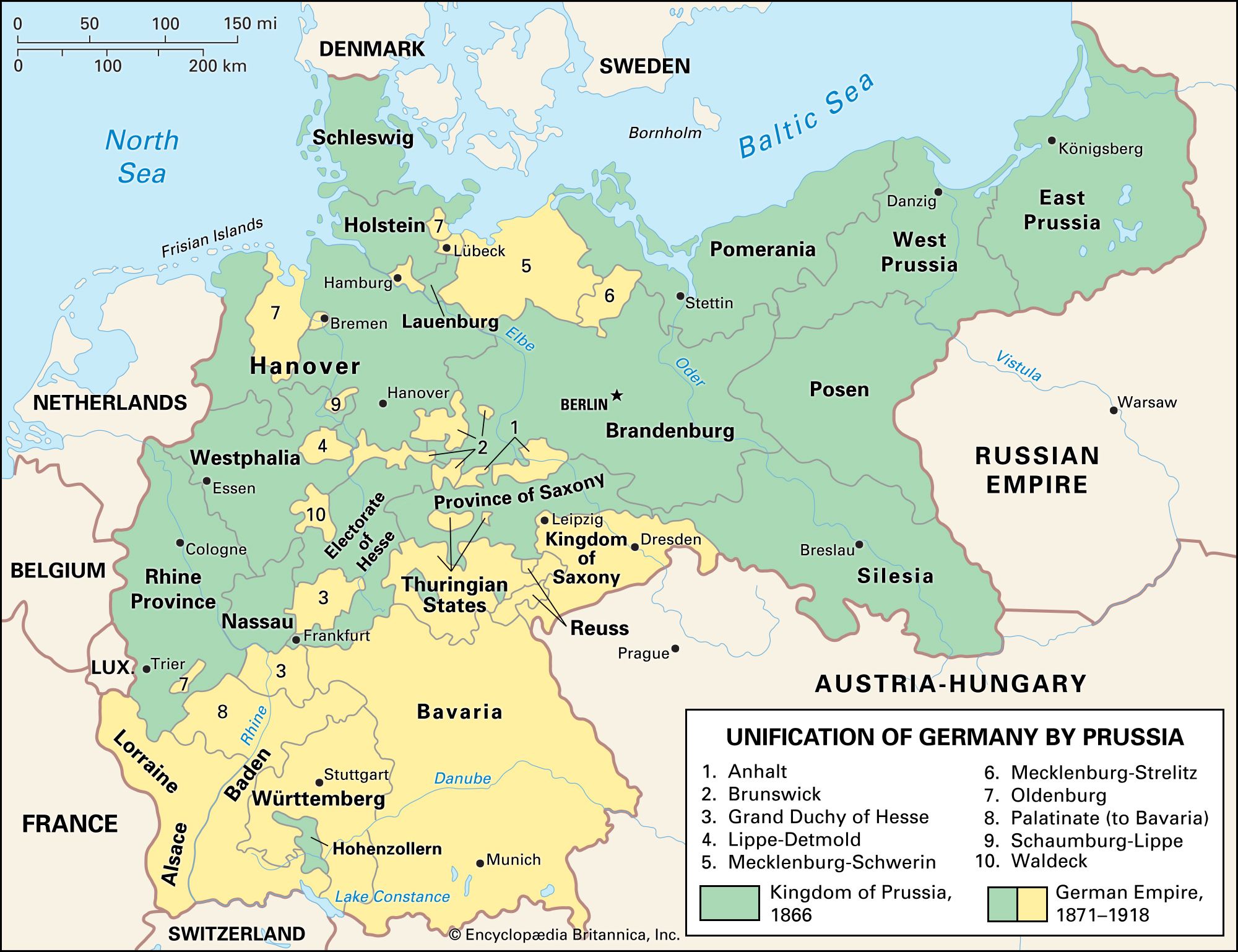
Kant was born outside of Kaliningrad, as it is now, which is a Russian exclave.
John CallananGUEST
But at the time, it was Königsberg, which was within the Prussian Empire.
John CallananGUEST
And it was a coastal town.
John CallananGUEST
And as Leah mentioned, it was quite a cosmopolitan area with lots of trade passing through.
Lea YpiGUEST
And I think in part of this first modesty, and second, this way of thinking about being a teacher without authoritarianism, that's what made him particularly successful with his students.
Lea YpiGUEST
That's what made him a beloved teacher, the fact that he didn't position himself in the relationship of hierarchy or of power vis-a-vis the students.

Mike MacnairGUEST
Indeed, oh dear, what's the man's name? There's a German-American academic at UPenn who's written on the extent to which the SPD was still in its majority strongly anti-imperialist down to 1914.
Mike MacnairGUEST
And also that the SPD leadership in summer 1914 was engaged in planning a general strike to force the Prussian suffrage question.
Mike MacnairGUEST
These plans were overtaken by the war.
Mike MacnairGUEST
And then conversely, so it's Gents, Uwe, Guttel, G-U-E-T-T-E-L.

Matthew Raphael JohnsonGUEST
Um, people think that Britain was this one huge factory.
Matthew Raphael JohnsonGUEST
No, it, it was, it was still a rural society, just like the US was, just like Prussia was.
Matthew Raphael JohnsonGUEST
So, um, yeah, I think I, I think I misread that, but that's what's, that's what's happening here.
Matthew Raphael JohnsonGUEST
And, um, I can't, I don't know how...

Marianne SpiegelNARRATOR
The quaint town of Thorn on the Vistula was more than two centuries old when Copernicus was born there on the nineteenth of February, 1743.
Marianne SpiegelNARRATOR
The situation of this town on the frontier between Prussia and Poland, with the commodious waterway offered by the river, made it a place of considerable trade.
Marianne SpiegelNARRATOR
A view of the town, as it was at the time of the birth of Copernicus, is here given.
Marianne SpiegelNARRATOR
The walls, with their watchtowers, will be noted.
4 HRS 41 MINS LATER
Marianne SpiegelNARRATOR
In reading of these invitations we cannot but be struck at the extraordinary respect which was then paid to scientific distinction.
Marianne SpiegelNARRATOR
It must be remembered that the discoveries of such men as d'Alembert were utterly incapable of being appreciated except by those who possessed a high degree of mathematical culture.
Marianne SpiegelNARRATOR
We nevertheless find the potentates of Russia and Prussia entreating and, as it happens, vainly entreating the most distinguished mathematician in France to accept the positions that they were proud to offer him.
Marianne SpiegelNARRATOR
It was to d'Alembert, the profound mathematician, that young Laplace, the son of the country farmer, presented his letters of introduction.

John D. RomeroGUEST
So we don't want them to know that there's so many of them and so few of us.
John D. RomeroGUEST
And even our education system is the Prussian education model.
John D. RomeroGUEST
Prussia was old school, modern day Germany.
John D. RomeroGUEST
US saw that and they're like, okay, we have farm workers right now and like military agriculture, right? We need obedient people to do and switch to the manufacturing that the US was switching into.
John D. RomeroGUEST
So they imported the Prussian education system and think about it since we all went to school.
John D. RomeroGUEST
Figure of authority tells us what to do.
John D. RomeroGUEST
A bell rings.

Walter Russell MeadGUEST
And we, so the ancient, ancient literature, and again, they would see even a, certainly a Herodotus, but even a Thucydides would see more commonality between what they were doing and say Homer than a contemporary American historian would likely see between history and literature of the time.
Walter Russell MeadGUEST
And while there's a lot to be said for the kind of essentially Prussian model of historical inquiry coming down out of the 19th century, there's a lot that has been gained by it, and I think more every day.
Walter Russell MeadGUEST
We still do need the Greeks.
Robert FergusonHOST
Well, you know, one of the things that, you know, this podcast, we've been encountering some of the great works of American historiography, most of which predate 1970.

Levi BurnhamHOST
1865, he was a great Germanic Rav.
Levi BurnhamHOST
He was the Rav of Konigsberg, which was then part of Prussia for many, many decades.
Levi BurnhamHOST
He says a fascinating idea.
Levi BurnhamHOST
He says the contrast between the house of Avram, where he treated everybody with such respect, even though he was post-surgery, And these three travelers, when they appear to him, they appear to him like Arab travelers, not anybody who was wealthy or successful or prominent, just three regular Arab travelers.

Matthew Raphael JohnsonGUEST
Um, people think that Britain was this one huge factory.
Matthew Raphael JohnsonGUEST
No, it, it was, it was still a rural society, just like the US was, just like Prussia was.
Matthew Raphael JohnsonGUEST
So, um, yeah, I think I, I think I misread that, but that's what's, that's what's happening here.
Matthew Raphael JohnsonGUEST
And, um, I can't-- I don't know how...
501 more episodes mention Prussia.
Create an account to see the whole feed, search across every transcript, and follow the entities you care about.