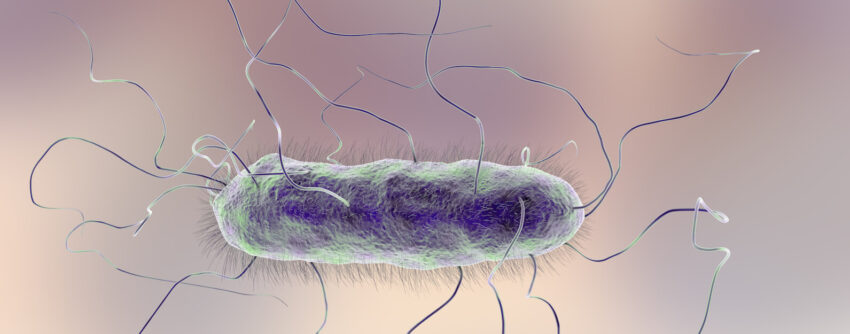
Proteus
BacteriaWikipedia
8
MENTIONS
7
EPISODES
7
PODCASTS
Search complete. 8 mentions across 7 episodes found for "Proteus".
Sep 14, 2026

Joanne KennedyHOST
They don't need sulfate at all.
Joanne KennedyHOST
Instead, they break down the sulfur-containing amino acid cysteine, which they get from protein, This group includes Citrobacter, Klebsiella, Proteus species, E. coli, Clostridium species, and Enterobacter species.
Joanne KennedyHOST
Now, that's not an exhaustive list.
Joanne KennedyHOST
Researchers keep identifying more species capable of doing this, but those are the common ones flagged on a comprehensive digestive stool analysis through a functional lab.

Jane LevesqueHOST
They're in the green, but they're not below detection limit.
Jane LevesqueHOST
Some of the autoimmune trigger markers, uh, whether that's Klebsiella or Proteus or Fusobacterium species like this person has, I want it at ze- like I do not want any in the system.
Jane LevesqueHOST
They're very highly associated with developing autoimmune disease.
Jane LevesqueHOST
Um, I don't wanna see any, uh, Candida, and he doesn't have any, and definitely no bacterial pathogens or H. pylori, and again, those things are all clear, which is great.

Priyanka WaliHOST
Struvites are made of magnesium ammonium phosphate.
Priyanka WaliHOST
And there's certain bacteria called Proteus species, for example.
Priyanka WaliHOST
They can form urinary tract infections, and if those UTIs get really gnarly, they can quickly grow these struvite stones, which if they're not treated, can become extremely large and usually require surgery to remove.
Hari KondaboluHOST
Wow.

speaker_0HOST
Most infections start in the lower urinary tract and travel upward through the ureters.
speaker_0HOST
E. coli is the most common organism, but other organisms include Klebsiella, Proteus, Pseudomonas, Enterococcus, and other Enterobacterioles.
speaker_0HOST
Candida can also cause urinary infection, especially in patients with diabetes, prolonged antibiotic exposure, hospitalization, or urinary catheters.
speaker_0HOST
The important distinction is between a localized urinary infection and a complicated UTI.

William DavisHOST
And what that means... is if you have a disrupted gastrointestinal microbiome, specifically an overproliferation of what are called gram-negative proteobacteria.
William DavisHOST
These are fecal microbes like E. coli, Klebsiella, Campylobacter, Citrobacter, Pseudomonas, Proteus, Serratia.
William DavisHOST
These are microbes that tend to become overproliferated in the colon because of our exposure, overexposure, antibiotics and other factors like glyphosate and other herbicides.
William DavisHOST
So there's an expansion of these proteobacteria in the colon, and frighteningly, in an amazing proportion of people, about half the U.S. population, these fecal proteobacteria microbes have been allowed to ascend into the small intestine, the 24 feet of small intestine.

Tricia QuahGUEST
And what it does is that, uh, it contains, uh, killed off or inactivated, uh, bacteria.
Tricia QuahGUEST
So the usual bacteria that cause the infections are, for example, the E. coli bacteria, Proteus, Klebsiella, Enterococcus.
Tricia QuahGUEST
So this vaccine contains inactivated bacteria where it is sprayed into someone's mouth.
Tricia QuahGUEST
It trains the immune cells in the mouth and the gut to produce antibodies-

Cassie SmithGUEST
Let's just see what's going on." Lo and behold, my gut was the typical Hashimoto's gut.
Cassie SmithGUEST
Meaning I had bacterial overgrowth of Klebsiella and Proteus and all the bacteria we see in people with Hashimoto's.
Cassie SmithGUEST
And he explained to me how those bacteria actually further attack your thyroid and they down-regulate the hormones that, like estrogen and progesterone.
Cassie SmithGUEST
And he just-- he explained to me exactly what was going on in my gut and how he knew different bacteria do different things in your gut, and then how that affects the production of estrogen, progesterone, and testosterone.
7 MINS LATER
Cassie SmithGUEST
That's what they eat.
Cassie SmithGUEST
They eat all the sugar and all the big unprocessed food.
Cassie SmithGUEST
So the bad bacteria, the Proteus and the Klebsiella, the ones that I mentioned that actually cause disease, they go crazy.
Cassie SmithGUEST
They love eating that food in your small intestine that couldn't be digested in your stomach because you didn't chew your food, you didn't sit down when you ate, you were chronically stressed, you're on a medication, you didn't get enough sleep, all these things.